Sunday, July 30, 2006

Turtle Moon by Alice Hoffman

Please pardon the small image; I couldn't find a larger image of the correct cover photo.

Reading about heat on a hot summer day is not usually what I consider entertaining and I've already elaborated on how much I disliked the experience of Savannah Blues. So, I was thoroughly surprised to find that Turtle Moon, which is set in the very steamy--and, I assume, fictional--town of Verity, Florida, elicited a completely different sensation. Why was I so mesmerized that the pages flew, in spite of the fact that I could practically feel the dirt and sweat and vaguely imagined I ought to be scratching chigger bites?

Two words: characterization and story. This is my first Alice Hoffman book and I can hardly wait to get my sticky little mitts on another. The characters in Turtle Moon are absolutely amazing: believable, flawed, almost without exception damaged and all extraordinarily three-dimensional human beings whom the author describes in such vivid, quirky detail that you can't help but feel attached to them. Hoffman has a brilliant yet subtle way of creating characters with history who manage, in spite of their negative characteristics, to be likable. Even the character described as "the meanest boy in Verity" grabs hold of your heart and doesn't let go.

The story is equally brilliant: part mystery, with romance, suspense and redemption added to the mix. In brief: A place where more divorced women from New York have landed than in any other Florida town, Verity is home to Lucy Rosen and her son, Keith. Lucy has moved to Verity to escape her ex, with whom she had little in common other than the strain of dealing with their troublesome son. Keith hates Verity, the heat, his mother, school, and pretty much anything else you can think of. When a woman in his building is murdered and her baby is left behind, Keith runs off with the baby. Officer Julian Cash and his two fierce dogs set out on Keith's trail. Thus begins a journey fraught with danger but with moments of tenderness.

A funny, touching and surprising story that often strikes one as realistic simply because it is so original and, at times, even bizarre. Real life, after all, is pretty strange. Highly recommended, even on a very hot day.

Friday, July 28, 2006

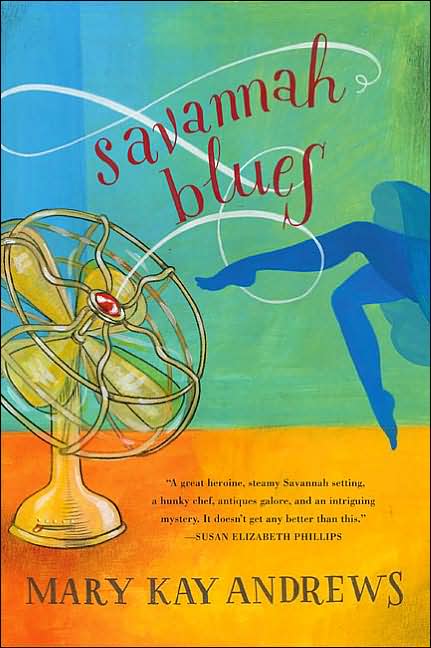
Savannah Blues by Mary Kay Andrews


I've been trying to put a finger on what exactly it is about Mary Kay Andrews' books that I dislike. Savannah Blues is my second read by Andrews. The first was Hissy Fit. Everyone I've spoken to who's read Hissy Fit loved it. My opinion was that it started out nicely and then went downhill fast, particularly as I began to grow weary of all the descriptions of the overpriced decorative items that the heroine purchased for her client. Maybe the concept of investing major dollar value in a cast-iron pot to hold flowers on a porch or spending thousands just for one small piece of furniture goes too much against my grain. Hissy Fit just didn't do it for me.

So, I opened up Savannah Blues a bit hesitantly. Again, the story had a fantastic beginning and the pages flew . . . for a while. After a time, that same sensation of being bored out of my mind swept over me. It wasn't a bad book; the writing was pretty decent. So, what exactly turned me off? Well, now that I think about it, there were quite a few things that bugged me. One was that the emotions of the characters didn't always fit the situation, in my personal humble opinion. To name characters in specific examples might spoil some surprises for those who enjoy her books, so I won't mention any of them by name, but when one character is arrested it sure doesn't seem to bother the person all that much. In fact, that character is much more disturbed by what people think than by the threat of being hauled off to prison for a very long time. Weird.

In addition to the emotional issues - and I've only provided one example; there were several occasions in which characters flew off the handle for reasons beyond my understanding - it seemed to me that the author had trouble focusing and the storyline went all over the place. I completely failed several attempts to synopsize the story because it simply went in too many directions.

On the positive side, Andrews' knows the South. Her skill lies in her ability to describe life in a small, Southern town. The mode of speech, mannerisms, what people are interested in and talk about, that strange sense of isolation from the rest of the world, the heat, humidity and profuse wildlife . . . her descriptions are dead-on. Maybe that's part of the problem. I get enough of life in the South, as is, and would much rather read a novel set someplace cold, someplace I'd rather be, myself, like London or Seattle. The last thing I want to read about while sweat is running rivers down my back as I wait in the heat for my son in a parking lot is . . . heat. Not to mention the fact that the heroine in Savannah Blues is one of those annoying people who will willingly barrel over you or grab something the moment you set it down at a yard sale. Yuck. Since I'm one of those people who has considered putting, "Early birds will be shot," in my garage-sale notices, in the vain hope that people would just wait till I opened the darned door in the morning, it's obvious they grate my nerves. I didn't like the heroine. Come to think of it, the hero was way too temperamental for me. The only character I really liked was the heroine's best friend.

So, there you have it. If you like Southern fiction in the Chick Lit vein, this book is probably for you. Savannah Blues just wasn't my thing.

Wednesday, July 26, 2006

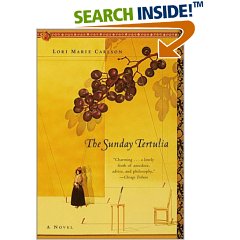
The Sunday Tertulia by Lori Marie Carlson


The Sunday Tertulia was one of the many books I purchased at our outlet bookstore's Going-Out-of-Business sale, this past weekend. When I flipped through the novel, it looked pretty interesting if a bit trite: one more book of alleged "wisdom", this time from a group of fictionalized Latina women at their weekly gathering, or tertulia.

Because the author has taught Hispanic literature (as per the back cover blurb) and the central character speaks Spanish fluently, it's not surprising that the book gives one the sense that it's simply a nominally altered version of the author's life. That factor alone is not necessarily a bad thing; in the right hands, the idea may have worked.

Unfortunately, the book falls flat. The heroine, Claire, is annoying, whiny and stupid. She complains about New York City being a heartless town filled with strangers and moans about her sorry dating life throughout the novel. Since Claire is in NYC by choice and the men she dates are often insulting, rude or arrogant during their initial conversations, she appears to be a seriously dim bulb plugged into a hinky socket.

The women who invite Claire into their exclusive meetings are wealthy, shallow and dull; one never gets to know them fully as individuals and, frankly, this reader didn't care to know them any better after a certain point. Part of the problem is undoubtedly the form of the book. Each character's opinion on a topic is separated and labeled with her name, so there is never any real interaction or flowing dialogue - just one opinion, followed by another, followed by another, with occasional interjection of Claire's thoughts.

I found myself rushing to get The Sunday Tertulia over with and probably should have abandoned it altogether. The book is so unmemorable that I finished it two days ago and promptly forgot about it. Had I not set the book down in an obvious place, I might have never gotten around to reviewing it at all. Definitely one to skip.


Friday, July 21, 2006

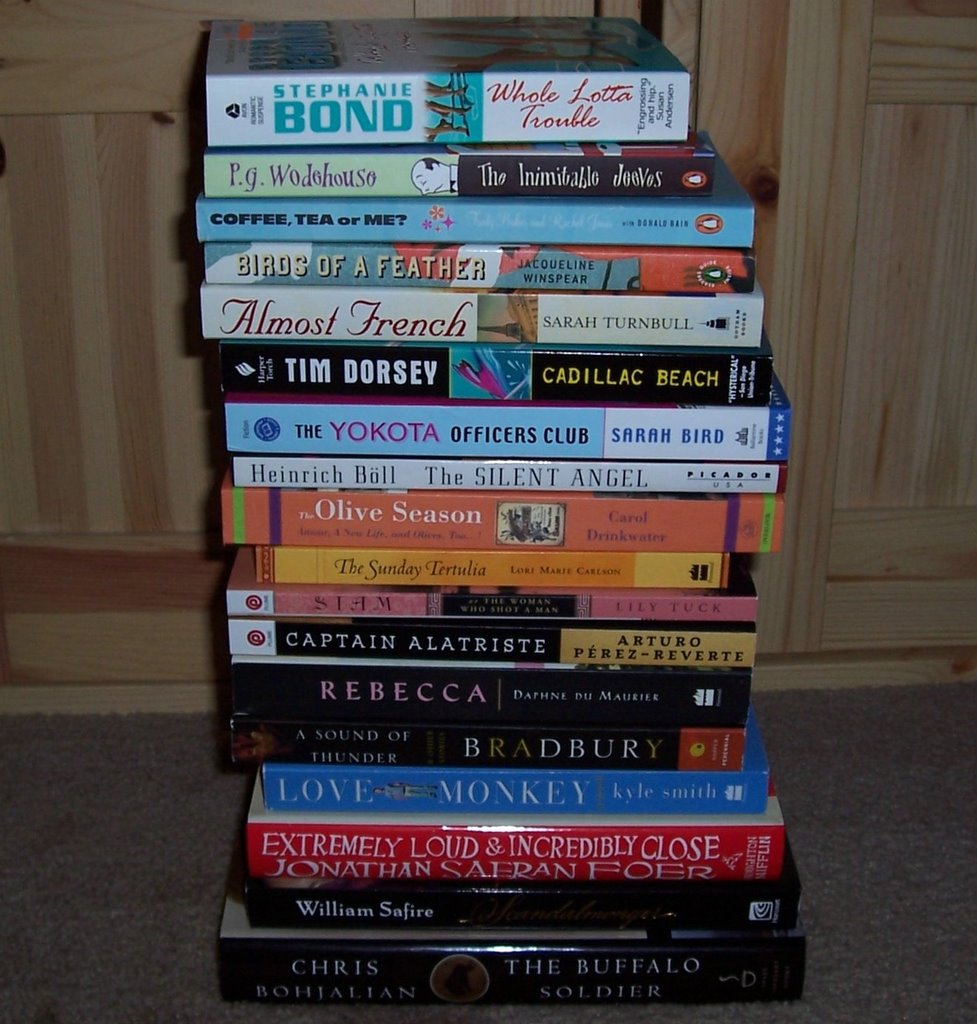
Bookfool Gets Some New Toys

Unfortunately, this stack is the result of our local outlet bookstore closing. So sad. We'll be back down to one bookstore, again.

Thursday, July 20, 2006

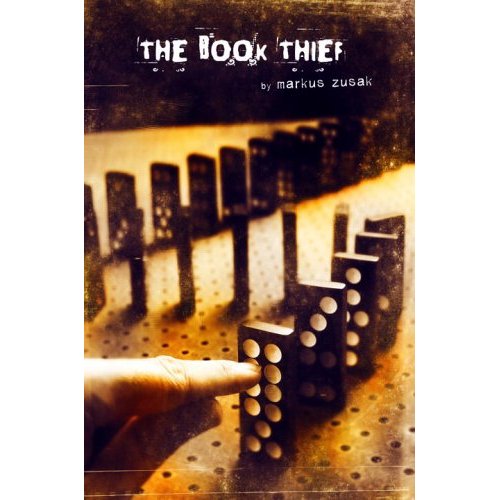
The Book Thief by Markus Zusak

I was so completely, totally blown away by this amazing, moving, wonderful, sad, beautiful book that I'm almost afraid to attempt to review it. But, I'll try. If nothing else, I'm willing to face up to the challenge of attempting to lash my thoughts into some reasonable facsimile of sense, especially if I can persuade others to read this astonishing book.

The Book Thief
, set in Nazi Germany during the years of WWII, is narrated by Death and germinates from his fascination with a girl named Liesel Meminger, the "book thief" of the title. Her first theft is a strange one; she is unable to read but feels as if she's salvaging a memory by clinging to the little blue book. When Liesel learns to decipher the language within books, with the help of her "papa", she grows to find solace in words.

There's so much more to it than just Liesel and her books. The author has taken a group of people--those who live with and around Liesel on Himmel Street in a small town on the outskirts of Munich--and made them so believable that they almost seem tangible. Very seldom have I felt such sympathy and attachment to a group of characters, in spite of their negative qualities.

The book is billed as a Young Adult title, which strikes me as a little odd given the subject matter and the depth of characterization, the strength of its emotional impact, and even its length (my copy is 550 pages long). The publishers could easily end up chopping their own profits off at the knees by marketing the book toward a younger audience. However, the YA designation may be based on the fact that Zusak is already well-established as a Young Adult author in Australia.

Certainly, it seems like a very adult book. And, yet, I can visualize The Book Thief in the hands of my 14-year-old and imagine the discussions that could be generated in a classroom setting. The Book Thief is a thought-provoking book, full of stunning imagery and, in my opinion, technically perfect with not the slightest deviation in tone. It's worth talking about, passing around, setting up on the good shelves for a future reread; and it has just rocketed to the top of my list of best books read in 2006.

Monday, July 17, 2006

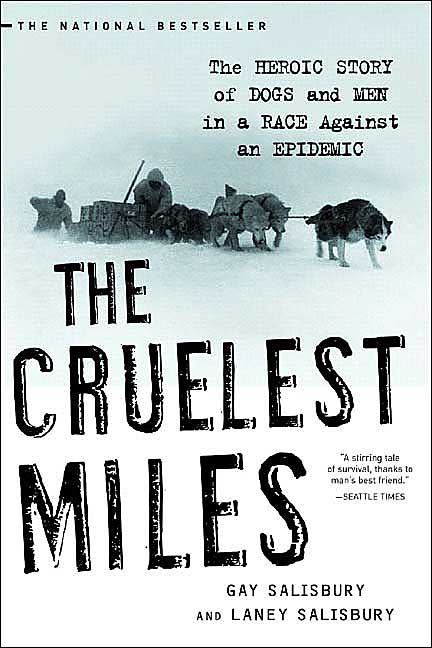
The Cruelest Miles by Gay & Laney Salisbury


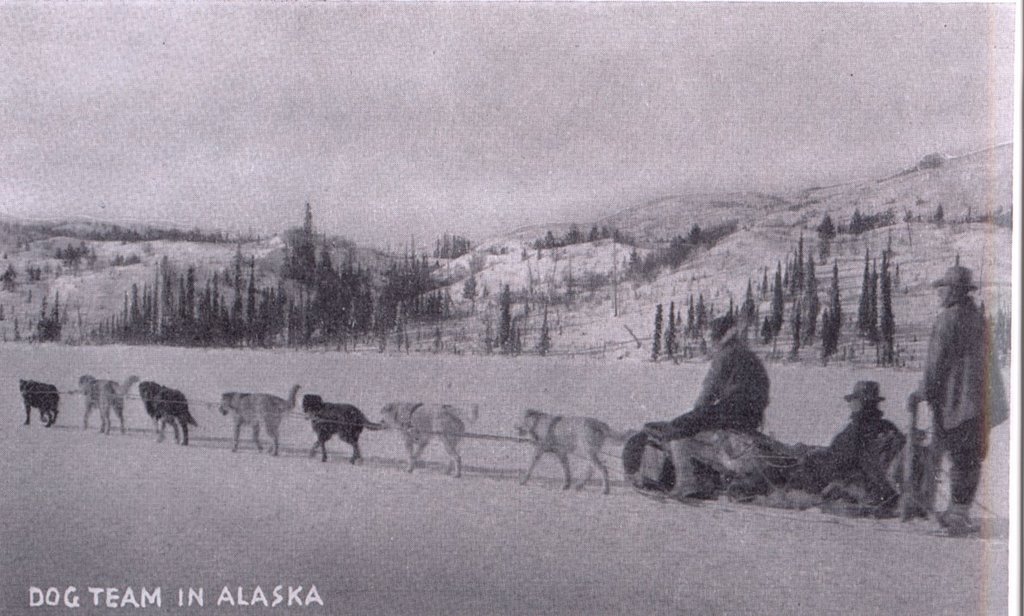
The Cruelest Miles tells the story of the famous Nome serum run, in which dog sled teams raced desperately needed diphtheria antitoxin from southeastern Seward to ice-bound Nome, Alaska to halt the growing diphtheria epidemic.

This book was recommended to me by a friend who read it while traveling in Alaska, last year. She thought it was a good choice for learning about the area and its history. Since I was in the midst of reading Peter Jenkins' Looking for Alaska, I didn't manage to begin reading the book until we were in Kenai --our fourth night in Alaska-- and continued to read it in Anchorage and on our return trip. I was a bit baffled as to why the authors spent such a great portion of their time describing the history of both dog sled teams and aviation in Alaska, at first; but, as it turned out, the timing was perfect. When we visited the aviation museum in Anchorage, I was already familiar with the stories of some of Alaska's early aviators because of The Cruelest Miles and I'm certain I got a great deal more out of our visit to that small museum because of the book.

As to the story of the diphtheria run, itself, the details were fascinating but minimal and not laid out in the kind of order I would have preferred. In fact, that portion was really quite jumpy and slap-dash, in my humble opinion. Apparently, there's not much more to the story than the descriptions of the weather, the experiences of individual dog-team handlers during their portions of the race, and a bit of controversy over which dog and driver deserved the most recognition; so, the time spent on background was necessary, if only to make the book long enough for publication. I found it a bit tedious, at times, because I was expecting more emphasis on the actual run. However, the book was intensely researched and well-presented if a bit dry.

The winter weather was unusually bitter, even for the area, during the time that the serum was being rushed to Nome in 1925. For that reason, it was sometimes exciting to read about how each musher decided which path he should choose for the sake of balancing his safety and that of the serum versus the time that would be added by making the safest decision or the potential for disaster if he chose a more dangerous route to save time.

Leonhard Seppala had the largest role, although I won't go into detail about where he was chosen to do his portion and what decision he made in order to avoid spoiling it for those who decide the book is worth reading. I will say I expected Seppala to be the man whose team was led by Balto, the team leader whose statue still sits in Central Park, in spite of having read something about there being a bit of controversy over which dog was lauded. Seppala's lead dog was not Balto and, in fact, Seppala was angered by the attention paid to a dog he considered less worthy than his own lead dog, Togo. There's plenty of detail to that aspect of the story. The descriptions of the dogs, how they were bred, the necessary qualities for lead dogs, and their ability to make decisions took up a sizeable portion of the text and made for some enjoyable reading.

I'd give this one a slightly above-average rating - enjoyable and informative, sometimes gripping, but a bit sleep-inducing in its detail, at times. Looking for Alaska is a better choice for learning about Alaska, its natives, tradition, and life in Seward, but The Cruelest Miles is worth the time.

Saturday, July 15, 2006

Still reading . . .

I'm in a bit of a post-vacation slump and working on a blog about our trip to Alaska, but should finish The Cruelest Miles very soon. Hopefully, the review will be posted tonight or tomorrow. Then, perhaps I can get back to a normal reading schedule. Fingers and toes are crossed because it's been somewhat bizarre not having the time to read. I haven't gobbled up any fiction in at least two weeks and am really starting to feel a hollow pang from the lack of a great read. You know how that goes if you're a booklover.

Alaska blog can be viewed at:

http://alaskatoes.blogspot.com/

Happy Reading!

Thursday, July 13, 2006

Looking for Alaska by Peter Jenkins


Peter Jenkins is well-known for his first travel memoir, in which he went searching for himself and his country in A Walk Across America. Nearly twenty years later and with seven published adventure books to his credit, now a father of six, Peter was feeling a little disillusioned and in need of a fresh adventure. So, he moved to Seward, Alaska for 18 months. Various members of his family popped in and out and joined him on a number of jaunts, with only his wife and youngest daughter remaining in Seward, occasionally tagging along on his journeys, year-round.

During his time in Alaska, Jenkins got to know the locals and was invited on a wide variety of adventures in which he observed a whale hunt, flew thousands of miles in bush planes, stayed with a man who lived 60 miles away from civilization and not that far from the Arctic Circle (on snow machines), visited an Iditarod musher and went mushing, took fishing trips, and kayaked to remote locations. Even as seasoned a traveler as Jenkins is, he was utterly awestruck by the scenery, the colors, and the people.

It took me a while to get into this book and to become accustomed to his sometimes-annoying introspection; but, as far as books worth reading before setting out for the areas discussed, this particular memoir is superb. I read the vast majority of this book on the plane to Anchorage and then finished up while we were in Seward, this past week. Thanks to Jenkins, I noticed and was aware of details that otherwise would have escaped me. Hobo Jim, for example, is mentioned and described in detail; he’s Alaska’s beloved balladeer. A sign with his photo hung on a Seward bar. I would have overlooked it and I certainly wouldn’t have managed to talk my husband into buying a CD of his hits when we stopped for drinks in Russian River, had I not already babbled on about him. The family loved the CD and listened to it on winding Alaska roads, the perfect accompaniment for a drive through the mountains.

Jenkins is humble and, apparently, has a love of people that is obvious immediately to most. As a result, folks opened up to him and chatted freely, invited him into their homes, and shared in a way one might not expect. As it turned out, we’ve never encountered friendlier people outside of our home territory in Oklahoma; his adventures seemed much less surprising when surrounded by a people of such remarkable warmth, humor, and openness. It’s the detail of his descriptions that make the book shine. He could stand a bit of grammatical help, now and then, but otherwise the book is excellent and I recommend it highly.

Bookfool still on an Alaska High

Sunday, July 02, 2006

Decisions, decisions


I will be leaving for vacation, soon - an actual vacation of the variety in which one climbs aboard an airplane and flies to a cooler climate. Because, in the summer you go north. This is a rule of thumb for Southerners who hate the heat. Note the cold, snowy theme evident on the covers at left. I love nippy weather, anyway, and there's always a shortage of nip, in our air, outside of January. Not that it's going to be cold, but anything helps. So . . . for the last couple of weeks I've been puzzling over the decision regarding which books to carry in my handy, dandy backpack. This is critical decision-making territory, I'm telling you. Without books, I would cease to exist and then what would be the purpose of flying north, where the air is cool and the days are long? Naturally, the spouse keeps reminding me that they actually do, in fact, have bookstores where we're headed. So, I should keep it light. Right. I'm trying. I really am.

I've settled on the two pictured. And, maybe The Electric Kool-Aid Acid Test by Tom Wolfe - if only for the totally hoopty title (and, yes, I know I'm a little behind on getting to this particular novel). And, there are about three dozen others I'd really, really like to read right now, including The Book Thief by Markus Zusak, which is unfortunately a real chunkster. Narrowing down to a torturously pitiful number as low as two . . . can it last? Will she cave in and throw in more books at the last minute? Has she ever not done so? (The answer to that one is, "No.")

And, what about all those magazines so recently purchased? Let's not even go there. I'm still working on the whole, "Damn, which should I take?" concept. It hurts, people. Just don't pinch me, right now, or I'll go ballistic.

Suffering Bookfool in a rainbow-highlighting mood

Thursday, June 29, 2006

Suite Francaise by Irene Nemirovsky

He wrote with a chewed-up pencil stub, in a little notebook which he had against his heart. He felt he had to hurry: something inside him was making him anxious, was knocking on an invisible door. By writing, he opened that door, he gave life to something that wished to be born. Then suddenly, he would become discouraged, feel disheartened, weary. He was mad. What was he doing writing these stupid stories, letting himself be pampered by the farmer's wife, while his friends were in prison, his despairing parents thought he was dead, when the future was so uncertain, the past so bleak?

Suite Francaise is an emotional novel, written, as it was, while the real-life events echoed within were occurring. Comprised of the two completed sections of an intended five-part novel, which the author was unable to complete before her death in a concentration camp, the book also includes notes by the author, correspondence from 1936-1945 (three years beyond her death), and a preface for the French edition published in 2004.

The two parts of Suite Francaise could easily stand alone, but they're interconnected and their stories would have been drawn to fuller conclusions, had the author lived.

The first section (or book, as some describe it), Storm, describes the German occupation of Paris and massive evacuation by its inhabitants. Refugees rush to the countryside with mattresses piled on top of cars and their most important possessions crammed inside, by foot or by train if they have no car. During this slow and tedious exodus, they experience the horrors of war firsthand. Bombs fall around them, trains cease to run, fuel and food become scarce, cars must be abandoned, weary and injured soldiers retreat, people sleep on the ground or in their cars and steal from each other. In the countryside, farmers take in refugees but fear they'll run out of food for their own families. All is seen through the eyes of a few people and, for the most part, the characters are snobs. Nemirovsky, herself, wrote in her personal notes: "In general, they are often characters who have too high a social standing."

This inclination toward characters with a "high social standing" is the only real annoyance in Suite Francaise. Nemirovsky's writing is beautifully crafted, obviously skilled, and painfully visceral.

The second part, Dolce, adds some new characters and moves on to the next phase of occupation as German soldiers enter, and are billeted in, the small village where many of the characters in Storm have taken refuge. As they become accustomed to life with enemy soldiers sharing their homes and their dwindling food supplies, milling about the village square, and engaging in maneuvers with confiscated horses, conflicts naturally arise. Torn between recognizing the humanity of soldiers they know were ripped from their own lives in Germany and the reality that their own sons and brothers are imprisoned, there are moments of gentle conversation, inward confusion and paralyzing fear.

An absolutely gut-wrenching and amazing book. Because it was written with a focus on emotion rather than history, I found I could only read a little at a time until I became accustomed to the raw emotion; and, I did have to get used to those snobby characters. Dolce has a slightly broader focus, as the reader gets a glimpse into the former lives of some of the German soldiers, but I also believe it's a bit more palatable because by the time one begins to read Dolce, he is well-versed regarding the antipathy between French classes.

Okay, don't call me modern: I'm going with the "he" rather than "he or she" of modern English. So sue me. Long story short: thumbs up and worthy of a spot on the keeper shelves. I plan to search for the book Vichy, France - a history of Occupied France referenced repeatedly in the notes after the novel - and hope that if none of the author's other books (9 of which had been published before the war) are in print, that they will be revived because of this release.

I should probably warn you that the notes and correspondence are particularly poignant and kept me up most of the night, tossing and turning as I reran the desperation of the author, her husband, and her publisher, mentally. But, then, I'm a lousy sleeper, the spouse was snoring like a jackhammer, and the kiddo incomprehensibly decided to steal the futon (my location of last resort). Just read the book, if it's your thing.


Tuesday, June 27, 2006

Obstacles

Five things that are keeping me from my reading, this week:

1. Friends who drop by unannounced and then stay for 3 hours
2. Husbands who recall they've left their luggage at home after driving 40 miles
3. Talkative kiddos (one at home, one by phone)
4. Shouldn't have bought those magazines
5. Late-night interruptions (like, you know, sheriff's deputies appearing on the driveway at 3:15am), which make the pages blur the next day

May your path to reading be unobstructed.

Monday, June 26, 2006

Tuesdays with Morrie by Mitch Albom


The story of a college professor, Morris Schwartz, sharing some last lessons about life with one of his favorite former students as Morrie dies of amyotrophic lateral sclerosis (ALS), or Lou Gehrig's disease.

Everybody's read this book and there may not be much to add, but I have a lot to say. I expected to hate this book. I figured it would be heart-tugging sap and, in general, books involving terminal illness do not appeal to me in the slightest. Reading for a good weep is simply not an indulgence of mine; I prefer laughter to tears. However, my husband placed a request, so to speak. He knows I'm always watching for a number of titles at any given moment; and I just happened to locate a copy in our library's sale corner shortly after he mentioned that the book was recommended by someone at work. For a quarter, I snatched up the book and brought it to my husband. That was last year. He gobbled it up and set it down on the shelf in our bedroom, where it stayed. I tiptoed around it, occasionally thinking, "Maybe I should read it," and then countering with a "Nah, not my thing," or "Maybe later."

Since I seem to be a bit bogged down in my reading - about a third of the way into three different books - the size of this book caught my eye. Unlikely that I'd take any interest in it, I thought, but the book was at eye level at the right moment. I cracked it open and read a few pages, sat down on the bed to read a few more . . . and, then I didn't stop until about halfway. At that point I decided I'd better get off my rear and move the laundry; but the next time I picked the book up I didn't put it down. Morrie's words were addictive in both their impact and simplicity. My favorite quote:

"There's a big confusion in this country over what we want versus what we need," Morrie said. "You need food, you want a chocolate sundae. You have to be honest with yourself. You don't need the latest sports car, you don't need the biggest house."

Such words fly in the face of the American Dream and I'm sure that rubs a few people the wrong way. Then again, some reviewers at Amazon say Tuesdays with Morrie is full of platitudes, that it's self-indulgent. That's both a criticism of Morrie's thoughts and the writing; and they're missing the point. Watching someone you care deeply for deteriorate rapidly is a process that makes one reflect. I know; I've been there. With a person as loving and kind as Morrie telling you what he's learned, how could you not think about his words and apply them to your own life? I only wish my father had been able to speak during his last days; he would have undoubtedly shared some last bits of wisdom. Personally, I thought the writing was appropriately blunt and suitably respectful without going overboard on the mush factor, although one couldn't help but feel a tug at the end. Morrie did die, after all.

This book also just happened to remind me of a book I enjoyed as a child, Mister God, This is Anna. Like Tuesdays with Morrie, Mr. God, This is Anna is full of the wisdom of someone who is about to die. Anna, however, didn't realize she was going to die, and at a very young age - as in 5 or 6 years of age. But, she was unusually wise for a small child. Somewhere around here, I should still have my copy. I'm that bad about hanging onto books.

Thumbs up for Tuesdays with Morrie. But, I can't see how anyone could imagine who we'll meet in heaven, so I'll skip the next book. Sounds sappy to me.

Friday, June 23, 2006

Best Moment of the Day


I dropped by the bank to deposit a check, today, and noticed the teller had a gorgeous bouquet of flowers on the counter behind her.

"Wow," I said. "Your flowers are beautiful."

The teller positively glowed. "Thanks," she told me. "My fiance gave them to me. He probably won't do that when we're married, so I'm gonna enjoy them while I can."

"Oh, I don't know," I said. "I think you've got a good shot at getting flowers when you're married if he's sending them to you, now. My husband isn't really a flower person. Never has been. When we were dating, he once gave me a cactus."

She laughed.

"I try not to dwell on it," I said.

At this point, the teller tipped her head back and laughed so hard I thought she was going to fall off her chair, which I must say gave me my warm fuzzy for the day.

The rest of the day kind of sucked.

Magazines are slowing down the book reading (as are laundry, and being married to a slob . . . but we won't go there). Thanks to having read The Polysyllabic Spree by Nick Hornby, I felt compelled - *compelled*, I tell you (pitiful, I know) - to buy a copy of The Believer magazine, just to see what else is between those mysterious covers, earlier in the week. Plus, I do adore Nick Hornby. Allegedly, the three magazines that I purchased at Border's were intended to save for our upcoming vacation plane ride. Ah, well. It's not like I haven't already been setting aside books I absolutely must take on the plane.

Still reading:
*Suite Francaise - Irene Nemirovsky
*Looking for Alaska - Peter Jenkins
*Tales from the Edge: True Adventures in Alaska - Ed. by Larry Kaniut
*Some other book with a title I can't remember and which is, to be honest, about to get ditched and therefore probably not worth mentioning

No recent bear nightmares, but I'm not holding my breath with this terror-in-Alaska theme going.

Show your love. Send a cactus.

Prickly Bookfool

Thursday, June 22, 2006

Addendum to The School Run

When I wrote my review of The School Run, I neglected to mention that the novel included a startling set of incidents that I found very disturbing as a parent. One of the characters leaves her child behind in his car seat while she makes a dash into the school - not once, but twice. Even after her toddler son has escaped from the car and disappeared for a few heart-pounding moments, it doesn't occur to this mother to actually pick up her child and carry him inside the school while she enters to dig through the lost-and-found box. Instead, she leaves him behind a second time, the next time locking the car and assuming he's secure.

There's a second aspect to this brief bit of maternal insanity: even knowing, as they search for the little boy, that the mother left her child locked in the car, the police don't question whether she was neglecting her parental duty. To me, that reveals that the author feels like there's nothing wrong with "just dashing inside" somewhere, provided a child is locked into a car. Believe me, I do understand what a pain it is to unload and carry a heavy child for a brief jaunt, say, into a gas station to pay - both of my sons were big, healthy babies and it was a nuisance lugging them around; but, as the old saw goes, "You do what you have to do." I found that particular secondary storyline upsetting because children have been known to die in hot cars while parents left them "briefly". I just thought it was worth a mention.

Bookfool who used to have a perpetually sore back from carrying kiddos


Wednesday, June 21, 2006

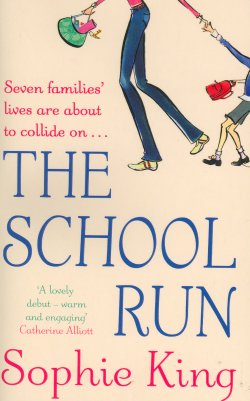
The School Run by Sophie King


From the cover:

Meet seven very different people, all on the same route to school. Little do they know that over the course of one week the school run will have become a collision course, connecting their lives in more ways than one.

The School Run is a contemporary story that looks at the lives of seven adults during one very eventful week: three mothers and one widowed father, a woman who lost her only child, a teacher, and a French au pair. Each day, the characters cross paths in the run to the drop-off zone at St. Theresa’s School. All, naturally, have some sort of challenge to deal with. Is Harriet’s husband Charlie going to leave her? Will Kitty ever find a man to settle down with? Is there any possibility that Betty will spot the hit-and-run driver who killed her son? Why has Evie’s husband suddenly disappeared?

The School Run is a surprisingly well-written first novel. In form and style, it's vaguely reminiscent of The Reading Group by Elizabeth Noble, but with its own flair. Each section begins with a snippet of radio chatter and, most of the time, the name of the main character serves as a heading to let you know which story you’re dipping into as the author whips from one character to the next, overlapping both the radio bits and the individual stories. The School Run has a tremendous flow and, thus, makes for a very quick read.

However, seven main characters are just a few too many. For the first third of the book, I found myself flipping to the back cover constantly, in order to discern which character I was reading about; and, even then, the cover information was not enough because there were so many children to keep mentally sorted. Still, the book was entertaining and even a bit surprising around the last third. All the strands of the various storylines were thoroughly wrapped up and, overall, I found the book a satisfying read in spite of the proliferation of characters and a bit of predictability. Definitely recommended for those who enjoy light, contemporary British writing.

Monday, June 19, 2006

Consider the Lily by Elizabeth Buchan


Consider the Lily took me weeks to read - very unusual for me, especially if we're talking fiction; with non-fiction I often have to pinch myself and say, "Stay awake, dummy." In this case, I think the story really just moved very, very slowly because the author paid great attention to historical accuracy and detail. The heroine was also quite hard to warm up to, but eventually Matty Verral Dysart seemed to grow and thrive as a character.

Backing up a bit, Consider the Lily is a story set between the two world wars. Kit Dysart and his family live in a decaying mansion on a crumbling estate, Hinton Dysart, the family money having dwindled. After a suitable introduction involving a wedding, Kit, Matty Verral, her cousin Daisy, and other relatives and friends of both families go on holiday in France. Kit and Daisy fall madly in love and are, it seems, a perfect match. But, when the American stock crash causes a huge loss of assets, Kit is called home to deal with business without managing to propose.

Matty is independently wealthy and asks Kit to marry her as they cross the channel toward England, knowing she can solve his financial troubles. He agrees. But, Kit doesn't love Matty. Haunted by Daisy, he treats Matty gently and tries to be a good husband but with a distance that is cruel; sometimes she can even see him flinch when she touches him. When Matty discovers a grown-over walled garden, she finds hope and solace, as well as some startling family secrets. There, with her hands in the soil, she is transformed along with the beautiful flowers growing around her.

Favorite quote:

For the novice, the first steps in gardening are the most difficult. There is much to learn, wrote a great gardener, Gertrude Jekyll. But, unlike the lessons in love or hate, even the lessons in money, they are pleasant, oh, so pleasant, and the fallings by the wayside do not wound, only teach. The beginner, said Miss Jekyll, should be both bewildered and puzzled, for that is part of the pre-ordained way; the road to perfection. Each step becomes lighter, less mud-clogged, until, little by little, the postulant becomes the novice, the novice the fully professed. Oh, yes, Miss Jekyll, you were so right. A garden is a grand primer. 'It teaches patience and careful watchfulness: it teaches industry and thrift: above all, it teaches entire trust.'

Another 3.5/5. I believe this book is particularly worth a read for those who love gardening and historical fiction; one who gardens can't help but nod at the therapeutic value of sticking hands in dirt and watching beautiful creations grow. I also enjoyed the fact that Hinton Dysart (a fictional estate) was near Farnham, a small town that I've visited in England (and where I met a ghost, but that's another story), so I knew a little of its Roman history. An enjoyable story, if somewhat slow to develop.

Sunday, June 18, 2006

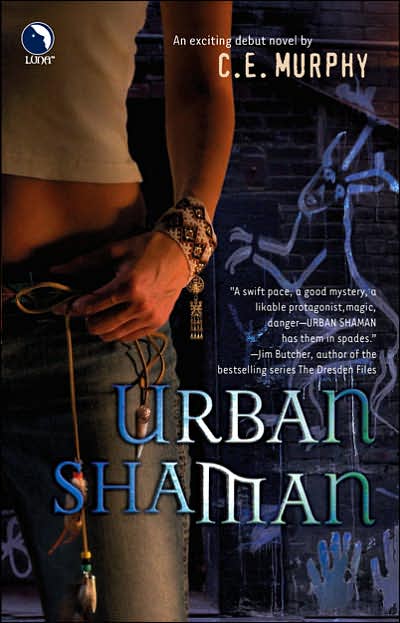
Urban Shaman by C.E.Murphy

If you've followed my previous posts, you know my 14-year-old son and I have been sharing Urban Shaman by C.E. Murphy. He finished reading on Friday night and I reached the end on Saturday.

When were both around 100 pages into the book, kiddo and I had a conversation that went as follows:

Me: This is a pretty weird book.
Son: Of course it is.
Me: What do you mean, "Of course it is"?
Son: Mom, it's about a shaman. Any book that has a shaman on the cover is going to be weird. They have spirit guides. They battle evil. It's weird stuff.
Me: But you're enjoying it?
Son (stealing book for the second time): Duh.

So, yes, the book is a bit bizarre, particularly if you're not accustomed to the fantasy/magic genre. At the beginning of the novel, heroine Joanne Walker (aka, Siobhan Walkingstick) sees a woman being chased by a pack of otherworldly dogs, into the path of a man with a knife. Convinced she must go help the woman, Joanne triangulates the woman's approximate location with a bit of mental math using the landing speed of the plane, current time, and the estimated time Joanne spotted her from the plane. It turns out the woman was being chased by a Celtic god called Cernunnos and the pack of dogs belong to The Hunt . . . sort of the rest of the team of god-critters, I guess you could say. Getting herself nearly killed by Cernunnos leads Joanne to the revelation that she is a shaman, or healer, and it's up to her to save the world.

I'd personally rate this one about a 3.5/5 because the fantasy aspect occasionally lost me and, geez, poor Joanne gets the crud beat out of her practically every 50 pages. Son loved it and wanted to rush right out to buy the next in the series, Thunderbird Falls. I decided we'll wait and buy that one for vacation reading, which got me a typical teenage shrug. He knows I'm a book wimp and he'll get to read Thunderbird Falls, eventually. Son rated it 4.5/5.

Bookfool whose life's earnings are probably keeping the publishing world on its feet

Thursday, June 15, 2006

Best quote, thus far


From Urban Shaman by C.E. Murphy (Andi, you'll love this): "Once upon a time, a nice young half-Cherokee half-Irish girl went to college and got the ultimate would-you-like-fries-with-that degree: English. "

Son #2 didn't get it.

Obviously, I snatched the book back from the teenager. The attack cat glared at me and then yawned and put her head back down.

Update: Son came marching into the room *while I was reading*, last night (okay, I set the book down for a minute . . . but *just* for a minute) and said, "Where's Urban Shaman?"

I pointed to the bedside TBR pile and said, "But, I'm reading it." Nonplussed, he walked to my pile and plucked up the book. "I mean, I'm reading it right now. She just pressed her hand to the confessional window and the priest said, 'Go with God'. It's getting so good."

"Too bad," quoth the teenager. I tell you I get no respect. He's nearly finished, but I was forced to pick up Consider the Lily for my evening reading time and then started Tales From the Edge: True Adventures in Alaska (because last month I didn't scare myself enough reading about bears and inducing nightmares in which one such giant climbed upon my stomach when its cub decided to roll around behind me --so not my fault-- and I was about to be clawed open. . . this is why my bookclub friends call me "major wimp").

And, it's not like we don't have thousands of other books he could read.

Sighing Bookfool

Remember Me by Lisa Takeuchi Cullen


I've already mentioned this book in several other posts, so I'll just copy my "official" review and then babble on. Remember Me is an advanced reader that technically belongs to my husband, but I have sticky fingers when it comes to books and the hubby didn't mind. You can imagine he's, perhaps, used to such things? My intense curiosity led me to hop over to the computer and look up some of the things the author mentioned. The Frozen Dead Guy Days Festival, for example, grabbed my interest. I got online and found a t-shirt for the teenager. Shopportunity principles failed - I bought last year's version because it cost less. Whether or not the school system will consider it offensive remains to be seen.

Official (and, therefore, probably dull) review:

An exploration of the traditions, trends, and future in American funerals written with humor and occasionally a bit on the gruesome side, Remember Me chronicles the author’s travels around the country to observe rites and rituals while learning what’s to come in the funeral industry.

An oddly fascinating, sometimes touching, occasionally downright weird chronicle written with a light-hearted flair but with the occasional “Ewww, gross” passage. The author traveled to a convention for funeral directors and crashed funerals, spoke to people with traditional and innovative businesses, and even described the funeral of her own grandfather in Japan. She joined in on scattering ashes from a plane with a homemade dispersal container, viewed the ceremony on-shore and the ocean burial of the deceased in an “eternal reef”, learned about turning human (thus, carbon-based) cremation ashes into diamonds, spoke to two men who have a mummification business and one who turns bodies into plastic, and attended the Frozen Dead Guy Days festival in Nederland, Colorado.

In general, the book was interesting but should not be taken as a detailed or scholarly analysis of trends, but rather a look at the variety of options now becoming available as Americans balk at the traditional funeral and burial process. The fact that the author had a new baby and often showed up at events and interviews with her child, usually in a backpack or stroller, added some light moments.

End of review--

Son #2 has walked off with Urban Shaman by C.E. Murphy. Hey! He's not supposed to pull the same kind of snatching tricks as his mom. Serves me right, I guess, for turning my kids into avid readers. He's out of the house, at the moment, so I could just . . . yeah, think I'll tiptoe into the room and get it back. Hopefully, the attack cat lodged on his bed won't awaken.

Sneaky Bookfool on a Mission