Showing posts with label Young Adult. Show all posts

Tuesday, May 11, 2021

Code Talker by Joseph Bruchac


Code Talker by Joseph Bruchac is a YA novel about a Navajo code talker in #WWII but it begins with the main character's childhood. Sent away to boarding school, Ned Begay was met with harsh authorities who would punish the children severely if they spoke Navajo instead of English.

Nevertheless, the students found ways to keep their language alive and it became a useful skill, speaking Navajo, when the Marines needed Navajo speakers to create and use a code as they invaded islands in the Pacific. 

The book goes beyond the war years as Ned is narrating his story to his grandchildren. So, you also find out that Navajos who served were cut out of the GI Bill (unless, apparently, they bought homes that were not on Native land) and were not given military honors for their bravery. It also gives you a little insight on Navajo beliefs and traditions. 

Highly recommended - Excellent writing, packed with carefully researched facts about military movements and some real-life characters who were important to the story. I liked the fact that not everything was fictionalized and the book went beyond the war years both past and present, so that you got a good feeling for what it was like to be a Navajo, having your traditions and language suppressed, and then serving with honor (some of the code talkers sacrificing their lives) only to return to the a hostile environment in which one was considered lesser at home. 


©2021 Nancy Horner. All rights reserved. If you are reading this post at a site other than Bookfoolery or its RSS feed, you are reading a stolen feed. Email bookfoolery@gmail.com for written permission to reproduce text or photos.

Thursday, April 29, 2021

Mini reviews - Mosquitoland by David Arnold, Reader's Digest War Stories, and Nocturnes by Kazuo Ishiguro

Mini review time! All of these books are from my personal library. 

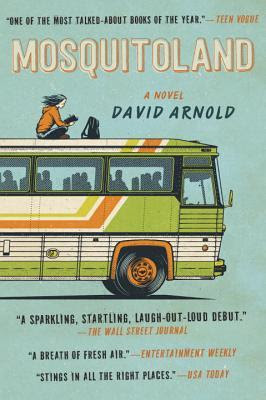
Mosquitoland by David Arnold is a YA book about a teenage girl named Mim Malone. Mim's parents recently divorced and she has moved to Mississippi (the "Mosquitoland" of the title — accurate, by the way) with her father and stepmother. When she finds out her mother is sick, she decides to take a road trip to Ohio. Nobody is saying anything about her mother so she doesn't know how bad her mom's illness might be. 

Along the way, Mim meets some quirky people, has a lot of unexpected experiences, and discovers a few things about herself. 

Recommended but not a favorite - I had mixed feelings about Mosquitoland but liked it enough to recommend it. It's well plotted (a lot happens) but there were two things that kept it from being a favorite. One is that one of the things Mim sets out to do is resolved but you don't know the full details. That felt like a cop-out to me. The other is that the voice was a little weird and I am frankly tired of super smart young fictional characters. Much of what Mim had to say seemed like it was well beyond her years. She's clearly above average and that just annoyed me. So, that was just a personal issue. 

What I particularly loved was the makeshift family trope. On her journey, Mim picks up a friend here, a friend there and they all bond. I did have a little trouble with the Mississippi portion as it sure seemed like the author knew nothing at all about Mississippi beyond the fact that it's hot, humid, and buggy. But, Mississippi itself was somewhat unimportant to the storyline; I liked the fact that I never, ever knew what was going to happen next; and, I warmed up to the strangeness and humor, the farther I got into Mosquitoland

Reader's Digest War Stories is a collection of stories from the Reader's Digest magazine. When I bought the book, I was actually looking for a collection of "Drama in Real Life" stories because it was a "Drama in Real Life" set in London during the Blitz (which I read when I was around 10 years old) that began my interest in WWII. I couldn't find anything like that so I bought the war stories, instead. 

Beginning with stories published in 1956, the book contains personal accounts of war experiences, some historical accounts told by writers, "Humor in Uniform" funnies, and a very nice article about the Churchill War Rooms. I had three particular favorites. One was about a man who fell 18,000 feet from an airplane without a parachute, survived, and had to convince his German captors that he was telling the truth about having fallen from a plane. Another was about a woman who worked for the French Resistance in both world wars. And, the third was "This Secret Place," about the War Rooms. We've visited the Churchill War Rooms but there were two general items of interest to me in this particular article. One is that the war rooms could only be visited by appointment at the time, as there was not yet a museum. The other was the fact that you can only learn so much during a museum visit. I found the article filled out a few cracks in my knowledge and, having been there, it was easy to visualize the rooms mentioned as I'd seen them. 

Highly recommended - The paper Reader's Digest War Stories is printed on is cheap and my copy has already yellowed, even though it was just published in 2012. And, unfortunately, I didn't realize one of the pages in my secondhand copy had a big chunk missing. Wish I'd known that when I bought it so I could have complained to the seller for not being totally honest about its condition. But, I found the war stories captivating, often terrifying, and I'm very glad I came across it. 

Nocturnes by Kazuo Ishiguro is the third book I've read by Ishiguro. A set of five interconnected stories with music as one of their connecting themes, I read it as part of my challenge to read anthologies and collections of short stories in 2021. 

I don't have much to say about Nocturnes, to be honest. The first two stories were very, very odd and I thought I was going to absolutely hate the book, initially. But, I did like the last three. They just weren't brilliant or moving or wise in the way you hope a short story will be. Still, I liked the clarity of Ishiguro's writing style enough to keep going. 

Meh - I gave this one an average rating. The stories are strange and generally disappointing but I don't regret reading Nocturnes. However, it fits the pattern. The only book I've loved by Ishiguro is The Remains of the Day. There are two that I've tried to get into several times but found boring. A Pale View of Hills was confusing (I didn't get the imagery) and then upsetting because it contained a senseless killing of kittens. I will never, ever love a book that contains animal abuse of any kind. But, I love The Remains of the Day so much that I will undoubtedly keep trying to find another Ishiguro that I love. This one was just average. 


©2021 Nancy Horner. All rights reserved. If you are reading this post at a site other than Bookfoolery or its RSS feed, you are reading a stolen feed. Email bookfoolery@gmail.com for written permission to reproduce text or photos.

Tuesday, January 05, 2021

Everything I didn't review in 2020: Rosencrantz and Guildenstern Are Dead, Orphan Monster Spy, Devil Darling Spy, and Fear

What? I only skipped reviewing 4 books in 2020? Wow, I did well. I'm impressed with me. 

Rosencrantz and Guildenstern Are Dead by Tom Stoppard is a modern classic play based on Hamlet. And, here's where I stop being impressed with myself. I didn't review the play because I figured I should read its predecessor, Hamlet, and see how I felt about the original story before reviewing both, together. 

I didn't finish Hamlet. It made my head hurt. Plus, I had several other books going and it just fell by the wayside. At any rate, it took me some time to understand what was happening in Rosencrantz and Guildenstern Are Dead, but once I got into it and realized what was happening, I thought it immensely clever and even before I "got it", I was entertained by the dialogue. 

I still need to read Hamlet. But, I'm definitely glad I read Rosencrantz and Guildenstern Are Dead


Orphan Monster Spy by Matt Killeen was a reread. Here's my original review: 

Orphan Monster Spy by Matt Killeen

I reread Orphan Monster Spy because Killeen wrote a second spy novel starring Sarah, the young protagonist, a Jewish orphan who befriends a British spy and undertakes a dangerous mission to save the world from a deadly bomb being created in Germany. 

I enjoyed Orphan Monster Spy even more the second time. The first time I read it, I was uncomfortable with the place Sarah ended up going on her mission but this time I expected the level of harassment she endured and was able to concentrate on the more exciting, dangerous parts of the story. It was edge-of-your-seat the first time and doubly thrilling on the second reading. 


Unfortunately, I have talked to the author and I like him, so I felt awful when I didn't fall in love with Devil Darling Spy. In this follow-up to Orphan Monster Spy, Sarah and her spy friend go to Africa, where someone known as the White Devil is working on creating the ultimate biological weapon. People die painfully but quickly from the disease and the natives are being used as guinea pigs. 

They track down the area in which people are currently dying and masquerade as Germans who have been sent to check on the doctor's progress. 

My problem with Devil Darling Spy was that it tried to be about too many things at once: biological warfare, colonialism . . . I don't remember what else, now. I waited too long to review, not wanting to put anything bad out there. Sarah was not as strong a character in Devil Darling Spy as she was in Orphan Monster Spy, as well. And, I figured out the plot twist quite early in the book. 

Having said all that, if and when Matt Killeen writes another book starring Sarah, I will read it. I felt a little overwhelmed by the companion novel but I like Sarah and I am impressed with Killeen's writing. A lot of research must have gone into Devil Darling Spy. You can sense the effort put into it.


I wrote about Fear: Trump in the White House by Bob Woodward on Instagram or I would not have any idea what to say. I remember thinking much of it was not news to me because I've read so much about the president (I've been reading about him since the 80s), but Fear does add to the story. 

First things, first. Bob Woodward is apparently known for his meticulous research and impeccable sourcing but not for his writing. I agree with that. Sometimes it was hard to tell who was speaking. However, I got enough out of Fear that I bought its follow-up, Rage, and hope to get to that soon. 

Woodward talks about the president's unwillingness to listen and learn, his impulsiveness, his demands for loyalty and paranoia about anyone who doesn't pledge to be loyal to him, his refusal to look at anything in a way other than the transactional, the chaos in his administration, and his horrific temper tantrums, as well as how little time he actually spends working (he watches TV 6-8 hours a day; of course, now, he seems to do nothing but golf and tweet . . . and apparently make extortionate phone calls). These things were described in The Mueller Report, which I've read, and every other book I've read about the president except for Mary Trump's book. She's knowledgeable about the person but not the presidency. 

Fear was most interesting to me for the insights about the individuals who worked for the president early in the administration and how and why they ended up leaving. Those stories were quite detailed and interesting. I would not have known without reading Fear that the president was compelled to make a statement criticizing white nationalists after Heather Heyer's death in Charlottesville and then when he said there were "good people on both sides", that was his real thoughts spoken off-the-cuff. His clear dismissal of white nationalism as no big deal was too much for some of the people closest to the president. Several resigned immediately. He has, of course, done this repeatedly. First, people tell him he really has to condemn someone he doesn't want to because he thinks they'll vote for him; then he says what he wants to say and the people in charge of communication spin what he says as misunderstood or a joke, etc., or just give up and resign. Then, he's often forced to make a retraction or "clarifying" statement. The truth is always in the second statement, the one where he goes off-script. 

At any rate, all these books were worth reading and I'm glad I read them. 

That's it for 2020 reviewing! I will post my full list of books read with links to reviews or mini reviews and then I'll move on to 2021. 

©2021 Nancy Horner. All rights reserved. If you are reading this post at a site other than Bookfoolery or its RSS feed, you are reading a stolen feed. Email bookfoolery@gmail.com for written permission to reproduce text or photos.
Tuesday, September 29, 2020

Challenger Deep by Neal Shusterman


Challenger Deep by Neal Shusterman is a young adult novel about a teenager who has an undefined mental illness (possibly a combination of illnesses). After his grades drop and he becomes paranoid, telling his father he thinks someone at school wants to kill him and then he acts strangely at school, as well, Caden is eventually hospitalized in a mental ward. There he meets other teenagers who have similar issues, sees a counselor and a psychiatrist, has his medications adjusted and readjusted, and learns to deal with an illness that can only be controlled, at best. 

While Challenger Deep is a young adult book it's not an easy read, emotionally speaking, since you're in the mind of a teenager who's had a break from reality. Sometimes he's hallucinating but the sights and voices are very real to him. 

I can see why this book is an award winner. After reading, I feel like I "get" what it must be like to experience both the illness and the fogginess that goes with having to take a cocktail of drugs to control it. It's clear why people dealing with severe mental illness have a problem with occasionally being non-compliant about taking their medication. 

Highly recommended - I had tears of relief streaming down my face when the main character, Caden, was finally able to leave the mental ward. A beautifully-written, engaging, distressing, fascinating book about what it's like to lose touch with reality and how it feels to be treated so you can get back to at least a tolerable life, if not a totally normal one. 


©2020 Nancy Horner. All rights reserved. If you are reading this post at a site other than Bookfoolery or its RSS feed, you are reading a stolen feed. Email bookfoolery@gmail.com for written permission to reproduce text or photos.

Tuesday, April 02, 2019

The Manic Pixie Dream Boy Improvement Project - Lenore Applehans


In TropeTown, Riley is the only Manic Pixie Dream Boy and he's been sent to therapy for going off script. Riley wants to be in control of his own destiny rather than sticking to the same old roles. But rebellion could mean the end for Riley, literally. When the council threatens to retire the trope entirely, Riley and the Manic Pixie Dream Girls must prove their creativity and diversity make them relevant.

OK, let's back up a bit. When I read the description of The Manic Pixie Dream Boy Improvement Project by Lenore Applehans, I thought, "Um, what?" But, I pre-ordered it because Lenore is one of us, a blogger friend from way back.  As it turns out, the world building is pretty straightforward and not difficult to follow at all. It is, as you may have surmised, a unique world peopled with various types of characters who enjoy a range of activities (including therapy, if necessary). At any time, a Manic Pixie can be called to work in an author's book. There, the Manic Pixie Dream Boy or Girl must play a role in which they will never be one of the primary characters. Being secondary is a drag and it's tempting to go off script. That's what the therapy is intended to stop. When not working in a book, the Manic Pixies and other characters have rich lives with hopes, dreams, love, and worries like anyone else, real or fictional.

I don't want to give away anything else because The Manic Pixie Dream Boy Improvement Project is a very plotty book with lots of surprises and plenty of questions. What will happen when the council of TropeTown threatens to retire the Manic Pixie Dream trope? Will some of the Manic Pixies choose to plant themselves permanently into a single book and live that life forever? Or, will they band together and find a way to prove their relevance? What happens to tropes who board the train? Do they disappear from existence or do they go off-page forever and become part of what we know as the "real world", the world of readers?

Highly recommended - I was truly worried when I read the first chapter of The Manic Pixie Dream Boy Improvement Project because I thought it was likely to become so clever it bent itself into pretzels of cute. But, it was clever without being either predictable or unbearable, although it's imperative to put up with the combination of giggles, quirkiness, and moments of thoughtfulness that go with the trope. Full of unexpected wisdom and so many surprises. I loved the experience, loved the denouement, and loved the strength and creativity the Manic Pixies showed when they were threatened. And, I think I can safely say there's no other book I've encountered that's quite like it.

©2019 Nancy Horner. All rights reserved. If you are reading this post at a site other than Bookfoolery or its RSS feed, you are reading a stolen feed. Email bookfoolery@gmail.com for written permission to reproduce text or photos.

Tuesday, September 25, 2018

When Elephants Fly by Nancy Richardson Fischer


In When Elephants Fly by Nancy Richardson Fischer, Lily Decker has a long-range plan. She's 18 and has entered the age during which people are most likely to be diagnosed with schizophrenia, a disease that has attacked the women in her family for at least 3 generations. Her mother had paranoid schizophrenia and tried to throw Lily off a roof to make her fly. Lily is still haunted by her mother's actions and the way her father watches over her doesn't help. For the next 12 years, Lily plans to keep her life calm, avoid drugs and alcohol, and have her best friend, Sawyer, regularly quiz her to see if she's showing signs of schizophrenia.

There's only one problem: life is becoming stressful. After getting an unpaid internship at the local newspaper and coming up with a "name the baby elephant" fundraiser for the zoo, Lily goes to interview the zookeeper. The baby elephant, Swift Jones, is attacked by her mother while Lily's there. Remembering her own mother's attack, Lily steps between the calf and her mother. She's fortunate not to get killed, but the incident and the article that ends up being published will complicate her life.

*****WARNING: POTENTIAL SPOILERS AHEAD. SKIP DOWN TO WHERE I'VE DECLARED IT SAFE IF YOU DON'T WANT TO HEAR TOO MUCH ABOUT THE PLOT*****

Now not only the calf's life is in danger but her future, as well. Swifty, as Lily begins to call her, is the offspring of a zoo mother and a father who belongs to a privately-owned circus. Lily tries to keep her article about the interview generic to avoid bringing the danger to the attention of the public. But, when her article is substituted for another that tells the unvarnished truth about Swifty being attacked by her mother, the circus insists that Swifty must be flown from the zoo in Oregon to their home in Florida, where she will learn to perform.

Lily ends up going along and finds that the conditions are not good. Baby elephants are sensitive and it's hard enough to get Swifty to eat, now that she's been rejected by her mother. But, things get even worse in Florida. Will Lily be able to come up with a plan to save the elephant calf before it's too late? When the stress and fatigue begin to get to Lily and she starts to hear voices, is it just her imagination or is she beginning to have symptoms of schizophrenia? Is there anything she can do to stop it?

*****OKAY, IT'S SAFE NOW. YOU CAN UNCOVER YOUR EYES.*****

OK, hmm. I have a lot of thoughts about this book. First of all, I found it utterly compelling because of the idea of what it must be like to live with the fear that you might be hit by a hereditary mental illness. It has a bit of a horror story feel in the vein of Richard Matheson's short stories, where something begins to happen and the horror is in not being able to do anything at all about it. Lily has researched medications and seen the difference between her mother on meds and off -- she knows that medication carries its own risks. And, then there's the elephant's story. The two stories deliberately play off each other: elephant and teenager rejected by their mothers and attacked. But, the themes are kind of different. For Lily, the theme has to do with the importance of living her life, even with a threat hanging over her head. For Swifty, it's more a subject of endangered animals and how quickly elephants are being driven to extinction.

I had a few minor problems with the story but I found it engaging and thought-provoking enough to keep me reading.

RecommendedWhen Elephants Fly is moving and heartbreaking, thought-provoking, and meaningful. I really enjoyed the story and I particulary think it would make a great discussion book.  My biggest problem with it was a sagging middle, although there were some other elements that bothered me. Of those, the one that nagged at me the most was the idea that a person who didn't work for the zoo would even be allowed anywhere near the elephants, much less be able to get herself into a situation in which she could have been killed or (later) allowed to travel with the zoo staff. I also wondered about the mental illness aspect. Is it likely that a person would suddenly begin to have symptoms of schizophrenia after having a totally normal first 18 years of life or would she have potentially shown some signs earlier? That seemed somehow "off" to me and a psychologist who wrote a review at Goodreads had some interesting but harsh words to say about the book because she didn't think the psychological elements were quite right.

Having said all that, I also realize it's fiction and it's YA. Although accuracy is certainly preferable, the story might not work as well if the author hadn't taken a little creative license. Part of what keeps the story moving forward is that question about schizophrenia and the main character: "Will Lily be okay?" I think it would make an excellent choice for a mother-daughter or young adult book club. When Elephants Fly opens up an opportunity for discussion about both mental illness and the preservation of wildlife on our planet, both excellent topics.

©2018 Nancy Horner. All rights reserved. If you are reading this post at a site other than Bookfoolery or its RSS feed, you are reading a stolen feed. Email bookfoolery@gmail.com for written permission to reproduce text or photos.

Tuesday, May 01, 2018

If You Come Softly by Jacqueline Woodson


If You Come Softly by Jacqueline Woodson is a story of young love. Ellie and Jeremiah literally bump into each other in the hall of their Manhattan school, knocking her books to the ground. There's an immediate attraction between them but neither knows the other and it takes time before they manage to connect. And, when they do, and they become a couple, they experience the expected: stares, questions, surprise. What is a white, Jewish girl doing with a black boy with dreadlocks? It doesn't matter. They are smitten and spend every moment they can together. And, then tragedy strikes.

I knew If You Come Softly is a retelling of Romeo and Juliet because of the preface to this 20th Anniversary edition by the author, but somehow I got so caught up in the love story that I completely forgot and was caught a little off-guard when I got to the tragic part. Tragedy is not the ending, though, and I absolutely loved the ending. It's a warm, contented ending, if not a happy one.

Highly recommended - I can see why this bittersweet tale of love and loss has been reissued. It took a while for me to warm to the story because, even though it's a "love at first sight" tale, it takes some time before the two get together. It's kind of a slow burn sort of story but a gentle one. The relationship between Ellie (short for Elisha) and Jeremiah (who goes by Miah) is all the more lovely and sweet and believable because of the pacing.

©2018 Nancy Horner. All rights reserved. If you are reading this post at a site other than Bookfoolery or its RSS feed, you are reading a stolen feed. Email bookfoolery@gmail.com for written permission to reproduce text or photos.

Thursday, March 22, 2018

Orphan Monster Spy by Matt Killeen


Orphan Master Spy starts out with a bang. 15-year-old Sarah emerges from the floor of her mother's car to find that her mother has been shot dead at a checkpoint in Germany. Will the Nazis know to look for a child? She's not sticking around to find out.

It's 1939 and Sarah is an orphan, half-Jewish, and on the run. But, Sarah has a few marks in her favor. She is physically adept (a former gymnast), smart as a whip, and blonde with blue eyes. She's small for her age, which means she can get away with pretending she's as young as 11 or 12. And, her Aryan features mean she can hide in plain sight if she can find a way to obtain false papers. After a night sleeping on a roof to evade the Nazis, she finds a friend. But, his life is in danger, as well.

When Sarah offers to help out with an important mission, it means going where the worst of her enemies live, inside a Nazi girls' boarding school where she is tasked with befriending the daughter of a scientist who has created a devastating bomb the size of a grapefruit. Can Sarah survive school and befriend Elsa in time to save the world from this bomb? Sarah finds the task is even more challenging than she'd imagined. She's is naturally a bit caustic and her sharp intellect can get her in trouble. Making friends is not easy. She's already a fish out of water and there's a social hierarchy at the boarding school. The only way to befriend Elsa is for Sarah to make her way to the top tier.

Highly recommended - Smart, scary, tense and gripping - a terrific read with the kind of disturbing, violent moments that are typical of realistic WWII novels. Sarah is fierce but flawed, a tough and witty character whom you can really get behind; and, the English captain she befriends has clearly also lived through a lot. I liked hanging out with them in the first part of the book. But, then comes the really scary part.

Life at a Nazi boarding school is insane. I can admit I found the boarding school parts much more uncomfortable to read, although Sarah is befriended by another girl who doesn't quite fit in (so, at least she always has one friend to rely on) and there are plenty of action scenes. The hardest part is the bullying and some vicious scenes of violent abuse. The girls are rough on each other, with an initiation for the new students and competition to get into the favored group. Will Sarah succeed at befriending Elsa? Will she get caught out as a spy? Will she survive the brutality of the girls she lives with and their teachers? Orphan Monster Spy had a slight sagging middle problem but the phenomenal ending is worth sticking it out. I never even remotely considered setting the book aside. Sarah's a terrific character and I cared about her. The reward for sticking out the slower part is immense.

The ending hints at continuation of Sarah's story, so I wrote to the publicist to ask if Orphan Monster Spy is a series book and she confirmed that it is, indeed, the first in a series. It's wrapped up completely and could stand on its own, though: no cliffhanger ending. I'm grateful to the author for that (I abhor cliffhangers). I'll be looking forward to reading more of Sarah's adventures.


©2018 Nancy Horner. All rights reserved. If you are reading this post at a site other than Bookfoolery or its RSS feed, you are reading a stolen feed. Email bookfoolery@gmail.com for written permission to reproduce text or photos.