Showing posts with label all highly recommended. Show all posts

Thursday, December 02, 2021

Spy School, Evil Spy School, and Spy Ski School by Stuart Gibbs

All three of these books are from the same middle grade series but the Spy School series has been going on for quite some time and there are at least 7 books, now. So, this doesn't cover all of them, by any means. 

In Spy School (Spy School #1) by Stuart Gibbs, Ben Ripley is an ordinary kid with above average math skills and his dream is to be in the CIA one day. But, he's not exactly CIA material. He can barely get through the school day without something going wrong. 

When Ben is told that he's being given a scholarship to a special school for science and math nerds, his parents are particularly excited. But, when it turns out that he's actually moved into a school for future CIA agents, it's Ben that's thrilled. Until he finds out that his acceptance was a case of mistaken identity. 

From his introduction to spy school to fighting the bad guys (known as SPYDER) toward the end of the book, Spy School is an action-packed, humorous, and hopefully-romantic ride. I particularly loved the side characters who are written in the James Bond vein: a grandfather, his son, and his granddaughter — a family that goes all the way back to the start of America's spy network by Nathan Hale, their ancestor. Ben develops a terrible crush on Erica Hale, who has been training to be a spy her entire life

Will Ben get a really attractive girlfriend and a place in the CIA? Will his opportunity to become a genuine spy evaporate when he scores badly in self defense? Are extreme math skills enough? What will happen when Ben is faced with a dangerous person from SPYDER, a network of criminals who would like the CIA's spy school to go up in smoke?

I knew I'd made a good decision buying as many from this series as possible when I read Spy School. It is just ridiculously fun. I loved the action, the humor, and the interaction between Ben and Erica, as well as the hilarity of Alexander Hale's attempts to make himself out to be the world's greatest spy (Alexander is Erica's father). 

Next up is Spy Camp, but when I bought the 5 books from this series, either I overlooked it or it wasn't available. So, I skipped on to Evil Spy School (Spy School #3). This wasn't a problem. Although there are references to the second book, each of the Spy School books stands alone just fine. 

Ben has been kicked out of spy school for accidentally bombing the principal's office, but when he's recruited to join a different group of spies, the bad guys he's already fought twice, he agrees to join their school with the thought that he can learn what they're up to and maybe even stop their nefarious plans. 

Evil spy school is not at all like the CIA's spy school. There's a massive gym, for one thing, and there aren't many students. One is extraordinarily perky, which seems odd in a school where the kids know they're working for the bad guys. But, as Ben gets to know his fellow students, he realizes he's there for a reason. He was set up and now he has no choice but to determine what the bad guys are up to before it's too late. And, by too late, I mean Really Big Bombs raining down. Will Ben be able to figure out the evil plan in time to save the day? 

Once again, nonstop fun. I love the rollercoaster plotting of the Spy School series and where the author took Ben's maybe-relationship with Erica (well . . . friendship) in Evil Spy School and the bang-up ending (lots of running and explosions and funny moments). 

Spy Ski School (Spy School #4) takes Ben, Erica, some of his friends from school, Alexander Hale, and the grandfather (I can't remember his name) to Colorado, where Ben has been tasked with getting to know Jessica Shang, the daughter of an extraordinarily wealthy Chinese businessman. The CIA suspects that he's up to no good, but they really don't know. They don't even exactly know how he became wealthy but he's rented an entire hotel for himself and Jessica while they're in town so Jessica can take skiing lessons. At the hotel and even around Jessica, security is very tight. 

Ben doesn't know how to ski and neither does Jessica, so he's the perfect person to hang out with her on the bunny slopes. But, a complication arises when Ben's best friend arrives on the ski slopes and risks the entire mission by getting in the way of Ben and Jessica's potential friendship. 

Will Ben be able to get close to Jessica so that he can figure out what her father is up to? Has Ben's best friend figured out that Ben is learning to be a spy? While some of his team also spend time skiing, a few dig for answers on computers set up at the hotel. Is Jessica's father really helicopter skiing? Or is he meeting with dangerous people? If he's doing something dangerous, can he be stopped?

All highly recommended - OK, yes, they're very goofy books. I like humor and action combined, so the Spy School series is perfect for a middle-grade-loving adult like me and makes me wish my kids were younger so I could foist the series on them and watch their faces light up. Both of my sons would have loved this series during their elementary years, especially my younger son. I highly recommend all three and I'm looking forward to reading the remaining two on my stacks. I think they'd be particularly great for reluctant readers who like a good laugh. Both of my sons went through a phase during which they were disinterested in reading and I lured them back by finding books that fit their personal interests. Both were fans of action and adventure and loved a good belly laugh. It's hard for me to imagine a child not enjoying this series, to be honest. 


©2021 Nancy Horner. All rights reserved. If you are reading this post at a site other than Bookfoolery or its RSS feed, you are reading a stolen feed. Email bookfoolery@gmail.com for written permission to reproduce text or photos.

Tuesday, January 14, 2020

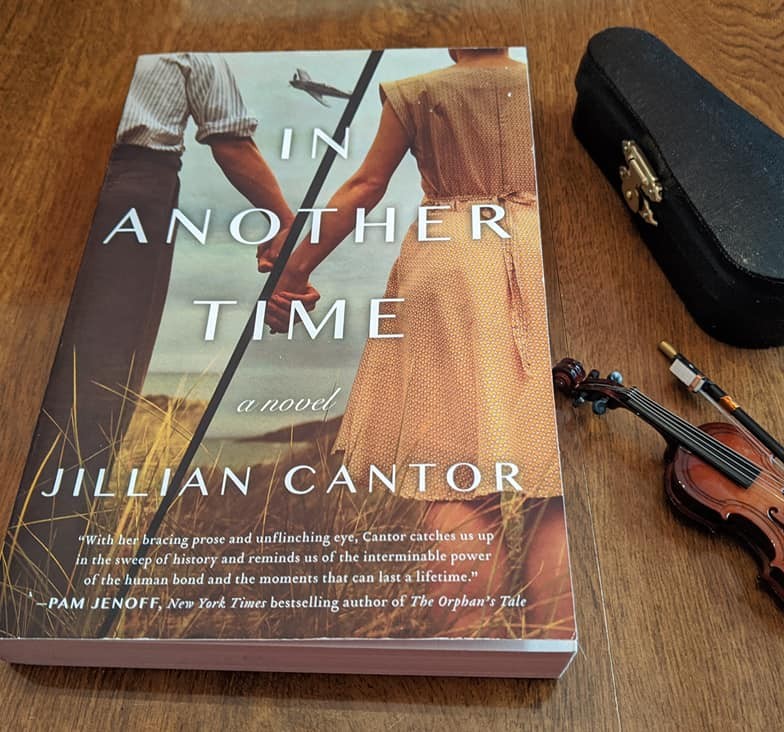
Mini Reviews - In Another Time by Jillian Cantor, The Roundhouse by Louise Erdrich, and Hotel on the Corner of Bitter and Sweet by Jamie Ford

More minis! And, all of these were excellent, all from my own shelves. Although Hotel on the Corner of Bitter and Sweet is an ARC, I didn't receive it from the publisher.


I just wandered around my house, looking for In Another Time in all the usual places for books I've read but not yet reviewed, and then it came to me . . . oh, I put it on the favorites pile. I loved In Another Time that much.

Hanna is Jewish; Max is not. When they fall in love in 1930s Germany, Max is worried about the growing anti-Jewish sentiment and Hitler's rising power. He wants to marry and leave the country. But, Hanna's musical education is too important to her and she's not concerned about Hitler. She thinks the Nazi party's rise is a passing phase.

In 1946, Hanna finds herself alone with no memory of the past 10 years of her life. Though she doesn't seem to know about it, the reader knows that there was a time portal in Max's bookshop. Did Max send Hanna into the portal and save her from the Nazis? If so, how did she lose her memory and what happened to Max? Why isn't he there with her?

Highly recommended - An utterly captivating and unique WWII story with a sci-fi twist. I went into the reading of In Another Time blind and was pleasantly surprised by the time travel aspect. I love a good time travel book. You don't know the truth of what happened till the end. Cantor kept me guessing all the way through the book.

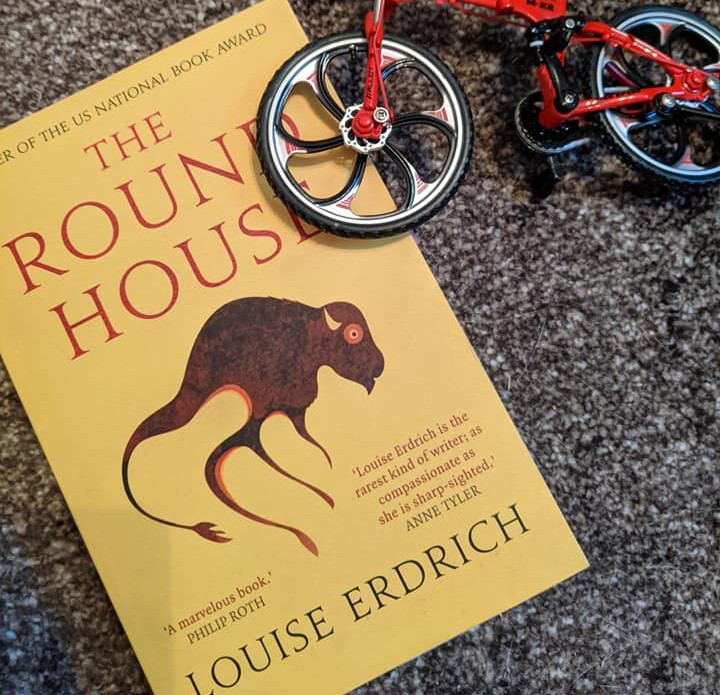
The Roundhouse by Louise Erdrich is a book that I bought and read at the request of a friend who wanted to hear my thoughts. I love it when that happens (a valid excuse to acquire a book I wanted to read, anyway). It's a book that was once offered to me for review but I presume I wasn't aware of how fabulous Louise Erdrich is, at the time.

When a woman is brutally raped and beaten, she is so traumatized and depressed that she can't talk about the rape and retreats to her bed. The police investigate but don't seem to be getting anywhere and her teenage son, Joe, is unwilling to accept the lack of progress.

Determined to solve the crime himself, Joe begins to investigate between biking around with his friends and working at his uncle's store.

Highly recommended - The crime is truly shocking but even more appalling is the fact that the raped woman is the wife of a judge and even he can't make sure that when a suspect is found he remains behind bars. Joe, meanwhile, is a fascinating character because he is so beautifully drawn. The story is told from his point of view and besides being very angry and confused about the crime and lack of progress by police, he's a typical teenage boy who is not a little obsessed with women and food, which took me back to the days when I had teenage boys of my own sticking their heads in the fridge all day long. I was very impressed by the authenticity of Joe's point of view.

My copy of The Roundhouse was published by Corsair, a British publisher. In the US, the publisher is HarperCollins and the cover is quite different.

Hotel on the Corner of Bitter and Sweet by Jamie Ford is one of those WWII books that I have wanted to read for years. Why didn't I get to it, before now? I have no idea.

The story of Henry Lee, a Chinese American, Hotel on the Corner of Bitter and Sweet goes back and forth between 1986 and the 1940s. In 1986, Henry finds out the Panama Hotel at the corner of Seattle's former Japantown has a basement full of luggage left there by Japanese-American citizens who were rounded up and sent to internment camps after the bombing of Pearl Harbor.

In the 1940s, Henry and Keiko Okabe, a Japanese American, are outsiders at an elementary school and lovers of jazz who become fast friends. When people begin to panic after Pearl Harbor, worried that Japanese Americans will side with the Japanese, Henry's father forces him to wear a button saying he's Chinese to prevent trouble with authorities. His father dislikes Japanese people and insists that Henry stay away from Japantown. But, Henry values his friendship with Keiko and wants to help her in any way he can.

Back in 1986, Henry gets permission to search through the luggage to see if he can find a prized possession that he gave to Keiko. Henry is widowed and was happily married but he has never forgotten Keiko. Will the discovery of the luggage lead Henry to finally seek out Keiko? What drove them apart, years ago?

Highly recommended - A lovely and, yes, bittersweet story about friendship, music, racism, and the power of memories. So lovely. I didn't realize Jamie Ford is such a romantic. I expected something a little different, less sweetly touching. I'm glad I finally got around to reading Hotel on the Corner of Bitter and Sweet and I will definitely read more by Jamie Ford.

©2020 Nancy Horner. All rights reserved. If you are reading this post at a site other than Bookfoolery or its RSS feed, you are reading a stolen feed. Email bookfoolery@gmail.com for written permission to reproduce text or photos.
Friday, February 09, 2018

More minis - Flowers for Algernon by D. Keyes, The Radium Girls by K. Moore, and Artemis by A. Weir

In my continuing quest to catch up with myself, I've sorted out three books that I purchased and decided to give them mini review treatment. I liked all three for dramatically different reasons.


I opted not to write a post about my 2018 reading goals but one of my goals is a continuation of my "one classic per month" goal for a third year. Flowers for Algernon by Daniel Keyes was my January choice.

Charlie Gordon has an extremely low IQ but a surprising amount of determination, so he's been chosen to be the first human in an experimental treatment. Only tried previously on mice (and not always with good results), the experimental surgery made a mouse called Algernon extremely smart. The book is told in journal form from Charlie's perspective as he goes through the surgery, quickly gains intelligence, falls in love, and then things fall apart.

I've seen a movie version of Flowers for Algernon, long ago, but this is my first time reading the book. All I could remember of the movie was that it was both moving and sad. And, as it turned out, the sadness toward the beginning almost overwhelmed me. Charlie has always been a happy man, in spite of his limitations. He has a job and people who watch out for him. But, after his surgery, he starts to become aware that people have been teasing him for years. Maybe they weren't his friends, after all.

At this point, my friend Kelly told me that it's one of her favorite classics. I was planning to finish the book, regardless, but I'm glad she gave me hope to help me push through the hardest part. Regardless of how it tugged at my emotions, I was really blown away by the writing. I knew the book was going to end sadly, all along. But, the way it was handled was perfect.

Flowers for Algernon is brilliant and heartbreaking and beautiful and awful and maybe even a little hopeful. And, definitely kind of deep, the way it makes you think about how we treat each other and how crucial friendship and love are to having a meaningful life. Highly recommended and a new favorite. I gave Flowers for Algernon 5 stars. I looked up Daniel Keyes and found that he wrote quite a few books, so I'm hoping to eventually find and read more of his work.

The Radium Girls by Kate Moore is even sadder than Flowers for Algernon because it's a true story. Subtitled "The Dark Story of America's Shining Women" -- the shining part is literal; they got radium all over their clothing and hair and faces, so they glowed in the dark. The Radium Girls is the story of women who painted watch dials and other instruments. Because they used paint brushes and the work was delicate, they used their lips to bring the brushes to a fine point each time they dipped into the paint. This meant they were actually ingesting little bits of radium all day, every day, at work. Because the paint had to be mixed from a powder, it also got all over their hair, clothing, and bodies.

At the time The Radium Girls took place, in the early 20th Century, radium was considered healthful. People drank radium concoctions and handled it without gloves, completely unaware of the damage it was doing to them. But, it didn't take long before the women at the first radium dial-painting establishment began to have serious health issues.

There were several companies involved in the painting of clock dials, over the time span covered. All went to great lengths to hide what they knew about the connection between the health problems their formerly-healthy and vibrant young female painters were experiencing (and then their deaths) and the paint they were using. And, the health problems were appalling. The vast majority of the early employees began losing teeth, getting infections in their jaws that would not heal, and even losing pieces of jawbone. Some had legs that shortened, giving them a dramatic limp, some developed back problems. All were in horrendous pain. When they died, their deaths were generally attributed to something entirely different from the actual cause. It took years and years, scores of deaths, miscarriages, and dismemberments, and a number of lawsuits before the surviving women successfully proved their case.

Highly recommended - While the descriptions of the health problems these young women experienced (and their equally horrific deaths) were heart-rending to read, The Radium Girls serves as an excellent reminder of why we have the "burdensome regulations" the current presidential administration is trying to do away with. When given the opportunity to do what's right, corporations do not regulate themselves but will fiercely fight to defend the bottom line, even to the extreme of letting people die to keep a company from losing money. It was particularly horrifying to find that even doctors were involved in the subterfuge. A heartbreaking read but an important one. It's notable that the author deliberately researched the individuals and described them in depth because she wanted to make it clear that they were living, breathing human beings. Getting to know them made it even harder reading about their deterioration, their hideous pain, and their deaths. I admire the author for that choice.

Artemis is the story of Jazz, a woman who lives on the moon colony Artemis. Her father is a welder and she's a smuggler. When she's offered a huge amount of money to sabotage four large machines, she agrees because she's perpetually broke -- her living quarters are so small they're known as a "coffin", a place to sleep and store her things with a low ceiling and a shared bathroom.

Basic storyline: Things go wrong, blah-blah, murder, danger, science stuff I didn't understand, everyone is going to die (literally, everyone on the entire moon colony). Will Jazz save the day?

Artemis is very entertaining (ignore the "blah-blah") but I didn't follow the science in Artemis as well as that of The Martian and I thought Jazz sounded more like a guy than a gal. In fact, I didn't realize Jazz was short for Jasmine for the first chapter or so, so I was picturing a male protagonist till I found out that was wrong. Jazz sounds a lot like Mark of The Martian -- lots of expletives. But, Artemis is a fun story and after a little initial boredom when the author was setting the scene, I really began to enjoy the book. At some point, it became can't-put-down exciting and I may have had a little reading hangover after the night I finished it.

Highly recommended - While Artemis didn't grab me from page one as The Martian did, I still found the idea of a moon colony captivating and hung in there. In the end, I liked Artemis enough that I wish I had my own copy to save for a reread. I read a borrowed copy. I just hope Andy Weir manages to vary his characterization a bit, next time out. There's only so much one can stand of protagonists who constantly swear. I did appreciate the fact that he tried to make his whip-smart, rebel character female but he should probably stick with males.

©2018 Nancy Horner. All rights reserved. If you are reading this post at a site other than Bookfoolery or its RSS feed, you are reading a stolen feed. Email bookfoolery@gmail.com for written permission to reproduce text or photos.
Thursday, February 01, 2018

The Dry and Force of Nature by Jane Harper

I got an Advance Reader Copy of Force of Nature by Jane Harper via Shelf Awareness after reading many gushing reviews, comments, and tweets about Harper's first release, The Dry. Knowing Force of Nature was the second in a series, I asked friends for advice about order. Did I really need to read The Dry, first? Would I miss important background that would likely feed into the next novel? I've read series books out of order, in the past. Sometimes it works; sometimes it doesn't. The advice I received was mixed but leaned toward the likelihood that I'd miss out if I didn't read The Dry, first, so I ordered a copy and have decided to review them together.

In The Dry, when Federal Agent Aaron Falk returns for his best friend Jake's funeral, it's his first visit to his hometown since he and his father were driven away. Luke, his wife, and son have been killed. But, did Luke murder his family and commit suicide or did someone else kill the family? Why was their baby daughter left alive but their son killed? Falk doesn't plan to stay in town to find out. But, then Luke's parents ask for help.

The title comes from the drought conditions in the area, as the story is taking place. Farmers are losing their livelihood because of the lengthy dry spell and nobody appears surprised that Luke may have killed most of his family. Since The Dry is the first in a series, you get to know Aaron Falk and the story of how and why he and his father were driven out of town in tandem with the unfolding investigation.

While there were some moments when I felt myself pulled briefly out of the story because I thought a particular element was weak, those were rare moments and the book was almost impossible to put down. I liked Aaron Falk and that feeling grew throughout the reading. And, I loved the way the author steered you toward believing someone was guilty, eliminated them entirely, and then did it all over again. The ending was surprising, tense, exciting, and believable. An excellent read. The book is set in rural Australia, west of Melbourne, and the setting is almost a character in itself. I love a very vivid setting, so The Dry was a 5-star read for many reasons. Highly recommended.

In Force of Nature, the weather has taken a 180° turn. It's winter, now. Months have passed since Aaron Falk solved the mystery of his best friend's death. He has a new partner named Carmen and the two of them have been working with Alice Russell to uncover money laundering at her place of employment. Alice has disappeared while on a team-building hike that lasted three days. The other 4 women made it out of the bush alive but some were injured. They claim Alice took her phone and hiked out on her own after they became lost and spent the night in a cabin. But, did she? Is it possible her disappearance is related to the investigation into the company's finances? A serial killer used to operate in this part of the Giralang Ranges and his son has disappeared. Could he have something to do with Alice's disappearance? Will she be found dead or alive -- or, not at all, like one of the victims of the serial killer?

I had two concerns when I first started reading Force of Nature: 1. Will it be as good as The Dry or a disappointing sophomore effort? and 2. Can she pull off yet another "5 women go into the woods and only 4 come out," storyline? It's a plot that has been done to death and I was definitely worried that it would be same old, same old.

Well, good news on both counts. I thought Force of Nature was actually even better than The Dry. As with the first novel, I found the book almost impossible to put down. The Giralang Ranges are, as I suspected, based on The Grampians (a few hours' drive from Melbourne, where Falk is based -- you can take a bus tour into The Grampians from Melbourne) and, again, the setting is practically a character unto itself. Whereas I felt the intensity of the heat and craved water while reading The Dry, I shivered along with the characters and grew weary of the rain in Force of Nature.

Highly recommended and I absolutely cannot wait to see what Jane Harper comes up with, next. I'm not a big mystery fan but I am fond of Aaron Falk, love the Australian settings, and find Harper's writing both competent and believable. I liked where she took her main character emotionally and thought Carmen was a nice addition as a sidekick.

Note on order: Force of Nature stands alone fine, but I'm glad I read the two books in order because I do believe that the events of the first book feed into the second one, mainly in the way of character development. There are some references to Falk's father, his burned hand, and his hometown. However, the storyline in Force of Nature doesn't depend in any way upon events in The Dry. So, no worries if you can't read The Dry, first. You can always catch up, later.


©2018 Nancy Horner. All rights reserved. If you are reading this post at a site other than Bookfoolery or its RSS feed, you are reading a stolen feed. Email bookfoolery@gmail.com for written permission to reproduce text or photos.

Wednesday, July 05, 2017

Mini reviews - On Tyranny by T. Snyder, Simon and the Homo Sapiens Agenda by Becky Albertalli

It's time to play a little catch-up and, since I've already reviewed almost all of the ARCs I've read, I'm going for mini reviews of those I have not. Afterlife by Marcus Sakey is the only remaining ARC I need to review and I'll give it a full post.

On Tyranny: Twenty Lessons from the Twentieth Century by Timothy Snyder is a book that is meant as a guide for how to behave with an authoritarian in power. While the author didn't mention our current American president by name a single time, he did refer to him on occasion in generic terms. Some examples of the "lessons":


  • Do not obey in advance.
  • Defend institutions. 
  • Beware the one-party state. 
  • Believe in truth. 
  • Contribute to good causes.
  • Be kind to our language. (This chapter includes an exceptional list of recommended reading material to offer additional perspective, as well as some advice readers will love: "... get the screens out of your room and surround yourself with books").
  • Be as courageous as you can.


Before I read On Tyranny, I read some reviews at Goodreads and discovered that it made a few readers burn with anger at the perceived comparison of our current president to the well-known German authoritarian who slaughtered 6 million + people. So, I was watching for direct comparisons. There are none. Not one. There may be comments about behaviors that the latter exhibited and the former is now also showing, but no claims that one is becoming the other. I watched an interview with the author (on video; unfortunately, I don't recall which organization it was that interviewed Snyder, but I expect there are a few available online) and he was pretty clear that comparing 45 to a specific tyrant was not his goal. I highly recommend looking up interviews with Snyder if you intend to read the book.

While not the easiest read, I thought Snyder had some excellent advice, offered from a purely historical perspective, and I plan to reread it soon to help solidify what I learned. It's a quick read, just 126 pages and the book is smaller than a mass market paperback.

Highly recommended to those concerned about today's political climate and certainly not limited to one or the other side. It does help if you take off your red- or blue-tinted lenses and try to remain neutral. Read it for a viewpoint colored by history, not politics.


Simon vs. the Homo Sapiens Agenda by Becky Albertalli is the story of a teenager who has developed an email friendship with one of his classmates. He doesn't know who the classmate is; all he knows is that they're both gay and talking to the friend he calls "Blue" is helping him come to terms with his homosexuality. What he wants most is to find the strength to come out.

Unfortunately, a fellow by the name of Martin has gotten a peek into Simon's email account and now he's blackmailing Simon. If Simon won't help Martin get together with the girl Martin admires, he'll spill the beans about Simon's sexuality. Will Simon summon the courage to come out to more than an anonymous friend? Will Martin give away Simon's secret before he's ready? Who is Blue?

I loved absolutely everything about Simon vs. the Homo Sapiens Agenda. It's a good book that's well paced with a lot going on, great characters, a mystery (Who is Blue?) and high stakes. It's also a book that treats its characters and their emotions with tremendous respect.

Highly recommended - The timing was pretty awesome. I chose Simon, etc. because it was calling to me without considering the fact that I was starting a book with an LGBTQ character right as Gay Pride Month was beginning. It wasn't till I was in the middle of the book that the timing occurred to me. At any rate, it's a good read for any time of the year.


©2017 Nancy Horner. All rights reserved. If you are reading this post at a site other than Bookfoolery or its RSS feed, you are reading a stolen feed. Email bookfoolery@gmail.com for written permission to reproduce text or photos.

Monday, June 06, 2016

Aim True by Kathryn Budig, The Secrets of Flight by Maggie Leffler, and A Tale for the Time Being by Ruth Ozeki

I've got to quickly whip out a few last reviews (and will also be posting a separate review that I've been working on for days . . . you'll find out why) because I'm about to go on a blog holiday. More on that, later. First, let's talk about books. All three of these are books that I highly recommend.

Aim True by Kathryn Budig doesn't seem to be getting a lot of attention and that's a shame because it is a wonderful book. Subtitled, "Love Your Body, Eat Without Fear, Nourish Your Spirit, Discover True Balance!" the amazing thing about Aim True is that the author actually does more than just talk about all of the items in the subtitle. She illustrates.

A combination memoir, exercise book, cookbook, and guide to meditation, Aim True begins with an introduction that describes what the author means by the words "aim true" and then goes on to talk about loving your body. She relates her own frustrations about her body, which I found both surprising (because she's pretty much perfect, if you ask me) and amazingly humble. In fact, one of the things I absolutely adored about the book was the author's humility throughout. Similar books are often written with an "I'm so wonderful!" tone. Not this one.

Kathryn Budig is a yoga instructor, so there is a section dedicated to yoga poses. She's a clean eater so the section on healthy recipes is almost entirely free of dairy and gluten, and she shares how she's found balance in her own life, along with advice on how to meditate. The book is beautifully and creatively illustrated. It's a gorgeous book with something for everyone seeking to improve life.

The only problem I found with this book was that some of the wording in the yoga descriptions and meditation is going to offend people who are afraid that they'll turn Hindu if they repeat certain words. But, you can always alter the wording. That's what I would do. The bottom line is that Aim True is one of the best, most well-rounded guides to health that I've ever read and I highly recommend it. I've done yoga with another book propped open, many years ago, and it wasn't easy so you might want to get some help (a buddy to read through the exercises with you) or view some of her yoga videos online, before doing the yoga. Everything else is self explanatory.

We only managed to try one of the recipes, incidentally ("Quinoa Egg Power Bites"), although we fully intend to do more. We had mixed results. The flavors appealed to my husband but the quinoa bites had a muffiny texture and I told him I kept biting into them and expecting a sweetness rather than the spicy flavors. I think I could get used to them, though. I didn't dislike them; they were just surprising.

The Secrets of Flight by Maggie Leffler is the story of an elderly woman named Mary Browning who was in the Women Airforce Service Pilots of WWII (WASPs). She has kept her story secret, including the fact that she used to go by an entirely different name. One evening, a young girl named Elyse shows up at the library to join her writers' group, a group that consists entirely of other elderly men and women. Elyse reminds Mary of her beloved sister, Sarah, who died long ago. And, Elyse is curious about Mary.

When Elyse offers to help Mary type her memoir, Mary realizes she's finally ready to share the story she thought she would never tell.

I had an afternoon alone, yesterday, and I fell in love with The Secrets of Flight immediately, so I took advantage of the quiet time to bury myself in the book. I got so caught up in the story, in fact, that I forgot to eat lunch and had to finally give in at about 4:45 and saunter out to the kitchen. I love it when that happens.

The Secrets of Flight is another book that I highly recommend. I'm going to share what I wrote at Goodreads upon closing the book:

There's a twist in this book that felt a little too convenient but it made for the most beautiful, uplifting ending. I loved the relationship between Mary and Elyse, loved the honesty of their frustrations (so true to life), loved learning the history of the WASPs and adored the way Mary's friends rallied around her when she really needed them. A lovely story. 

A Tale for the Time Being by Ruth Ozeki is another book that I adored. I've put off writing about it because it's a little hard to describe, even in my head, but I'll try.

When Ruth finds a Hello Kitty lunchbox sealed inside two plastic bags on the shore of her Canadian island home, she's curious about its contents. Inside, she finds the diary of a 16-year-old Japanese girl named Nao (pronounced "now") and a another small book hand-written in Japanese. Suspecting the diary is part of the debris from the tsunami of 2011, Ruth begins to read the book and finds herself so drawn into Nao's story that she begins to believe it's still happening, that Nao is considering suicide and Ruth needs to find a way to stop her.

Nao spent her entire childhood in the United States, till her father lost his job and was forced to return to Japan. In Tokyo, still unable to find a way to support his family, her father has fallen into a deep depression and attempted to take his life while Nao is an outcast at school, brutally bullied. She plans to take her own life, as well, but first she feels obligated to write her 104-year-old great-grandmother's story, a tale of WWII, tragedy and how she became a Zen Buddhist nun.

There is, of course, a lot more to the story. The journal written in Japanese must be translated, Nao's story slowly unfolds as Ruth reads it, and there's a touch of magical realism and some hints of Nao's future. At times, the story is so sad that it left me feeling gloomy but it ends on an upbeat note. A Tale for the Time Being is just such a spectacularly unique book that you have to read it to understand its complexity. And, really, you must if you haven't already.

©2016 Nancy Horner. All rights reserved. If you are reading this post at a site other than Bookfoolery  or its RSS feed, you are reading a stolen feed. Email bookfoolery@gmail.com for written permission to reproduce text or photos.

Thursday, May 21, 2015

Sleepy Puppy and Sleepy Kitty by Sterling Children's Books


Sleepy Puppy is a board book without any credited author. Instead, what the publisher apparently did was purchase images of puppies from various sources to fit the text. Interesting. The result is a book that shows a variety of different puppies rather than a single puppy character. The text is about a puppy who needs to go to bed. But, first, he wants to play, get a drink and a tissue, check for monsters under the bed -- in other words, all the things little kids do to put off going to bed. It's adorable. A peek inside, with apologies for the image quality (I realized I needed to photograph the interior as I was packing and took them rather hurriedly):


Eventually puppy gets comfortable and falls asleep and the final image in Sleepy Puppy shows a little boy sleeping next to a puppy.

We spent last weekend visiting family in New Jersey and I took Sleepy Puppy along with me for our granddaughter. I read it to her and helped her turn the pages when she played with it on her own. She absolutely loved it. Her family has a dog, so I thought she'd prefer Sleepy Puppy to Sleepy Kitty, the companion board book (which I'm saving for my younger son's possible future children, since he's a cat lover). Sure enough, she was drawn to the photos of puppies. She looked them over, patted them, and smiled.

Sleepy Kitty is much the same as Sleepy Puppy but with slightly different wording and, of course, kitties featured instead of puppies.


As in Sleepy Puppy, the kitties (mostly kittens, but not all) resist going to bed, ask for milk and a softer pillow, then eventually give in and go to sleep. The final image is, again, a photo of a human sleeping with a kitty.


Both highly recommended - While the books are similar enough that you could easily choose just one book based on your animal preference, there are slight differences in the wording. Both Sleepy Puppy and Sleepy Kitty are exceptionally cute books in which the text and photos illustrate the typical resistance to bedtime most children go through. They're utterly charming and Sleepy Puppy definitely passed the Small-Child Approval test. I'm sure Sleepy Kitty would have, as well, if I'd brought it along. Granddaughter actually favored Sleepy Puppy over the ABC book I brought along (also a board book). She liked both but spent more time pondering the puppy faces than any particular page of the ABC book.

©2015 Nancy Horner. All rights reserved. If you are reading this post at a site other than Bookfoolery  or its RSS feed, you are reading a stolen feed. Email bookfoolery@gmail.com for written permission to reproduce text or photos.

Wednesday, October 08, 2014

Catch-up #1: Of Mice and Men by Steinbeck, A Survival Guide for Life by Grylls, Tomorrow We Die by Grady

I had such a fantastic reading month in September that my sidebar has been taunting me for ages. Yes, true, I am under no obligation to write about every book I read (I do skip a book if I feel like there's nothing to say and the book in question is from my personal library). But, the whole point of blogging is to keep a record of what I've read and my thoughts about each of those books so I'm going to do some catch-up posts. The following were either recently purchased or on my home shelves. I absolutely loved and highly recommend all three.

Of Mice and Men by John Steinbeck - I just found out I'm not the only person in America who missed out on reading and discussing Of Mice and Men in school, yesterday! Whew! Good to know.

Short version of the storyline, lacking spoilers: Two friends travel around working odd jobs together. Lennie is intellectually challenged; George watches out for his friend. When they end up in trouble -- which invariably happens because Lennie has difficulty understanding boundaries and doesn't know his own strength -- George takes charge of their escape. When Lennie does something so horrific their lives are both put in danger, what will George do?

I love Steinbeck. For such a small book, Of Mice and Men certainly packs a wallop. Definitely one of my favorite reads of the year. I wish I'd read it in a group setting. When I closed the book, I was dying to discuss the moral dilemma.

I love Bear Grylls and have been thinking, "I need to read one of his books" for quite a while. So, when I indulged in some stress shopping in September I went in search of a book by Grylls. Any title would do -- and since I was looking at a discount website I took what was available.

A Survival Guide for Life by Bear Grylls is about achieving your goals, with focus on paying attention to what makes you happy, maintaining enthusiasm, dealing with adversity, working on strength of character -- really great advice. The author refers to the book as "self help" within its text. I'm not generally a fan of self-help because I've found the majority of such books are not particularly helpful or their effects are short-lived. However, I do love books on positive thinking and have several favorites that I periodically reread when I need an upper.

A Survival Guide for Life definitely falls into the "uppers worth rereading" category. Although much of Grylls' advice is common sense or already in practice here, there is still plenty to think about and his infectious can-do attitude just can't be beat. I haven't yet talked my youngest into reading the book because he's been reading business books recommended by his father while working on his second degree but I think there are aspects to A Survival Guide for Life that are particularly relevant to young people on the verge of entering the work force so I hope he'll find the time to read the book soon. In the meantime, I may even give it a second go. A Survival Guide for Life is definitely a book I plan to reread repeatedly. And, I would especially recommend it for those who need a little mental boost. It would also make a fabulous graduation gift. Bear Grylls is truly an inspiration.

I've already talked about Tomorrow We Die by Shawn Grady a bit, here, but without describing the storyline.

Jonathan Trestle is a paramedic working for a private ambulance service. When he's called to a cardiac arrest, he manages to revive the patient, an unkempt man who may have overdosed. Before the patient slips back into unconsciousness, he hands Jonathan a note and tells him to give it to Martin. Of course, Jonathan has no idea who Martin is.

There is so much going on in this book that I realize now why I didn't post a synopsis, before. First, there's the patient with the note. Jonathan tracks down the patient and goes in search of Martin. There's an old girlfriend Jonathan keeps running into; they have a lot of baggage but the mutual attraction is still there. His alcoholic dad is fading. Jonathan has flashbacks to his mother's death. And, when the ambulance company gets after Jonathan for not meeting the city's standard response time because there aren't enough ambulances to cover the quantity of calls coming in, he stumbles across a corporate cover-up that puts his life (and the lives of several other people) in danger.

I have a feeling there's more that I've forgotten but the bottom line is that Tomorrow We Die is action-packed, well paced and the pages absolutely flew. I loved this book. My only problem with it was that it could be a little too descriptive. But, that's something you just have to be prepared for when you're reading a book written by a paramedic. The things they see are not pretty. I'm currently reading Bringing Out the Dead by Joe Connelly (yet another novel written by a paramedic) and it is equally stomach-turning, at times, but I love this stuff. Tomorrow We Die was definitely the most exciting novel I've read by a paramedic, so far. We'll see how the next one goes.

©2014 Nancy Horner. All rights reserved. If you are reading this post at a site other than Bookfoolery  or its RSS feed, you are reading a stolen feed. Email bookfoolery@gmail.com for written permission to reproduce text or photos.

Wednesday, April 16, 2014

50 Children by Steven Pressman, The Accidental Caregiver by Gregor Collins and Children's Wartime Diaries, ed. by Laurel Holliday

I've decided to combine 50 Children and The Accidental Caregiver with Children's Wartime Diaries in one post because they have WWII as an element in common. 50 Children: One Ordinary American Couple's Extraordinary Rescue Mission into the Heart of Nazi Germany by Steven Pressman is about the rescue of 50 Jewish children from Vienna, Austria after the Anschluss (the peaceful but harrowing occupation of Austria by Nazis).  The Accidental Caregiver is a memoir about an actor who became one of several caregivers to an elderly Jewish woman who escaped Vienna, also after the Anschluss.  So, they have escape from the Nazis in common. The third book is mostly about children who were not so fortunate. Although they have the war in common, they're entirely different books.  I just thought it was very cool when I realized Maria Altmann, the elderly woman, was also a Viennese Jew, after reading 50 Children and then it occurred to me that this would be a perfect time to mention Children's Wartime Diaries. I love it when there's an unexpected tie between reads.

50 Children (an ARC received from HarperCollins) is one of the best-written and most surprisingly gripping books set during WWII that I've read in a while. 

Gil and Eleanor Kraus were living a fairly quiet life in Philadelphia, Gil as a lawyer involved in charitable organizations, his wife a socialite who adored their two children. When Gil was approached by the head of a Philadelphia Jewish organization with the request to head up an effort to rescue 50 children from Nazi Germany, he said "yes" without even giving it any thought. Eleanor was heavily involved as she had to persuade a number of people to divulge deeply personal information necessary for the affidavits needed to prove that there were people able and willing to care for the children when they arrived in the U.S.  

After the Anschluss, it became clear that children in Austria were at even greater risk so the origin changed but not the mission. 

Gil, being a lawyer, realized that the only way the rescue could possibly occur during a time when immigration was strictly limited would be to stick to the letter of the law. Consequently, there's a great deal about the red tape, the detailed paperwork and the people Eleanor and Gil Kraus had to deal with. So, I was a bit surprised that I never found 50 Children dull.  Instead, I really found it quite gripping and beautiful but a little sad -- sad because not every child who applied for a spot could be taken, sad because the heads of other Jewish organizations who had failed to do similar were envious enough to speak out against them, sad because you can't read about those left behind without knowing the fate of the majority. 

But, how beautiful the stories of the children themselves, told toward the end of the book, about how much fun they had during their summer together at a camp building and how lovely the reflections of the rescued children, now grown, still living.  And, how amazing that 3 Jewish adults (they were accompanied by a pediatrician, who actually fell in love in Berlin . . . that's a great story, as well) were willing to risk their own lives, going into Nazi-occupied nations to interview children and parents, dealing with paperwork and interviews to obtain visas, and then accompanying the children from Vienna to Berlin and onward to the U.S.

There is a photograph at the head of each chapter and my favorite is a photo of Gil Kraus reading to 4 of the children, with the following quote:

While the number 50 is but a small drop among the hundreds of thousands of lives yet to be saved, still in all each life is worth a world unto itself.  ~ Gil Kraus

Highly recommended - I get a little soppy just thinking about this book. It is a heroic tale, brilliantly researched and told in compelling narrative that makes the story feel quite tense, even though you clearly go into the reading knowing the outcome. 

The Accidental Caregiver: How I Met, Loved, and Lost Legendary Holocaust Refugee Maria Altmann by Gregor Collins is not merely about an escape from Austria, although Maria Altmann's escape story is told. Rather, it's about how Gregor, an actor, became one of Maria Altmann's caregivers, his time working with her, and his journey abroad after her death. 

When I was updating my progress reading The Accidental Caregiver -- a rare e-book purchase whose reading took me a few days because my iPad is crashing frequently -- I glanced across a few of the reviews at Goodreads and found that some people considered the author egotistical. I didn't feel that way at all, although there are moments that Maria humorously whips her head to the side to indicate that she wants to see Gregor's handsome profile.  Even when those moments happen, they're about Maria rather than the author.  At least, that's how I saw it.  

Maria Altmann was in her 90s when Gregor Collins became one of her caregivers.  She was quite a feisty, vigorous woman but during the 3 years Gregor worked for her she went into a sharp decline and passed away. The author had dated a number of shallow women who confused him; he wasn't even sure what he was looking for in a woman.  But he fell in love immediately with Maria's fearless, happy-go-lucky, sometimes raunchy and definitely life-affirming ways.  Sometimes Maria could be a bit shocking but it's the fact that Gregor and Maria both felt an immediate rapport that makes the book such a joy.  

Highly Recommended - I loved The Accidental Caregiver enough that I deliberately dragged out the reading a bit (aided by regular iPad crashes) and found both author and subject charming in their own ways. There are some misused words but I loved the light writing style and, no, I didn't feel like the author was uncomfortably self-centered. I gave it a 4.5/5 at Goodreads -- not much taken off for minor editing problems. The Accidental Caregiver is, after all, a memoir so it's not just about Maria Altmann but about the author's feelings about her as the author cared for her and then (briefly) his couch-surfing journey around Europe.  Loved it and wish I had the chance to know Maria. The book is currently being made into a film, which I hope will be widely released so I'll have the opportunity to see it.


Children's Wartime Diaries: Secret Writings from the Holocaust and WWII, ed. by Laurel Holliday, is a book I've meant to mention and which ties in to the other two books pretty well.  It's a set of diaries (some complete, others partial) written by children during the Holocaust.  I have the full versions of some of them on my shelves. 

I read Children's Wartime Diaries a couple months ago.  The surprising thing about the writings in Children's Wartime Diaries is that most of them (with only a couple exceptions) are every bit as well-written as Anne Frank's diary.  Some are even more jaw-dropping. Such skilled writing from children so young!  Many of the children died, their writings retrieved later by a friend or relative, so it's a heartbreaking read and the cruelty they experienced is . . . well, it leaves me speechless just to think about what some of them endured. Two diaries written by British youngsters lend a little levity to the book (those two are both on my shelves in complete form) although they do eventually begin to feel the full impact of war on their own home turf. 

Again, highly recommended - Surprisingly mature writing in most cases but definitely a rough read because of the horrors experienced by the children who wrote the entries in this book. I cried a lot while reading Children's Wartime Diaries but at the same time I was mesmerized by some of the writing. There were only a couple excerpts that were simplistic enough to feel as if they matched the age of the writers. If you were captivated by Anne Frank's diary, you really must try to find a copy of Children's Wartime Diaries.  I bought my copy secondhand and I'm pretty sure it's no longer in print, but there were plenty available. Prepare to have your heart broken if you do chase down a copy.


©2014 Nancy Horner. All rights reserved. If you are reading this post at a site other than Bookfoolery  or its RSS feed, you are reading a stolen feed. Email bookfoolery@gmail.com for written permission to reproduce text or photos.

Thursday, June 06, 2013

A few minis: The English by Matt Rudd, The 5th Wave by Rick Yancey and The Great Gatsby by F. Scott Fitzgerald


This is quite a hodge-podge of titles but all were purchases and I don't feel like dedicating an entire page to any of them, even though I enjoyed them all.  

I purchased The English: A Field Guide by Matt Rudd when I got to Victoria Station in London and realized I didn't have any reading material for the train trip to Dover.  Unacceptable!  Must have reading material!  So, I grabbed The English and, since it was one of the "Buy 1, Get 1 Half Price" books and so was The 5th Wave, I threw in the Yancey book for good measure.

The English is sarcastic fun, a book that observes and pokes fun at English habits and attitudes in the kitchen and garden, on the sofa, in the office, on the commuter train.  It talks about pubs and clubs and shops, sporting events, the motorway, the beach and even the bedroom. 

I love the cover blurb:  

"An opportunity for the English to laugh at themselves and to show everyone else how mad and brilliant we are."
--Jeremy Clarkson

Spot on, Jeremy.  Except the problem with the rest of us is that some of that lingo doesn't translate.  I could have used a British English dictionary.  Y'all do love your slang in the UK.  But, I made sense of most of The English and it made the train trip out to Dover go quickly.  

On the way back, I didn't get to read because I was distracted by the adventurers across the aisle. One fellow kept showing the others photos of the time he had to dig himself out of a snow cave and talked about how difficult it was to pull himself up out of a crevasse.  But, at least his team had practiced for possible falls into crevasses by building a climbing area in the local garage.  You so wish you could have eavesdropped with me, don't you?

The 5th Wave by Rick Yancey was on my wish list because my friend Tammy gushed about it and it's getting very positive reviews.  

An alien invasion has wiped out most of the Earth's population in 4 separate waves.  Cassie has been alone for a while, living in the woods with occasional runs into town for food and water, knowing that even if there are any remaining humans it will be almost impossible for her to know who is human and who is not.  She must stay alone and trust no one.  But, how long can that last?

Private Zombie is being trained with a team of children. Nugget, the smallest, is so little he can't become an officer for another two years after training.  Zombie likes little Nugget and feels protective of him.  When the team is sent out on its first mission, they discover something sinister and realize the 5th Wave they've been waiting for has already begun.  Zombie realizes he must go back for Nugget.

I love dystopian and apocalyptic books (aliens or otherwise), so it's only natural that I expected to enjoy The 5th Wave.  And, I did.  I liked the fact that the author tried to turn the whole alien-invasion concept on its head with references to movies and books in which, says the narrator, everyone got it wrong because there's no scattered group of humans that will band up to save the day.  I guess we'll find out if that's the truth in the next book.  The 5th Wave stands alone and is comfortably wrapped up, but it will still have you bouncing in your seat like popcorn, wishing you could get your mitts on the next book.  Assuming you like that kind of thing.  It's not great literature, but The 5th Wave is very well-written, stunningly plotted, action-packed, scary fun.  I loved it.  

Speaking of great literature, The Great Gatsby by F. Scott Fitzgerald is right up there.  I've actually attempted to read it twice and couldn't get into it.  There was something about the intro that threw me.  But, the third time I had no problem.  I haven't been able to find my elderly copy of Gatsby, so I wandered into a bookstore in Uxbridge (again, in the Greater London area) after we hiked out to the Battle of Britain Bunker.  My feet needed a break, so I let the guys wander off to Sainsbury's without me and sat happily reading and swinging my feet on a nearby park bench.

All of that goes to say, this time around The Great Gatsby really grabbed me and, even though it's tragic and I adore sweetness and light, I loved it.  I'm pretty sure everyone on the planet knows what it's about so I won't bother going into that.  What I will say is that when I closed the book, I wanted to talk about it.  I didn't love it as much as my first Fitzgerald, This Side of Paradise, but I was still astounded by Fitzgerald's mastery of the language and the way the narrator, Nick Carraway, made me see a tragic affair and overblown desperation as a story with more heart at its core than I'd have expected.  

At any rate, I'm glad I bought a second copy if only because the print is much larger than my older one.  I like the cover, too, because glancing at the costumes helped me visualize the opulence. The Great Gatsby display in the Harrods' windows might have helped, too, but Husband kept dragging me down Sloane Street to get home, at night, instead of past Harrods. So it wasn't till our last evening that I finally managed to photograph those cool costumes.


This one rotated:


Bottom line:  Thumbs up to The Great Gatsby, loved living through the alien invasion in The 5th Wave, and the English, as described in The English, are indeed mad and brilliant.  I really enjoyed my vacation reading and highly recommend all three!

©2013 Nancy Horner. All rights reserved. If you are reading this post at a site other than Bookfoolery  or its RSS feed, you are reading a stolen feed. Email bookfoolery@gmail.com for written permission to reproduce text or photos.

Tuesday, January 22, 2013

Mini reviews - Titanic Remembered by Alan Ruffman, Wall and Piece by Banksy and An Unexpected Angel by Janet K. Halling

Time for a few more quickie reviews.  All of the following were recently added to my home library.

Titanic Remembered:  The Unsinkable Ship and Halifax by Alan Ruffman is the official guide and souvenir book from the Maritime Museum of the Atlantic.  I haven't been there; it's just one of those books that popped up in the recommendations at Paperback Swap when I was looking up other Titanic titles, last year.  Because it's a guide book, Titanic Remembered is quite thin at 70 pages but I must say I was totally impressed.  Titanic Remembered is loaded with photographs and tells the story of the Titanic from the Halifax, Nova Scotia end of the story.  
Since Halifax is the place from which recovery ships were sent and where the bodies were buried (those that weren't buried at sea, that is), a good portion is about the process of recovery, identification and burial of bodies.  It was a lot more complex than I'd ever considered.  There are some interesting stories about individuals, both among the perished and survivors (not necessarily the most commonly described victims and survivors) and a few unique tidbits about the collection of souvenirs by those involved in the recovery efforts, as well as a few illicit photos.  Photos of bodies and/or the unloading of them was strictly forbidden but people are sneaky devils.

I found Titanic Remembered surprisingly gripping and the book definitely piqued my interest in the maritime museum.  Highly recommended to those who are not squeamish.  There are a couple photos of dead bodies . . . only a couple.  

Wall and Piece by Banksy was a gift to myself -- you know, one of those cases of, "Three gifts ordered and one tossed in the cart for myself."  For those who are unfamiliar with Banksy, he's a "street artist" from England who uses pre-made templates to quickly paint his works of art on various walls, bridges, billboards and other surfaces.  Since graffiti is considered an eyesore and is often illegal, most of his artwork has been quickly washed away.  I thought it would be fun to get a book of photographs of Banksy's art -- and it is definitely art, not just a bunch of messy fat lettering, like you often see under bridges and on the sides of trains.
Since this is a book written by Banksy, there is also some text.  Unfortunately, the text doesn't lend a lot of insight into the artist and/or reveal context for the vast majority of the paintings.  However, there was enough to satisfy me.  I don't necessarily agree with Banksy's philosophy that if someone advertises it's a one-way street and people have the right to respond (by painting a response directly on the billboard), but I learned a little about why he paints certain images like rats and some of the meaning behind the themes in his artwork.  As the title indicates with a cute bit of word play, he heavily emphasizes war and peace.   Occasionally, I didn't get what he was trying to say and those were the times I yearned for a bit more text to explain what Banksy was attempting to portray.  But, in general, I loved Wall and Piece.  If you're a Banksy fan, Wall and Piece is worth owning.  Highly recommended with a warning that those who are picky about grammar may occasionally cringe.

Quote on the back of the book:  "There's no way you're going to get a quote from us to use on your book cover."  -- Metropolitan Police spokesperson

An Unexpected Angel by Janet K. Halling is a drawing win from Holly at 2 Kids and Tired Books.  It's a Christmas book that plays on the Dickens classic, "A Christmas Carol" and the movie It's a Wonderful Life.  

Ellie hates everything about Christmas.  After working late on Christmas Eve, she stops to pick up some groceries and snaps at the clerk who attempts to engage her in conversation.  She's not interested in talking.  She just wants to be alone.  

But, the clerk turns out to be an angel with an unexpected surprise in store for Ellie.  Instead of the quiet Christmas Eve she's become accustomed to, she is tossed into the past.  Ellie doesn't stay in one time period.  Just as events begin to resolve and her purpose clarifies, she's yanked from one time period and flung into another.  You never know where Ellie will end up next and the reasons she's tossed about don't fully come together until the end, although it's made clear, early on, that Ellie's hatred of Christmas and drive are related to a tragedy in her past.  

I absolutely loved An Unexpected Angel.  When I first began the reading, I thought it was going to be a typical, sappy Christmas story, but that thought only lasted a handful of pages.  While the theme was common, I absolutely loved the sensation that one was traveling through time in An Unexpected Angel and I found the resolution deeply meaningful.  One for the keeper shelves, a lovely little Christmas story with heart.  Keep tissues handy when you read this one.  Highly recommended

I gave all three of these books 5 stars at Goodreads. 

On an unrelated note:  I have no idea how to resolve the problem with those huge gaps between paragraphs of text, one of the new problems with the updated Blogger interface.  There are simply times I cannot remove air space, even by going into HTML mode, where it ought to be apparent that there's a large gap.  If you're aware of a solution, please let me know!


©2013 Nancy Horner. All rights reserved. If you are reading this post at a site other than Bookfoolery and Babble or its RSS feed, you are reading a stolen feed. Email bookfoolery@gmail.com for written permission to reproduce text or photos.