Showing posts with label Bantam Books. Show all posts
Wednesday, April 17, 2019
The Awakening by Kate Chopin
There were strange, rare odors abroad -- a tangle of the sea smell and of weeds and damp, new-plowed earth, mingled with the heavy perfume of a field of white blossoms somewhere near. But the night sat lightly upon the sea and the land. There was no weight of darkness; there were no shadows. The white light of the moon had fallen upon the world like the mystery and the softness of sleep.
~p. 35 of The Awakening
Edna Pontellier is spending a lazy summer in her family's cottage near the beach at Grand Isle in Louisiana. Her children are mostly watched by an unreliable servant (the term used to describe this woman is archaic and, according to the site where I looked it up, now considered offensive) while Edna spends the bulk of her time hanging out with Robert, a single man who is around her age, talking, taking walks or listening to music, wading into the ocean. She is learning how to swim but is not quite comfortable going far out into the water and has a frightening experience, at one point.
Meanwhile, Mr. Pontellier spends most of his time either at his club or ignoring everyone, especially his wife. He's disinterested in her until and unless she steps out of line.
"Sometimes I am tempted to think that Mrs. Pontellier is capricious," said Madame Lebrun, who was amusing herself immensely and feared that Edna's abrupt departure might put an end to the pleasure.
"I know she is," assented Mr. Pontellier; "sometimes, not often."
~p. 37
Nobody is bothered by the fact that a married woman is publicly spending her time with a single man. The neighbors all know each other, both through the proximity of their vacation homes and socially, when they're back home in New Orleans. Edna's clearly a daydreamer and Robert is willing to listen to her flights of fancy. She's lightened by his presence.
When she and Robert stepped into Tonie's boat, with the red lateen sail, mostly spirit forms were prowling in the shadows and among the reeds, and upon the water were phantom ships, speeding to cover.
~p. 51
But, then Robert abruptly decides to go and seek his fortune with some friends when a business opportunity in Mexico arises. After he leaves, Edna is lost. She is in love with Robert, feels penned in by her husband's demands for a certain type of behavior, restless, and probably depressed. When they return to New Orleans, Edna's longing grows more pronounced. A friend is receiving letters from Robert, but he isn't writing to Edna.
When Mr. Pontellier leaves town for an extended business trip, Edna purchases a small house next to her home and moves in. There, Robert eventually comes to visit her. But, when he makes it clear that he's not going to indulge in an affair or attempt to break up her marriage, Edna makes a fatal decision.
Recommended - I am utterly fascinated that, upon finally reading this classic I've heard was considered so scandalous upon its publication, I discovered it to be so mild. It seemed to me less a book about a woman who desired to have an affair and more a novel about a women whose husband was completely immune to her charms to the point of torturous indifference. She was clearly not just capricious and whimsical, although Edna certainly was a woman who danced to her own tune. I think The Awakening is really a story about a woman who is so choked by convention that it leaves her chronically depressed. Would Robert have been able to save her from herself, had he been willing? Hard to say. The ending both shocked me and was expected, though. I felt Edna's pain throughout the reading. Loved Chopin's prose. There were several of Kate Chopin's short stories included with the copy I read. At least one of those had a shocking twist ending, as well, and I closed the book wishing I'd read The Awakening with a buddy or a discussion group.
©2019 Nancy Horner. All rights reserved. If you are reading this post at a site other than Bookfoolery or its RSS feed, you are reading a stolen feed. Email bookfoolery@gmail.com for written permission to reproduce text or photos.
Wednesday, February 27, 2019
Franny and Zooey by J. D. Salinger
Franny and Zooey is one of those secondhand classics that I spent years collecting (seriously, you should see my classics shelves; they're great) which then spent years collecting dust. Now that I'm back to challenging myself to read a classic read per month, I'm happy to be diving back into those particular shelves.
Franny and Zooey contains two sections: one from Franny's point-of-view and one from Zooey's, Zooey being a nickname for Zachary. In the first section, Franny's boyfriend comes for a visit but during dinner Franny slowly goes to pieces and by the end of supper she has collapsed. In the second part of the book, Franny is home after suffering the nervous breakdown during dinner with her boyfriend. Pale and tearful, she spends her time alternately crying and sleeping on the couch while her mother tries to feed her chicken soup and her brother attempts to talk her into understanding the source of her distress in order to knock her back to her senses.
There were two particular things I got out of the reading of Franny and Zooey. The first was that it's definitely a product of its time, with long-winded, philosophical dialogue and a bit too much superfluous swearing. The swearing felt unnatural to me in a way I don't recall thinking the swearing in Catcher in the Rye came off, possibly because it was Holden thinking or saying all the swear words in Catcher but the people around Franny who used a rougher mode of speech when she was the one going to pieces. Most of the characters chain smoked in public and private, as well -- something that seems odd in today's mostly smoke-free environment. The fact that religion and/or philosophy was at the core of Franny's breakdown also felt like it was a very time-sensitive thing. Maybe I'm wrong about that. Salinger did seem to enjoy writing about breakdowns, didn't he?
The second thing I got out of the book was that, yes, I do believe Salinger was pretty impressive. If you can tolerate the idea behind the book, which is a bit odd (the cause of the breakdown) and put up with the long-windedness of the dialogue, it's actually kind of hard to put down. I have a 1980s copy and by that point it was in its 45th printing. 45th!!! That's any writer's sweetest dream.
I had to become accustomed to Salinger's style, I confess. At first, the dialogue just exhausted me. But, then I found myself sucked in, partly because the Glass family's history was slowly revealed and it became clear in that onion-peeling plottish way that everyone was deeply affected by the loss of the eldest Glass son, Seymour, who was the kindest of the children and apparently the most sensitive as he died by suicide. I had no problem whatsoever keeping the Glass children distinct in my mind because the characterization was so sharply drawn, even though only Franny, Zooey, and their mother actually appear in the book.
Highly recommended - I do like Salinger. I'm one of those people who fall on the love side of the love/hate polarization of Catcher in the Rye readers, so while there were things I found awkward about Franny and Zooey -- the basis for Franny's breakdown being so weird (although, in the end, it's implied that the book was more of a mechanism for expressing her grief -- at least, that's how I saw it) and all the uncomfortable swearing, for example -- I found the Glass family fascinating and I wanted to know what would happen. What caused Franny to fall apart? What was Zooey trying to accomplish as he talked her through her breakdown and brought up the book that started it all? The ending is fabulous. In just a few pages, after you've finally gotten the idea that Franny's obsession with the book may be connected to her trauma over the loss of Seymour, at least tangentially, Zooey does something that helps to moor her and you just want to give him a hug for doing something so wise and comforting.
Somewhere, I've also got a copy of Salinger's Nine Stories, which I recall being stories of the Glass family. I'll have to see if I'm right about that. If so, I'll seek out my copy because I'd definitely like to read more about the Glass family.
In case you're wondering, I took a raft of photos of Franny and Zooey with various backgrounds and chose the one with Izzy partly because it's a moody book and both the cat's face and the lighting in this particular frame look kind of moody, partly because I just like pictures of cats with books.
©2019 Nancy Horner. All rights reserved. If you are reading this post at a site other than Bookfoolery or its RSS feed, you are reading a stolen feed. Email bookfoolery@gmail.com for written permission to reproduce text or photos.
Tuesday, February 05, 2019
Howard's End by E. M. Forster
That evening Margaret took decisive action. The house was very quiet, and the fog -- we are in November now -- pressed against the windows like an excluded ghost. Frieda and Helen and all their luggages had gone. Tibby, who was not feeling well, lay stretched on a sofa by the fire. Margaret sat by him, thinking. Her mind darted from impulse to impulse, and finally marshalled them all in review.
~p. 51
Howard's End by E. M. Forster is a book I've meant to get to for literally decades, as is the movie. So far, I haven't had any luck finding the movie on any of the streaming channels we have access to, but I'm happy to have finally read the book for my January classic selection.
Howard's End is a delightful classic about two single women who are into the arts, intellectual pursuits, and travel. When Helen visits acquaintances from their recent travels and then the two women (Helen and her sister, Margaret) cross paths with a struggling man whose umbrella Helen accidentally absconds with, a chain of events is set off and at the center of it all is a house called Howard's End.
Since I haven't seen the movie and Howard's End is not one of those classics that people bring up in conversation regularly, I had no idea quite what I was getting into. I knew I liked the only other book I've read by Forster but even the trailer to the movie (the Merchant and Ivory film starring Helena Bonham Carter as Helen and Emma Thompson as Margaret) didn't tell me much, although I thought it hinted at sinister happenings. So, I was pleasantly surprised that there was occasionally a slightly comedic touch to the dialogue.
I'm not going to get into the plot because I'm sure it's been written about all over the place, but my favorite scene is one in which Margaret (I don't recall if Helen was present) attends a gathering of women in which they do an intellectual exercise. The set-up is that a millionaire has died. Each person is assigned an identity and then has to argue what should be done with the deceased's million dollars from the perspective of the identity given to them. So, one woman might have to argue from the perspective of the millionaire's son, another from that of a neighbor, and so on. I not only loved the scene because it was entertaining and thought-provoking but also found myself wishing I happened to hang out with people who liked playing that sort of mind game. The women in the novel had a great time and laughed a lot. Doesn't it sound fun? I'm sure there are board games with similar concepts but we don't currently have any friends that enjoy game nights, as we used to.
Recommended - The only reason I'm not giving Howard's End my highest recommendation is that sometimes the language of turn-of-the-Twentieth-Century England lost me. There would be some bit of dialogue with sentences that I'd have to read and reread or just blow past because I couldn't entirely follow them, although I always at least got the gist of what they were saying. I just didn't always understand the detailed meaning because of their dialect. At any rate, I thoroughly enjoyed Howard's End and a few passages that I couldn't completely follow were not enough to ruin the story in any way. Howard's End was first published in 1910. My edition (shown on a Fiona-cat easel) was printed in 1985. Chances are good that I bought it at a library sale but it definitely has been lurking on the shelves for a very long time.
©2019 Nancy Horner. All rights reserved. If you are reading this post at a site other than Bookfoolery or its RSS feed, you are reading a stolen feed. Email bookfoolery@gmail.com for written permission to reproduce text or photos.
Tuesday, January 03, 2017
Wouldn't Take Nothing For My Journey Now by Maya Angelou
My dears, I draw the picture of the wealthy couple standing in a darkened hallway, peering into a lighted room where black servants were lifting their voices in merriment and comradery, and I realize that living well is an art which can be developed. Of course, you will need the basic talents to build upon: They are a love of life and ability to take great pleasure from small offerings, an assurance that the world owes you nothing and that every gift is exactly that, a gift. That people who may differ from you in political stance, sexual persuasion, and racial inheritance can be founts of fun, and if you are lucky, they can become even convivial comrades.
~from "Living Well, Living Good", p. 65 of Wouldn't Take Nothing For My Journey Now
I started the year off right by reading a Maya Angelou book. Wouldn't Take Nothing For My Journey Now is a book of short essays. I've only read one other book by Angelou, but when I did I immediately got online and ordered her collected poems. This time, I got online and ordered her collected memoirs. And, I'll plan on reading her poetry in April for National Poetry Month.
Wouldn't Take Nothing For My Journey Now begins with a nice, feminist bang as her first essay, "In All Ways a Woman" describes a practice that has, I believe, now fallen mostly into the past. She talks about how demeaning it is to add the "ess" that used to define whether a working person was male or female. Postmaster, postmistress; actor, actress. It jarred me a little when I realized that female actors were simply being called actors, years back. I don't know exactly when that occurred but I agree with Maya. It makes a lot more sense to use a single term, rather than demeaning women by making it obvious when there's a female in a certain position. Having said that, I believe we still do call females in Congress "congresswomen". That needs to change.
From the essay "Complaining":
"Sister, there are people who went to sleep all over the world last night, poor and rich and white and black, but they will never wake again. Sister, those who expected to rise did not, their beds became their cooling boards and their blankets became their winding sheets. And those dead folks would give anything, anything at all for just five minutes of this weather or ten minutes of that plowing that person was grumbling about. So you watch yourself about complaining sister. What you're supposed to do when you don't like a thing is change it. If you can't change it, change the way you think about it. Don't complain.
~fr. pp. 86-87
From the essay "Our Boys":
We all should know that diversity makes for a rich tapestry, and we must understand that all the threads of the tapestry are equal in value no matter their color; equal in importance no matter their texture.
~p. 124,
Highly recommended - A short gulp of a book at just 139 pages (with lots of white space between essays) but deeply meaningful. So glad I started the year by reading the advice of a wise, strong, amazing woman.
©2017 Nancy Horner. All rights reserved. If you are reading this post at a site other than Bookfoolery or its RSS feed, you are reading a stolen feed. Email bookfoolery@gmail.com for written permission to reproduce text or photos.
Tuesday, April 19, 2016
The Bell Jar by Sylvia Plath
I chose The Bell Jar by Sylvia Plath as my classic for April because I've wanted to read it for years and I was so excited when I found my copy in a box that had not yet been unpacked from our move, 3 1/2 years ago. I couldn't wait to dive in.
The Bell Jar is Sylvia's fictionalized account of her own story, beginning with her month working for a magazine in New York City. Because I've read about this time period in Pain, Parties, Work by Elizabeth Winder, I was surprised to find that it felt like I'd already read the book. I didn't realize the nonfiction account I've already read covered the same time period fictionalized in The Bell Jar.
On the plus side, I did enjoy finally getting a glimpse of why everyone thought Sylvia so brilliant. Her prose definitely sparked with her own unique turn of phrase; she was clearly a talented writer. Somewhere around here, I have a volume of her poetry and I'm looking forward to that even more, now that I've gotten a glimpse of her writing.
On the negative side, The Bell Jar is truly, deeply disturbing. It's one thing to read about Sylvia Plath and the various theories about what exactly, during that fateful month, may have set her on the downward spiral that led to a suicide attempt and treatment that sounds more terrifying than the depression; it's another to read it through her eyes. It's not heavily fictionalized; it hovers very close to the actual events, including an attempted rape that she successfully fought off.
Recommended for the writing and to help understand depression but with a warning - I thought Sylvia Plath did an excellent job of actually showing the agony of depression and how it leads to irrational thoughts and behavior. The scene in which she tosses her clothing off the roof of the hotel is one that I think is particularly telling, as it shows her irrationality in a vivid, effective way.
Reading The Bell Jar, then, may help those who simply don't get depression to at least get a glimpse of its complexity, particularly those who consider the depressed and their attempts at suicide "selfish" or think people take their own lives specifically to get back at people who have caused them pain (a simplistic viewpoint that places blame on the victim without attempting to understand the emotions involved). However, I do think this book should come with a warning. It's so dark and despairing that it took two fairly light follow-up reads to get past the melancholy that it inflicted on me. Absolutely do not read The Bell Jar if you're already feeling blue.
©2016 Nancy Horner. All rights reserved. If you are reading this post at a site other than Bookfoolery or its RSS feed, you are reading a stolen feed. Email bookfoolery@gmail.com for written permission to reproduce text or photos.
Wednesday, February 18, 2015
Two Memoirs of the Great Depression: Anneville by Thomas G. Robinson and Little Heathens by Mildred Armstrong Kalish
I feel like talking about books, finally, so I'm going to bash out some mini reviews and pre-post to my heart's content. Anneville and Little Heathens are books I acquired because I currently have a particular interest in the Great Depression.
Anneville: A Memoir of the Great Depression by Thomas G. Robinson is a little confusing, title-wise. Anneville is a memoir with names of people and places changed and written with as much accuracy as memory provides but in the introduction the author refers to it as a novel because he's aware that memory is imperfect. I don't think it was necessary to rename the book a novel within the intro, but it's a nice touch since there have been some controversies about invented memoirs in recent years.
As to the content, Anneville is absolutely charming. Thomas, the author, is clearly Thos in the book (one of 6 children) and the book is told in past tense, third person, but you mostly see things from his perspective. The Robinsons' father absconded early in the book, leaving a mother with 6 children, no income, and no relatives nearby. You get a good idea of the difficulties the family went through as they were evicted twice, each time moving into a home of lesser size and quality, and the mother had to beg the selectment of Anneville to give them a weekly allowance. This was called living "on the town" and it was frowned upon. Occasionally, Mrs. Robinson resorted to stealing electricity and, at least once, food.
But, though the book describes constant hunger, cold, outgrown shoes and clothing, and how the impoverished are treated with disdain, it's mostly about boyhood and that's what makes the book so captivating. There are tales of jaunts into the woods to skinny dip in a swimming hole, having to prove oneself tough (there are quite a few fistfights), pranks and silly games the children came up with that got them into trouble, school stories, and an adventure in which two of the boys helped a WWI vet enjoy his last days. Anneville is lovely in many ways.
The book is an Author House publication and like many self-published books, Anneville is rife with errors. There are a few inconsistencies in the memories, as well, but I enjoyed the storytelling so much that I gave the book 4 out of 5 stars, taking a single point off for the book's problems. I'm glad I read it. Just be aware that you will have to fight your internal editor a bit if you're a perfectionist. Recommended.
Little Heathens: Hard Times and High Spirits on an Iowa Farm by Mildred Armstrong Kalish is similarly misleading in that the words "hard times" absolutely do not belong in that subtitle. The author's father was out of the picture, as Thomas Robinson's father in Anneville was, but her grandparents owned a farm and a home in town debt-free and the children alternated between living at the farm and the house in town. There was never any threat of being kicked out or having their possessions hauled away.
The farm had livestock and fowl to provide milk, eggs and meat, as well as vegetables and orchards. Even honey was available, although it could be tricky to acquire. Young Mildred also had the advantage of a large, extended family that banded together. As such, the only hardship that enters into the picture at all was the fact that the houses were not fully heated, forcing the occupants to either cram together in a single heated room or bundle up and shiver.
There are some charming stories about life -- box socials, holidays with the family, splitting wood, etc. But, Little Heathens is heavily focused on food, with recipes interspersed throughout. I perused the reviews at Goodreads when I was considering requesting the book from Paperback Swap and quite a few people complained about the quantity of recipes and the author's arrogance as she often remarked that "kids today" don't know how to do this or that thing she was taught to do by hand in the olden days. Forewarned is forearmed. Those comments didn't bother me. I found the book entertaining and upbeat. Kalish set the scene beautifully, describing various aspects of her childhood in vivid detail. In fact, when she mentioned the song, "Hello, Central, Give Me Heaven," she helped add a little dimension to the reading of Parade's End, in which Sylvia Tietjens refers to her maid as "Hullo Central" because of her tinny, high-pitched voice. The operator at a central telephone exchange must have sounded oddly metallic through early phone lines, both in the U.S. and abroad. Interesting. Recommended.
Of the two books, I enjoyed Anneville the most -- in spite of its editing problems -- because the tales of childhood were so immensely entertaining and I was (and am) particularly in search of stories about how people dealt creatively with poverty, cold and hunger during the Great Depression. I liked both books very much, though, and I'm glad I read them.
©2015 Nancy Horner. All rights reserved. If you are reading this post at a site other than Bookfoolery or its RSS feed, you are reading a stolen feed. Email bookfoolery@gmail.com for written permission to reproduce text or photos.
Anneville: A Memoir of the Great Depression by Thomas G. Robinson is a little confusing, title-wise. Anneville is a memoir with names of people and places changed and written with as much accuracy as memory provides but in the introduction the author refers to it as a novel because he's aware that memory is imperfect. I don't think it was necessary to rename the book a novel within the intro, but it's a nice touch since there have been some controversies about invented memoirs in recent years.
As to the content, Anneville is absolutely charming. Thomas, the author, is clearly Thos in the book (one of 6 children) and the book is told in past tense, third person, but you mostly see things from his perspective. The Robinsons' father absconded early in the book, leaving a mother with 6 children, no income, and no relatives nearby. You get a good idea of the difficulties the family went through as they were evicted twice, each time moving into a home of lesser size and quality, and the mother had to beg the selectment of Anneville to give them a weekly allowance. This was called living "on the town" and it was frowned upon. Occasionally, Mrs. Robinson resorted to stealing electricity and, at least once, food.
But, though the book describes constant hunger, cold, outgrown shoes and clothing, and how the impoverished are treated with disdain, it's mostly about boyhood and that's what makes the book so captivating. There are tales of jaunts into the woods to skinny dip in a swimming hole, having to prove oneself tough (there are quite a few fistfights), pranks and silly games the children came up with that got them into trouble, school stories, and an adventure in which two of the boys helped a WWI vet enjoy his last days. Anneville is lovely in many ways.
The book is an Author House publication and like many self-published books, Anneville is rife with errors. There are a few inconsistencies in the memories, as well, but I enjoyed the storytelling so much that I gave the book 4 out of 5 stars, taking a single point off for the book's problems. I'm glad I read it. Just be aware that you will have to fight your internal editor a bit if you're a perfectionist. Recommended.
Little Heathens: Hard Times and High Spirits on an Iowa Farm by Mildred Armstrong Kalish is similarly misleading in that the words "hard times" absolutely do not belong in that subtitle. The author's father was out of the picture, as Thomas Robinson's father in Anneville was, but her grandparents owned a farm and a home in town debt-free and the children alternated between living at the farm and the house in town. There was never any threat of being kicked out or having their possessions hauled away.The farm had livestock and fowl to provide milk, eggs and meat, as well as vegetables and orchards. Even honey was available, although it could be tricky to acquire. Young Mildred also had the advantage of a large, extended family that banded together. As such, the only hardship that enters into the picture at all was the fact that the houses were not fully heated, forcing the occupants to either cram together in a single heated room or bundle up and shiver.
There are some charming stories about life -- box socials, holidays with the family, splitting wood, etc. But, Little Heathens is heavily focused on food, with recipes interspersed throughout. I perused the reviews at Goodreads when I was considering requesting the book from Paperback Swap and quite a few people complained about the quantity of recipes and the author's arrogance as she often remarked that "kids today" don't know how to do this or that thing she was taught to do by hand in the olden days. Forewarned is forearmed. Those comments didn't bother me. I found the book entertaining and upbeat. Kalish set the scene beautifully, describing various aspects of her childhood in vivid detail. In fact, when she mentioned the song, "Hello, Central, Give Me Heaven," she helped add a little dimension to the reading of Parade's End, in which Sylvia Tietjens refers to her maid as "Hullo Central" because of her tinny, high-pitched voice. The operator at a central telephone exchange must have sounded oddly metallic through early phone lines, both in the U.S. and abroad. Interesting. Recommended.
Of the two books, I enjoyed Anneville the most -- in spite of its editing problems -- because the tales of childhood were so immensely entertaining and I was (and am) particularly in search of stories about how people dealt creatively with poverty, cold and hunger during the Great Depression. I liked both books very much, though, and I'm glad I read them.
©2015 Nancy Horner. All rights reserved. If you are reading this post at a site other than Bookfoolery or its RSS feed, you are reading a stolen feed. Email bookfoolery@gmail.com for written permission to reproduce text or photos.
Wednesday, October 08, 2014
Catch-up #1: Of Mice and Men by Steinbeck, A Survival Guide for Life by Grylls, Tomorrow We Die by Grady
I had such a fantastic reading month in September that my sidebar has been taunting me for ages. Yes, true, I am under no obligation to write about every book I read (I do skip a book if I feel like there's nothing to say and the book in question is from my personal library). But, the whole point of blogging is to keep a record of what I've read and my thoughts about each of those books so I'm going to do some catch-up posts. The following were either recently purchased or on my home shelves. I absolutely loved and highly recommend all three.
Of Mice and Men by John Steinbeck - I just found out I'm not the only person in America who missed out on reading and discussing Of Mice and Men in school, yesterday! Whew! Good to know.
Short version of the storyline, lacking spoilers: Two friends travel around working odd jobs together. Lennie is intellectually challenged; George watches out for his friend. When they end up in trouble -- which invariably happens because Lennie has difficulty understanding boundaries and doesn't know his own strength -- George takes charge of their escape. When Lennie does something so horrific their lives are both put in danger, what will George do?
I love Steinbeck. For such a small book, Of Mice and Men certainly packs a wallop. Definitely one of my favorite reads of the year. I wish I'd read it in a group setting. When I closed the book, I was dying to discuss the moral dilemma.
I love Bear Grylls and have been thinking, "I need to read one of his books" for quite a while. So, when I indulged in some stress shopping in September I went in search of a book by Grylls. Any title would do -- and since I was looking at a discount website I took what was available.A Survival Guide for Life by Bear Grylls is about achieving your goals, with focus on paying attention to what makes you happy, maintaining enthusiasm, dealing with adversity, working on strength of character -- really great advice. The author refers to the book as "self help" within its text. I'm not generally a fan of self-help because I've found the majority of such books are not particularly helpful or their effects are short-lived. However, I do love books on positive thinking and have several favorites that I periodically reread when I need an upper.
A Survival Guide for Life definitely falls into the "uppers worth rereading" category. Although much of Grylls' advice is common sense or already in practice here, there is still plenty to think about and his infectious can-do attitude just can't be beat. I haven't yet talked my youngest into reading the book because he's been reading business books recommended by his father while working on his second degree but I think there are aspects to A Survival Guide for Life that are particularly relevant to young people on the verge of entering the work force so I hope he'll find the time to read the book soon. In the meantime, I may even give it a second go. A Survival Guide for Life is definitely a book I plan to reread repeatedly. And, I would especially recommend it for those who need a little mental boost. It would also make a fabulous graduation gift. Bear Grylls is truly an inspiration.
I've already talked about Tomorrow We Die by Shawn Grady a bit, here, but without describing the storyline.Jonathan Trestle is a paramedic working for a private ambulance service. When he's called to a cardiac arrest, he manages to revive the patient, an unkempt man who may have overdosed. Before the patient slips back into unconsciousness, he hands Jonathan a note and tells him to give it to Martin. Of course, Jonathan has no idea who Martin is.
There is so much going on in this book that I realize now why I didn't post a synopsis, before. First, there's the patient with the note. Jonathan tracks down the patient and goes in search of Martin. There's an old girlfriend Jonathan keeps running into; they have a lot of baggage but the mutual attraction is still there. His alcoholic dad is fading. Jonathan has flashbacks to his mother's death. And, when the ambulance company gets after Jonathan for not meeting the city's standard response time because there aren't enough ambulances to cover the quantity of calls coming in, he stumbles across a corporate cover-up that puts his life (and the lives of several other people) in danger.
I have a feeling there's more that I've forgotten but the bottom line is that Tomorrow We Die is action-packed, well paced and the pages absolutely flew. I loved this book. My only problem with it was that it could be a little too descriptive. But, that's something you just have to be prepared for when you're reading a book written by a paramedic. The things they see are not pretty. I'm currently reading Bringing Out the Dead by Joe Connelly (yet another novel written by a paramedic) and it is equally stomach-turning, at times, but I love this stuff. Tomorrow We Die was definitely the most exciting novel I've read by a paramedic, so far. We'll see how the next one goes.
©2014 Nancy Horner. All rights reserved. If you are reading this post at a site other than Bookfoolery or its RSS feed, you are reading a stolen feed. Email bookfoolery@gmail.com for written permission to reproduce text or photos.
Monday, January 14, 2013
More minis - The Folk Keeper by F. Billingsley, Poison Study by M. Snyder and The Garden of Happy Endings by B. O'Neal
Once again, these are mini reviews of books that came from my personal library.
©2013 Nancy Horner. All rights reserved. If you are reading this post at a site other than Bookfoolery and Babble or its RSS feed, you are reading a stolen feed. Email bookfoolery@gmail.com for written permission to reproduce text or photos.
The Folk Keeper by Franny Billingsley was my last book read in 2012. After reading the neurotic cat humor book that I found somewhat less than humorous, I felt like I needed to quickly read something I loved to end my year. I figured that The Folk Keeper was a good bet, since Chime by Franny Billingsley was one of my favorite books in 2011.
The style in both books is very similar; both are fantasy and in both cases, Billingsley doles out clues slowly and sparingly so that it takes a while to figure out where you are and what's going on . . . but in a good way. You know how sometimes it can be terribly frustrating to have an author keep too many secrets from you, but at other times it feels more like a mystery is slowly unfolding and it's more of an adventure? The Folk Keeper was the latter.
I am so impressed with Franny Billingsley. The Folk Keeper is a middle-reader about a girl masquerading as a boy to get the job of Folk Keeper -- a person who keeps the harmful Folk at bay. Taken from the foundling home by a dying Lord, she is transported to a manor where she will continue her job as Folk Keeper in the cellar. But, there are new dangers near the seaside and there is much that Corin/Corinna doesn't know about herself. Scary and original enough to compete with a Gaiman, with a bit of magic and even a tiny touch of romance.
Highly recommended - a dark, mysterious, atmospheric book, beautifully written and deliciously creepy. The Folk Keeper was the perfect read to end 2012 and would make an absolutely wonderful read for the annual R.I.P. Challenge.
Poison Study by Maria V. Snyder is actually Kiddo's book. I noticed Snyder has a more recent series and since Kiddo has read two of her series and enjoyed them, I bought him the two newer titles for Christmas then asked if I could read one. Instead, Kiddo shoved Poison Study into my hands. Here's what Isabel has to say about Poison Study:
1222222222222222222222
Obviously, she missed some key discussion points. Poison Study is about Yelena, a woman who is reprieved from a death sentence for murder when there's an opening for the job of food taster to the Commander of Ixia. Not only must Yelena take her chances with the potential for poisoning (because there is no escape), she must also keep her eyes out for the people who want to kill her for the murder she committed. Plus, she's got a little bit of a magic problem -- a touch of magic in a place where magical ability alone is a death sentence -- and she's haunted by the ghost of the man she killed, a very nasty man who deserved to die. Just so you know Yelena is a cool chick.
There were things I disliked about the world of Poison Study, but once I became accustomed to it I loved the story, even though I thought it bore some similarities to the only Snyder novels I've read: Inside Out and Outside In. A super-tough heroine who sometimes doubts her own strengths and abilities and gets beat up quite a bit, plus a very evil bad guy and at least one character who is not what he or she seems were the common denominators I recognized. Regardless, I loved Poison Study and actually had a little trouble switching gears when I picked up the next book. Poison Study was my first read in 2013.
Highly recommended - A very entertaining read with numerous dilemmas, a touch of magic and an action-heavy plot.
I am so impressed with Franny Billingsley. The Folk Keeper is a middle-reader about a girl masquerading as a boy to get the job of Folk Keeper -- a person who keeps the harmful Folk at bay. Taken from the foundling home by a dying Lord, she is transported to a manor where she will continue her job as Folk Keeper in the cellar. But, there are new dangers near the seaside and there is much that Corin/Corinna doesn't know about herself. Scary and original enough to compete with a Gaiman, with a bit of magic and even a tiny touch of romance.
Highly recommended - a dark, mysterious, atmospheric book, beautifully written and deliciously creepy. The Folk Keeper was the perfect read to end 2012 and would make an absolutely wonderful read for the annual R.I.P. Challenge.
Poison Study by Maria V. Snyder is actually Kiddo's book. I noticed Snyder has a more recent series and since Kiddo has read two of her series and enjoyed them, I bought him the two newer titles for Christmas then asked if I could read one. Instead, Kiddo shoved Poison Study into my hands. Here's what Isabel has to say about Poison Study:
1222222222222222222222
Obviously, she missed some key discussion points. Poison Study is about Yelena, a woman who is reprieved from a death sentence for murder when there's an opening for the job of food taster to the Commander of Ixia. Not only must Yelena take her chances with the potential for poisoning (because there is no escape), she must also keep her eyes out for the people who want to kill her for the murder she committed. Plus, she's got a little bit of a magic problem -- a touch of magic in a place where magical ability alone is a death sentence -- and she's haunted by the ghost of the man she killed, a very nasty man who deserved to die. Just so you know Yelena is a cool chick.
There were things I disliked about the world of Poison Study, but once I became accustomed to it I loved the story, even though I thought it bore some similarities to the only Snyder novels I've read: Inside Out and Outside In. A super-tough heroine who sometimes doubts her own strengths and abilities and gets beat up quite a bit, plus a very evil bad guy and at least one character who is not what he or she seems were the common denominators I recognized. Regardless, I loved Poison Study and actually had a little trouble switching gears when I picked up the next book. Poison Study was my first read in 2013.
Highly recommended - A very entertaining read with numerous dilemmas, a touch of magic and an action-heavy plot.
The Garden of Happy Endings by Barbara O'Neal is a book I won in a drawing, last year, after a friend's gushy recommendation just happened to coincide with a blog drawing.
In The Garden of Happy Endings, minister Elsa's world is rocked when a young girl from her church is murdered. Unable to help her church family through their grief because she is having her own crisis of faith, Elsa leaves Seattle to spend time with her sister, Tamsin, and her former fiancee, Joaquin (aka, "Father Jack") in Pueblo, Colorado.
In Pueblo, Elsa stays busy helping build a neighborhood garden and serving in Father Jack's soup kitchen while helping her sister through a crisis of her own. There are a lot of personal crises in The Garden of Happy Endings, some really scary trouble with gang members, a few poignant moments with parishioners and a bit of a romance.
I liked The Garden of Happy Endings but I didn't love it and I can't quite put a finger on why. There was just something about the writing style that bothered me a bit, I suppose, or perhaps it was a little too predictable. Regardless, The Garden of Happy Endings is an engrossing story that explores some deep topics and which contains a surprising amount of conflict of both the internal and external varieties -- stuff happens, in other words, and yet there is a nice balance of darkness and light. While the book addresses God and faith, it's not a preachy book.
Recommended - A nice, light read about life, love and faith that is very difficult to put down. I'd recommend The Garden of Happy Endings for beach reading.
In other news:
In The Garden of Happy Endings, minister Elsa's world is rocked when a young girl from her church is murdered. Unable to help her church family through their grief because she is having her own crisis of faith, Elsa leaves Seattle to spend time with her sister, Tamsin, and her former fiancee, Joaquin (aka, "Father Jack") in Pueblo, Colorado.
In Pueblo, Elsa stays busy helping build a neighborhood garden and serving in Father Jack's soup kitchen while helping her sister through a crisis of her own. There are a lot of personal crises in The Garden of Happy Endings, some really scary trouble with gang members, a few poignant moments with parishioners and a bit of a romance.
I liked The Garden of Happy Endings but I didn't love it and I can't quite put a finger on why. There was just something about the writing style that bothered me a bit, I suppose, or perhaps it was a little too predictable. Regardless, The Garden of Happy Endings is an engrossing story that explores some deep topics and which contains a surprising amount of conflict of both the internal and external varieties -- stuff happens, in other words, and yet there is a nice balance of darkness and light. While the book addresses God and faith, it's not a preachy book.
Recommended - A nice, light read about life, love and faith that is very difficult to put down. I'd recommend The Garden of Happy Endings for beach reading.
In other news:
- We went to Les Miserables for the second time, this weekend, and loved it just as much on the second viewing as the first. I really, really need to read the book. But, mostly I just walk past my copy and sigh.
- I read about a study in which diet soda was implicated for causing higher incidences of depression in regular drinkers. Huh. In the same study, they found that regular coffee drinking reduces depression. So, I bought a coffee maker. I need all the help I can get.
- I've photographed some recent arrivals but a "book box" has just arrived at my house, so I've got a few more to snap. I'm in an online group that holds group swaps, you see. We just pass a box around. Each person removes a few books and replaces those removed with an equal or greater number of books -- usually ARCs, but not always. Fun!
- Isabel got her shots recently. She weighs 9.1 pounds. That makes her the smallest cat I have ever been owned by. I was wondering if Vans (she's a rescue and obviously not a breed but a distant relative of the long-haired Turkish Van) are unusually intelligent because she is also the smartest cat I've ever owned. So I read up a bit and, sure enough, she fits the description perfectly. Vans love water, are very energetic explorers, play hard and sleep hard, are people cats and are fiercely intelligent. One of Isabel's favorite games keeps me running to change her water frequently. She likes to drop her dry cereal in the water bowl, just so she can fish it back out.
- It's cold and rainy, perfect reading weather. Happy Monday!
©2013 Nancy Horner. All rights reserved. If you are reading this post at a site other than Bookfoolery and Babble or its RSS feed, you are reading a stolen feed. Email bookfoolery@gmail.com for written permission to reproduce text or photos.
Friday, October 19, 2012
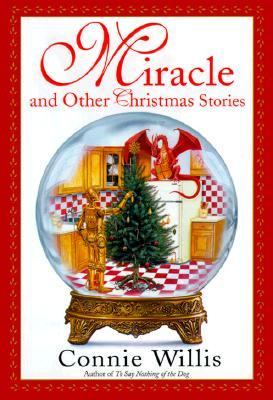
Christmas stories . . . in October? A Christmas Memory by Truman Capote, A Child's Christmas in Wales by Dylan Thomas, and Miracle & Other Stories by Connie Willis
I used to avoid seasonal books like the plague and some years I read hardly any (although I don't avoid them like the plague, anymore), but this year . . . well, I got suckered. My F2F group leader asked me to come up with ideas for our December read. Not one to go into such a request lightly, I asked for suggestions on Facebook and Twitter (my Facebook friends were the most helpful) then spent some time looking up Christmas reads on my own. In the end, my group decided to read three stories from the same book we used last year.
One could say, "Argh, what a waste of reading time!" But, no. All three of the following books are really quite special, each in its own way. I also have one Christmas e-book that I'll be touring, Lola's Secret. We'll talk about that one when the time comes.
A Christmas Memory by Truman Capote was originally published in 1956 and is a classic that was not written for children, although it is marketed as such. A Christmas Memory is exactly what the title makes it out to be, the short memoir of a Christmas in Alabama when Capote was seven years old and living with elderly, distant cousins -- one of whom, Miss Sook Faulk, was his only friend. I have the copy pictured at left, with a CD narrated by Celeste Holm and watercolor illustrations by Beth Peck.
A Christmas Memory tells about a simpler time, when most everything was handmade, possessions were few and creativity was a necessity. As the story opens, Miss Sook declares that it's "fruitcake weather" and then she and the boy she calls "Buddy" gather the ingredients to make 30 fruitcakes. There's a lot to making such a huge quantity of fruitcake. All year long, the two must scrounge and work to save every penny they can, just to purchase the ingredients.
There's a sweet scene involving the acquisition of whiskey and then they dance and drink the last of the whiskey when they've finished (earning a fierce chewing-out from the other relations). Next up is finding a tree, making the decorations and decorating. The dog, Queenie, tries to eat an angel. Then, they make gifts for each other. They have so little money that they make each other kites and on Christmas Day they go outside to fly them.
The story ends with Capote's reflection that after that Christmas he was forced to leave the house and friendship behind as he was sent to attend a succession of military schools. He dearly missed Miss Sook. Queenie's death and then the slow deterioration of Miss Sook are described with touching affection.
A Christmas Memory is a tender, beautifully written, emotional story. I can't recommend it enough. I liked the illustrations in the version I purchased and enjoyed listening to the CD that came with it, as well.
A Child's Christmas in Wales by Dylan Thomas is also very short and, while marketed to children, it was the fact that several people wrote about the language being so lovely that they thought adults would appreciate it more than children that led to my choice to purchase the book.
I was quite surprised to find that A Child's Christmas in Wales is actually quite funny. The prose is definitely lyrical, which isn't surprising given the fact that Dylan Thomas was a poet. Copyrighted in 1954, A Child's Christmas in Wales begins with the following sentence:
One Christmas was so much like another, in those years around the sea-town corner now and out of all sound except the distant speaking of the voices I sometimes hear a moment before sleep, that I can never remember whether it snowed for six days and six nights when I was twelve or whether it snowed for twelve days and twelve nights when I was six.
That made me laugh. You can actually find the entire story online but I like the little book I bought. It has lovely illustrations and it's worth hanging onto. My copy was published by New Directions. Highly Recommended.
In a slightly-related side note, Welsh author Simon Van Booy once told me his grandfather was Dylan Thomas's newsagent. The words "newsagent" and "Wales" paired together oddly make me crave the melty Welsh cheese I had in Llandudno, North Wales, many years ago.
Miracle and Other Christmas Stories by Connie Willis caught my eye because it was not only close to the top of a list of recommended Christmas reads at Goodreads, but also happens to be a book by one of my favorite authors.
Connie Willis is known as a sci-fi author, although at least one of the books I've read had more of a common scientific setting than the otherworldly type of location and storyline that typifies sci-fi.
In Miracle and Other Christmas Stories, Willis shows off her knack for observing the absurdities of everyday life. Some of the stories are humorous,
some just a touch magical, one a time travel, one about possible alien
invasion and one a mystery. Willis said she wrote them with the goal of avoiding the usual sappy or depressing fare and I think she succeeded brilliantly. I absolutely loved this book. I had favorite stories, of course, but I really liked them all. Again, Highly Recommended.
I love this review of Miracle and Other Christmas Stories at Blogging for a Good Book.
So . . . even though it's only October and it seemed a little bizarre to sit down with Christmas stories, at first, I absolutely loved all three of the books in this post and plan to keep every one of them for rereading. Usually, I just read Christmas stories and donate them, so that's a pretty unusual statement.
©2012 Nancy Horner. All rights reserved. If you are reading this post at a site other than Bookfoolery and Babble or its RSS feed, you are reading a stolen feed. Email bookfoolery@gmail.com for written permission to reproduce text or photos.
Monday, July 23, 2012
Tuesday Twaddle - Including Un-greening and mini reviews of A Town Like Alice by Nevil Shute and The Knights of Derbyshire by Marsha Altman
Hello! Monday Malarkey turned to Tuesday Twaddle because of an evening of painting at the new house.
We're all done de-pinking the "library". So, after cleaning the floor, we'll start bringing in shelves and books. Meanwhile, I've moved on to un-greening the master bedroom. Here's what the bedroom looked like when the previous owner was still in residence:
Oddly, she left that headboard in the garage. I'm actually quite fond of green, but I prefer a neutral color in my bedroom so I can change bedspread/quilt colors without having to paint, again. Plus, I had a different color scheme in mind. We have to buy new linens because we are finally getting a new bed, after 29 years on the same old mattress and box springs. Woot! I am so ready for a new mattress!!! I'll show you the color I settled on, when the room is all painted and put together.
In other news:
Kiddo got the keys to his apartment in Oxford and took a load of his possessions, including his bed (without the frame), this weekend. He then came home and agreed with his father that they should put a twin mattress and box springs on his full-size frame, in spite of my noisy protests. Kiddo sat on the bed and promptly broke one of the slats. I have been heckling my husband the engineer about how he should have known the amount of stress would not have been spread as evenly over the slats and breakage was a likelihood. He responded that he's a better manager than engineer. Haha.
Kitty news:
Isabel has been sick, again!! Can you believe it? I don't know if she didn't get enough antibiotic or she's got something new, but she was sluggish all weekend (but smiling -- seriously, she stayed near me instead of hiding and seemed fairly happy, in spite of being miserable) so I took her to the vet, yesterday, and found that once again she had a fever, this time 104.2.
She got a shot of antibiotic, anti-nausea and something else -- not sure what. Well, it did the trick. This morning she was all bright-eyed and chipper. She chattered away at me, begging for head-to-tail rubbings and generally making a nuisance of herself. I was so thrilled to see her back to normal! She's angry with me, at the moment, since I took her to the Scary Place and she got an additional, long-lasting antibiotic shot to keep the magic going. Update: Isabel's huff lasted about an hour. I have been forgiven. :)
Mini reviews of books finished, this week:
A Town Like Alice by Nevil Shute is a book I read for my Face to Face book group, although I didn't make it to the meeting because I got the meeting week wrong in my head and had only managed 100 pages by meeting time. It's about a woman named Jean who was captured during WWII in Malaya and marched around the country with a number of other women and someone else's baby till Jean manages to find them a place to sit out the rest of the war, working the rice paddies and dressing like the natives. She recounts her story after finding out she's inherited a large sum of money.

A Town Like Alice by Nevil Shute is a book I read for my Face to Face book group, although I didn't make it to the meeting because I got the meeting week wrong in my head and had only managed 100 pages by meeting time. It's about a woman named Jean who was captured during WWII in Malaya and marched around the country with a number of other women and someone else's baby till Jean manages to find them a place to sit out the rest of the war, working the rice paddies and dressing like the natives. She recounts her story after finding out she's inherited a large sum of money.During her imprisonment, she met an Australian man who tried to help them and was killed for his efforts. Or, so she thought. It's a war story, a romance, a story of one incredible woman's strength. Although A Town Like Alice is fiction, it's based on a true story. If you haven't read it, grab a copy. You will absolutely love Jean. She's tough but kind, savvy but a woman who uses her abilities to help everyone, not just herself. Excellent, excellent book -- copyrighted in 1950 and no wonder it's still around. Highly recommended in a very pushy way, with fireworks and dancing. I've got a pending post of quotations to which I'll add my favorite bit from A Town Like Alice.

The Knights of Derbyshire by Marsha Altman is, I think, the fifth in her Pride & Prejudice spin-off series -- the only series of its kind that I have become addicted to. Seriously addicted. I absolutely love Altman's adventurous, witty tales.
In The Knights of Derbyshire, the Darcy's eldest son, Geoffrey, becomes the victim of dangerous men. Will he survive? Meanwhile, George Wickham the Younger rescues his sister from a marriage for her inheritance and is kicked out of Oxford for missing his final exams, then kicked out of his family's house for not happily sharing his inheritance with his mother, Lydia. There is the usual fun, tension, adventure and romance. The Knights of Derbyshire is definitely one of my favorites in this series, so far. You absolutely must read this series in order -- and should, if you have any interest in P & P spin-offs.
This entire series is highly recommended. Be advised that Altman has had several different publishers. The Knights of Derbyshire is available through Amazon, as are the rest of her books, beginning with The Darcys and the Bingleys. See my review of The Ballad of Gregoire Darcy for a link to all of my other reviews.
There are quite a few small errors in the new book, but I was forewarned by the author and told they will be eliminated. That was 2 months ago, so hopefully things have been fixed by now. The errors didn't get on my nerves; none were huge and I was expecting them.
Books that walked in, this past week:
Sin by Zakhar Prilepin - from Glagoslav Publications for review
The Lost Button by Irene Rozdobudko - from Glagoslav Publications for review
The Wild Princess by Mary Hart Perry - from HarperCollins for review
Shadow Show ed. by Sam Weller and Mort Castle - from HarperCollins for review
Shadow of Night by Deborah Harkness - win from Amy at Life by Candlelight (Thanks, Amy!)
And, what am I reading, now?
I'm reading two books, one nonfiction and one fiction. The Aleppo Codex by Matti Friedman, which I got unsolicited from Algonquin Books (I love Algonquin -- the unsolicited books they send are often among my personal favorites). The Aleppo Codex is an adventurous tale of the author's search for the truth about how a book known as the oldest copy of the Bible was smuggled out of Syria and taken to its original home in Jerusalem.
My fiction choice is a backlist title: Dreaming in English by Laura Fitzgerald. It's another unsolicited book and it was kind of a satisfice. I wanted to read something light and I had a particular recent arrival in mind, Enchanting Lily. But, guess what? I took Enchanting Lily (and a few other titles) to the new house because I wanted to have some books on hand, in case I got stranded at the house in a thunderstorm. We had big storms popping up daily, for a while. So, when it came time to choose a new title to start reading, the book I wanted was at the new house . . . and I was at home in the old house.
I didn't read Dreaming in English when I received it because I read a review advising readers not to skip the first book, Veil of Roses. This time, I looked up Dreaming in English at Goodreads and found different advice: "It stands alone well, but it will totally ruin Veil of Roses, for you." Fine. I never did get around to finding a copy of the first book and Dreaming in English fit my needs, right now.
I'm enjoying both books -- reading slowly, of course, since we're still packing and painting and all that, but when I sit down to read I'm immediately swept away, regardless of which book I'm in the mood for.
Interesting development:
We have been asked to rent our house out to someone who works with my husband (temporarily) by September 1. Oh, dear. I thought we'd have a bit more time to get the place cleaned up thoroughly. The fellow who asked is going through a divorce and he's tired of staying in a hotel. So, we're probably going to say yes, just to be kind to him. If necessary, I'll take a blogging break but as long as I can keep up with two posts a week, I will.
What's up in your world?
©2012 Nancy Horner. All rights reserved. If you are reading this post at a site other than Bookfoolery and Babble or its RSS feed, you are reading a stolen feed. Email bookfoolery@gmail.com for written permission to reproduce text or photos.
Thursday, March 01, 2012
Three more minis - Cruising Attitude, The Selected Works of T. S. Spivet and Peace is Every Step
Cruising Attitude by Heather Poole is subtitled "Tales of Crashpads, Crew Drama, and Crazy Passengers at 35,000 Feet." I'm guessing that between the flight attendant's uniform and the word play in which "attitude" is substituted for "altitude" that not a single one of you looked at that cover and thought, "Hmm. I wonder what on earth that's about?" Am I right? Actually, I do like the clarity of the cover.Cruising Attitude is the third flight attendant memoir that I've read, if you count the classic, "Coffee, Tea or Me?" by two anonymous flight attendants who were later accused of making it all up. While Cruising Attitude is not as laugh-out-loud funny as the other two books I've read, I loved the fact that Heather Poole goes all the way back to her training and fills you in on what it's like to be a flight attendant -- how they're trained, what the lifestyle is like, the complexity of scheduling, which planes and cities a career flight attendant aspires to work in and why some attendants commute to their flight base rather than living there, why your flight attendant and pilot might be really, really hungry -- as well as the usual crazy passenger stories, a bit about her love life and stories of friendship with other flight attendants.
Recommended - Engrossing, entertaining and highly informative. I enjoyed Cruising Attitude immensely. While the sheer quantity of rude and crazy passenger stories may make you a little bit more nervous about flying, Poole's reassurance about turbulence and her obligation to put safety above all else offset the stories about the nuts very nicely. You'll also come out of the reading knowing what is expected of you as a passenger -- what can get you removed from a plane, what ticks off a flight attendant, why you should wait to take your drowsy meds till you get on the plane and the reason a flight attendant will awaken a passenger rather than allow him or her sleep through a meal service. The only thing I disliked about this book was the repeated use of the deliberately misspelled "Buh-bye". Annoying.
The Selected Works of T. S. Spivet by Reif Larsen is a book that I'm relegating to mini status merely because it's been so long since I read it. T. S. Spivet is the story of a precocious 12-year-old, map-making genius who wins an award that leads him to set off from Montana on a journey to Washington, D.C.The Selected Works of T. S. Spivet was the February selection for my face-to-face book group. Unfortunately, it was raining cats and dogs and only 4 people showed up. The conversation was pretty much a dud. Our fearless leader said everyone who called to say, "I'm not coming," at the last minute loved the book. Most of the group members who showed up were a little iffy because they found the illustrations and notes distracting. I loved it.
Highly recommended - An adventurous, brilliantly-written, charming, funny, poignant and surprising story. Young T. S. is a delightful character, humble and lovable in spite of his brilliance. My thanks to SuziQ, whose enthusiastic review led to my purchase of the book as well as the suggestion that the book group read T. S. Spivet along with me. The meeting may have fallen flat, but the reading experience was awesome.

Peace is Every Step by Thich Nhat Hanh is one of the books I removed from my closet, this past weekend, during the Cleaning That Made My House Even Scarier Than Normal. Subtitled, "The Path of Mindfulness in Everyday Life," it contains writings about how to become more "mindful," which I'm interpreting as "in the moment" -- aware of what you are doing, who you are speaking to, how you respond, your emotions, the life around you, etc. It's about living a peaceful, joyful life and turning the negatives of your life into positives.
I had a migraine that was really pissing me off, while I was reading this book, and loved the fact that he was telling me to be mindful of my pain so that I'd appreciate it more when I'm not hurting. I was also informed that my anger can be turned to compost to grow happier thoughts. There are lots of gardening metaphors.
Highly recommended - You don't have to be a Buddhist to learn and practice the kind of thought process Thich Nhat Hanh recommends. A wise, thought-provoking, wonderful little book.
In other news:
I'm going to upload my Fiona Friday post then take off a week to practice mindfully cleaning my house and peacefully reading. I moderate comments, so don't freak out if you try to comment and it takes a day or two to show up, okay?
This may end up being one of those months that I end up doing a lot of mini reviews and periodically disappearing for large stretches, especially given the fact that Kiddo will be home for Spring Break somewhere in the middle and I like to be present when he's around. The weather is fickle but on the good days the sun shines and a breeze blows. These are days that I need to spend my time outdoors, before the real heat descends. We broke a heat record, today, with a high of 83 degrees, so we're getting there quickly.
©2012 Nancy Horner. All rights reserved. If you are reading this post at a site other than Bookfoolery and Babble or its RSS feed, you are reading a stolen feed. Email bookfoolery@gmail.com for written permission to reproduce text or photos.
Monday, February 13, 2012
Passage by Connie Willis
Passage by Connie Willis is a book that naturally follows Paranormal by Raymond Moody in the most extraordinary way. I'm still a little shocked that I just happened to pick up Passage and begin reading it almost as soon as I'd put down Paranormal.In Passage, Dr. Joanna Lander, is a research psychologist studying Near-Death Experiences (NDEs). To gather material for study, she spends her time interviewing people who have just had NDEs. Maurice Mandrake, author of Life at the End of the Tunnel (fake title; Mandrake is a fictional character who appears to be patterned after Moody but lacking in scruples), is Joanna's bane. He works in the same hospital and the two are constantly racing to capture the stories of recent near-death patients. But, Mandrake has an agenda; he is convinced that there is a heaven and he uses leading statements to convince patients that they've seen things that prove there's a heaven.
Joanna pairs up with a neurologist named Dr. Richard Wright, who has come up with a way to chemically simulate NDEs and observe the patterns of brain activity while the simulated NDEs are occurring. But, when they find that Mandrake has contaminated their list of volunteers and realize they have a limited amount of time to come up with results in order to continue their funding, Joanna agrees to "go under" for the sake of keeping the research on track. And, where she travels is both fascinating and terrifying.
I'm not going to say much about where this book heads, plot-wise because I fear if I mentioned where Joanna travels during her NDEs, it would be a spoiler (although I figured it out pretty quickly), although I should mention that she doesn't technically die. On to love/dislike . . .
What I loved about Passage:
I loved the setting and details about the "place" to which Joanna is transported during her NDEs. Let's just say it's particularly apropos, this year. And, I love Willis' trademark eye for the absurdities of life. In Passage, the hospital is like a maze and I can relate to that. I once worked in a hospital that was very maze-like -- not to the extreme of the hospital in Passage, but it was definitely confusing. There is also a cafeteria that is almost never open, so Joanna frequently eats out of Richard's lab coat pockets, where he keeps a surprising stash of food and drinks.
Passage is also gripping enough that I read the nearly-800-pages in 3 days (that's fast for me). While it's not my favorite book by Willis, I still believe she can do no wrong. There is a shocking turn of events that totally threw me in the third section of the book. I was completely stunned; I may have even gasped aloud. It's well done and genuinely unexpected, totally changes the direction of the story and leads to a satisfying, if a bit eyebrow-raising, denouement.
I also liked the fact that, since the book is set in Denver, the author mentioned The Tattered Cover. Way to go, Connie Willis! I love it when an author has one of his or her characters mention a real-world bookstore if the setting is a genuine city, even just in passing.
What I disliked about Passage:
It could have been a bit shorter and less technical, I think. However, not being a scientist I can't say whether or not a lot of the yawn-worthy passages that included scientific detail (such as the following) were completely necessary:
"How the feeling of significance factors into the choice of scenario is one of the things I want to explore," Richard said. "Also, does the scenario remain the same, or does it change depending on the stimuli, or the initial stimulus?""The initial stimulus? I thought you said--""That the unifying memory fit all the stimuli? I did, but the initial stimulus may be what determines the choice of one suitable image over another. That would explain why religious images are so prevalent. If the initial stimulus was a floating feeling, there would be very few suitable memories, except for angels.""Or Peter Pan."
~p. 303 of Passage
Note that there's still a little humor inserted into a mostly-technical passage. The story is always entertaining, even if at times the detail can be a little heavy.
I'm going to put a spoiler passage at the end of this post. I don't think it's really all that spoilery, but it could mess with the experience for people who like everything to be a surprise, so I'll set it off with a warning. I'm going to even include a quote I love.
Highly recommended to fans of Connie Willis and those who like science fiction (emphasis on the science -- no time travel, outerspace, etc., in this one). It would be a mistake to avoid Passage because of its genre because it really is just a good novel that happens to have a scientific storyline. Great characterization, dialogue and storytelling, in general. I can never close a Connie Willis book without wanting to scrounge on my shelf for more.
I'll save recent arrivals for tomorrow. For now . . . the spoiler:
--------------WARNING! WARNING! WARNING! WARNING! --------------------
-----------------------------POSSIBLE SPOILER!!--------------------------------------
----------JUST SKIP THIS PART IF YOU'RE A WORRIER, OKAY?--------------
I just love this. When Joanna's brain is in near-death simulation, she finds herself on the Titanic. The question is . . . does everyone go to the Titanic when they die or was there some specific trigger that caused her mind to go there? If so, why does she keep returning to the same place? If you're a Titanic buff, you'll find it very fun reading the details as Joanna slowly makes her way around the ship. Here's a quote I loved which, I think, goes a long way toward explaining why I am fascinated by the Titanic disaster:
The lesson of the Titanic was that people kept on trying even when they knew it was hopeless--tapping out SOSs, cutting the collapsibles free, going belowdecks and bringing the mail up, letting the dogs loose-- all of them determined to save something, someone, even though they knew they couldn't save themselves.~p. 719
END SPOILER - You may now pick up your delicate bone china cup with pinkie sticking out and make a "Hummph!" noise if you had no choice but to skip this part (or are offended that it was such a let-down).
©2012 Nancy Horner. All rights reserved. If you are reading this post at a site other than Bookfoolery and Babble or its RSS feed, you are reading a stolen feed. Email bookfoolery@gmail.com for written permission to reproduce text or photos.
Subscribe to:
Posts (Atom)