©2022 Nancy Horner. All rights reserved. If you are reading this post at a site other than Bookfoolery or its RSS feed, you are reading a stolen feed. Email bookfoolery@gmail.com for written permission to reproduce text or photos.
Tuesday, February 22, 2022
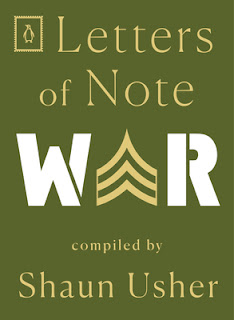
A few minis - Slightly Foxed #71, Letters of Note: War by Shaun Usher, The Arrow Book of Funny Poems by Eleanor Clymer
Monday, February 21, 2022
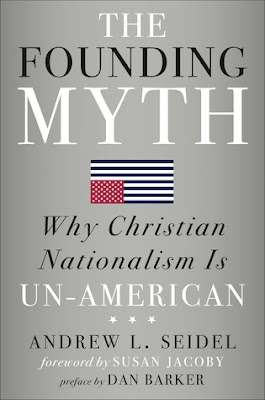
The Founding Myth by Andrew L. Seidel
Jefferson also authored the Virginia Statue for Religious Freedom, upon which the First Amendment would be based. That law, along with the University of Virginia and the Declaration of Independence, were the only achievements he wanted inscribed on his gravestone. The statute guaranteed religious freedom by guaranteeing a secular government. In the statute, Jefferson skewered "the impious presumption of legislators and rulers, civil as well as ecclesiastical, who being themselves but fallible and uninspired men, have assumed dominion over the faith of others, setting up their own opinions and modes of thinking as the only true and infallible, and as such endeavoring to impose them on others."
~p. 36 of The Founding Myth
The Founding Myth: Why Christian Nationalism is Un-American by Andrew L. Seidel is about the separation of church and state, how and why the "founding fathers" of the United States chose to create this wall of separation, and what specifically they said about religion that indicated their personal beliefs.
If you're a Christian, as I am, you'll struggle with certain opinions of the atheist author of The Founding Myth. He can be pretty strident when describing the negatives of religion. But, while he may get certain details wrong from our perspective, the bottom line is that the historical references and quotes lay out his assertion that the US was not founded as a Christian nation in a logical, detailed way.
Seidel also asserts that the wall of separation between church and state makes both religious groups and the government stronger. I agree with him on that, but if the idea rubs you the wrong way, all the more reason to explore why he makes such a declaration.
Highly recommended - I have always been a strong believer in the separation of church and state and the author of The Founding Myth does an excellent job of explaining why it exists and backing that up with historical references. As to his thoughts about Christianity, while there were some minor issues with some of his assertions about it, I like having my beliefs challenged and I can't deny that he makes a lot of excellent points about how Christianity has been used as a cudgel, whether to cause the submission of women or justify violence against enemies. Christianity has a terrible, bloody history, when you get right down to it. We see, in fact, the justification of gun ownership and use by Christians using a single, out-of-context Bible quote, even today.
There are a lot more quotes I considered using for this review as this is my most marked-up book, so far in 2022. But, the book is so worth reading that I'd rather just encourage everyone to read it, instead.
©2022 Nancy Horner. All rights reserved. If you are reading this post at a site other than Bookfoolery or its RSS feed, you are reading a stolen feed. Email bookfoolery@gmail.com for written permission to reproduce text or photos.
Thursday, January 06, 2022
More Stuff I Read in 2021 but Didn't Get Around to Reviewing - In a Holidaze by Christina Lauren, The 2021 Short Story Advent Calendar, and The True Believer by Eric Hoffer
©2022 Nancy Horner. All rights reserved. If you are reading this post at a site other than Bookfoolery or its RSS feed, you are reading a stolen feed. Email bookfoolery@gmail.com for written permission to reproduce text or photos.
Monday, November 15, 2021
How to Astronaut by Terry Virts
How to Astronaut: Everything You Need to Know Before Leaving Earth by Terry Virts is exactly what the author describes in the subtitle. He talks about everything involved in becoming an astronaut, both now and when he was in training. Virts worked both on the space shuttle and the International Space Station (ISS). The space shuttle program ended some time ago, so that gives you a vague idea of the timing.
Terry Virts began his career as a fighter pilot and then later moved on to the astronaut training program. So, he knew his physics and knew how to fly, had lived with intense pressure to perform with accuracy and lived with a certain amount of risk. But, danger as a fighter pilot and its intensity level of training paled by comparison to the training to become an astronaut.
In How to Astronaut, Virts walks readers through the process of becoming an astronaut, from learning to speak Russian (now an absolute requirement because Americans and Russians work together and the ISS missions take off from Russia) to learning to handle weightlessness, to practicing space walks. He also talks about such everyday things as the food they eat, the clothes they wear, the experiments they perform, how they exercise and why a certain amount of daily exercise is crucial to an astronaut's health, how to use the bathroom in space, how they keep clean, and (yuck) how they clean the toilet. He describes disasters that have taken place and what happens when one does (for example, the loss of a supply ship that blew up and how it impacts astronauts on the ISS). There are a lot of interesting details that I found utterly fascinating.
Updated 11/16/21
After yesterday's news about the Russian anti-satellite missile test and the resulting scramble to safety by the ISS crew members, it occurred to me that I needed to update my review of How to Astronaut because space debris and its dangers are discussed in the book. In fact, I think I can safely say I would have been concerned about Russian aggression but otherwise probably not blinked at the news if I hadn't read this book. But, space debris is a significant danger both to the International Space Station and future hopes for space travel. Terry Virts goes into some detail about how different countries have handled such tests, the preferred method being to only do them at such a height that the resulting debris will reenter the atmosphere and burn up harmlessly. Otherwise, it remains in orbit around the Earth perpetually and because of that, the ISS has to make maneuvers several times a year to avoid debris, which could not only damage the space station but kill everyone in it.
I also neglected to mention how Virts goes into the realities of long-term space travel (radiation danger, in particular) and why travel to Mars is plausible but what would be involved in such a mission, including the supplies necessary, the need to find a way to protect astronauts from space radiation, how such a ship would need to be assembled, and the best way to fuel a long journey. On that same note, he goes into what it would take to do space travel along the lines of what we've seen in science fiction TV and movies and why it's unlikely we'll ever encounter other living beings outside of Earth — because of the sheer length of time it would take to get to the closest potentially habitable planet. Fascinating stuff.
And, one last thing . . . Space Force. I was dubious about the concept of the Space Force, thinking it some weird thing that the last president came up with to look cool, until someone I know explained to me that the job of the Space Force is protecting our satellites and was formerly the mission of the US Air Force but merely separated into its own unit to focus on that particular mission. Yesterday's anti-satellite missile test shows why it's necessary. Having said that, I still think it is badly named and has been poorly described to the public and that's probably the main reason so many people have scrunched their faces up and wondered aloud at why it even exists. There was not yet a Space Force, at least in the early part of How to Astronaut, but the author hinted at the fact that it might be coming. I can't say whether or not the references to a potential space force have been updated because I don't have a final copy of How to Astronaut but I did find it of interest that he knew it might be coming.
Highly recommended - Especially recommended for fans of all things outer space/NASA and nonfiction lovers. My husband has recently met a former astronaut so I had a lot of fun telling him what I'd learned about the process of becoming and being an astronaut and he's planning to read the book soon. My only problem with the book was that occasionally I got lost in the science and felt like I was drowning in acronyms. There are far too many acronyms!!! But, that just goes with the territory if you're an astronaut, apparently.
The most interesting anecdote, in my opinion, was one about learning to deal with zero gravity. Back in his early training days, there was still a plane that went up and arced down in a parabola to cause a few minutes of weightlessness. You may have seen Howard Wolowitz, the astronaut character from The Big Bang Theory inside the padded plane when he was doing his training. That's exactly what Virts describes; however, this type of training is no longer done in the US and the reason why is what's most interesting to me. Virts says the US had been doing this for decades and it was affordable. But, then someone decided to privatize the zero gravity training and it became, in the process, dramatically more expensive. Instead of bringing back the old program, now canned, they eliminated it completely. So, if you want to get zero gravity training in the old plane-dropping-precipitously way, you have to go to another country.
Having said that's my favorite anecdote (it's partly because I'm of the opinion that privatizing government work is generally, although not always, a bad thing — and I have a business degree so that's the kind of thing that really piques my interest), there are a lot of entertaining and fascinating stories in How to Astronaut and I'm glad I read this book. Terry Virts keeps it light-hearted and has a great sense of humor.
I received an ARC from Workman Publishing in 2020 and it kept moving from one TBR pile to another till I finally decided its time had come. My thanks to Workman for the ARC! How to Astronaut was published in September of 2020, so it's readily available for purchase.
©2021 Nancy Horner. All rights reserved. If you are reading this post at a site other than Bookfoolery or its RSS feed, you are reading a stolen feed. Email bookfoolery@gmail.com for written permission to reproduce text or photos.
Monday, May 10, 2021
The Little Spacecraft That Could by Joyce Lapin and Simona Ceccarelli
The Little Spacecraft That Could by Joyce Lapin, illustrated by Simona Ceccarelli, is about the spacecraft that traveled to Pluto and then onward to view a snowman-shaped object in the Kuiper Belt called Arrokoth, sending back photos of both our most distant planet and a unique object that nobody even knew existed when the spacecraft left the Earth.
If you're thinking of the story with a similar name (The Little Engine That Could), throw that idea out the window. It's not about huffing and puffing through space but a nonfiction book with lots of facts about the spacecraft New Horizons — its size, how it used another planet's gravity to slingshot outward at a faster rate, how important it was to get the trajectory of New Horizons just right, how long it took to get to Pluto, what kind of information it sent back to Earth and how long it took for the spacecraft to communicate with NASA as it traveled farther away, etc.
The Little Spacecraft That Could also talks about Pluto's journey from being called a planet to losing its "planet" designation, and then back to being a planet but now called a "dwarf planet" and how that all came about. I confess, this is the part that interested me the most because I'm old enough to have been a child who had to memorize the nine planets and do projects with them. Like most folks, I was shocked when scientists announced that Pluto had been taken off our list of planets. How and why did that happen and why did it get its designation back, but slightly altered? It's satisfying to finally have the answers.
I call this kind of book a "picture book for young readers" because it's a book for slightly older elementary level children but which is still picture-book sized and loaded with gorgeous illustrations.
Highly recommended - The Little Spacecraft That Could would make an excellent resource for either an elementary school library or a science classroom, a nice addition to the library of anyone who has a passion for astronomy and/or NASA, or just a fun read for anyone curious about the journey of a spacecraft to our most distant planet and what exactly it found upon its arrival. It contains a very nice, 2-page glossary.
There are so many fascinating bits of information about Pluto, our solar system, the spacecraft's journey, and what it found when it arrived in The Little Spacecraft That Could that I'm going to have to muzzle myself a bit. It's just the size of a piano! It's powered by plutonium! The only thing I found a little uncomfortable (at first . . . but I got over it) was the anthropomorphizing of a spacecraft in a nonfiction book. But, it makes the book a little more palatable for youngsters, I'm sure, and makes for cool spreads like this, showing the little spacecraft crying, "Wheee!" as it uses Jupiter's gravity to increase its speed (click on image to enlarge):
Fun and educational! Many thanks to Sterling Children's Books for the review copy!
©2021 Nancy Horner. All rights reserved. If you are reading this post at a site other than Bookfoolery or its RSS feed, you are reading a stolen feed. Email bookfoolery@gmail.com for written permission to reproduce text or photos.
Thursday, January 14, 2021
Ten Lessons for a Post-Pandemic World by Fareed Zakaria
My second read of the year was a terrific read and I'm so glad I hastily bought it before the end of the year. Ten Lessons for a Post-Pandemic World by Fareed Zakaria lays out how the pandemic has exposed weaknesses in such things as American healthcare (the most obvious) but also covers a lot of other territory: past and present economic policies including taxes and tariffs; globalization and why it's been painted as a boogeyman but isn't going away; historic and present-day politics and nationalism; how life changed after past disasters, for better or worse. He even covers Artificial Intelligence and how it may affect our future.
Zakaria also discusses how and why some countries handled testing, tracing, and halting spread of the virus better than others and what we can learn from them. He zones in on places like Taiwan, where previous outbreaks of deadly disease gave the country experience that enabled them to prepare for the current pandemic. I just looked up a graph of Taiwan's Covid-19 cases and their peak — the highest number of cases reported in a single day — was 18. Impressive.
Across all these topics, Zakaria discusses where we've succeeded and failed and what the current president has done to improve or diminish our place in the world.
Highly recommended - Excellent writing and a fair-minded viewpoint of how the pandemic could lead to positive change and reduced inequality if handled right. My only problem with the book was that I had to reread some paragraphs a few times to get what he was saying, but that's more a factor of my own lack of understanding of such things as economics than a problem with the writing. In fact, I found the writing very clear and the subject matter educational. But, wow, Fareed Zakaria is one sharp dude. I am not on his intellectual level. If I can find the time, I may reread it in the future so that I can hopefully get an even better understanding.
©2021 Nancy Horner. All rights reserved. If you are reading this post at a site other than Bookfoolery or its RSS feed, you are reading a stolen feed. Email bookfoolery@gmail.com for written permission to reproduce text or photos.
Wednesday, November 18, 2020
The Day the World Came to Town by Jim Defede
I read The Day the World Came to Town: 9/11 in Gander, Newfoundland by Jim Defede as an e-book, which means I shocked myself because not long before I'd read Mexican Gothic electronically, as well. You know how I abhor e-books, right? Two in a row? Gasp! That's not likely to happen again, soon, although I am trying to read at least one per month. We'll see how that works out.
The Day the World Came to Town is the story of what happened when American airspace closed after the twin towers were hit, why Gander was chosen as the place to land a large number of planes, how the landing was handled and locals coordinated the effort to care for their huge influx of visitors, and what became of the various planeloads of people in the short and long run, along with a few of their stories.
The Day the World Came to Town is not particularly well written but I liked it for the stories of kindness and the sense of community, including the way the "Newfies" embraced their guests and went out of their way to provide for their individual needs (like Kosher food for a small group when someone realized they were Orthodox Jews and noticed they weren't eating at all). For a few days, nobody cared about status, country of origin, skin color, etc. It made me want to move to Newfoundland, to be honest. What lovely people and so generous.
The hard part of the reading was the losses described; and, if you were around on 9/11, it really takes you back to the memories and the emotion. I got teary a lot.
Recommended - The Day the World Came to Town is slightly dated because it was written soon after 9/11 but it's still a good read. I chose to read it specifically because I'd heard it was an uplifting story and we were on the verge of the presidential election, as I was reading. I needed the escape and it didn't need to be perfect to fit the bill.
©2020 Nancy Horner. All rights reserved. If you are reading this post at a site other than Bookfoolery or its RSS feed, you are reading a stolen feed. Email bookfoolery@gmail.com for written permission to reproduce text or photos.
Tuesday, November 10, 2020
I is for Illuminati by Chris Vola
I is for Illuminati by Chris Vola is an A-Z guide to conspiracy theories, a coffee table style book with an opening poem for each letter, a spread of text — usually 2 pages but sometimes a tad more about the particular topic (aliens, chem trails, the big bad government wanting to kill us all with vaccines), and a list of other things that start with the same letter, not necessarily all conspiracy-related. The author mentions both those who've espoused a theory and those who've debunked it within in the text.
My only problem with this book is the fact that occasionally the writing is so tongue-in-cheek I had a little trouble figuring out what the author was serious about and when he was joking. To be honest, I don't consider that a big issue because I is for Illuminati is probably best for sparking conversation rather than as, say, a reference book (it's definitely meant to entertain, not go into elaborate detail). Here's an interior shot, with apologies for the poor quality:
It was actually the fact that I have a friend who has fallen for the QAnon conspiracy theories that made me sit up and take notice of this book when it was offered to me for review. It was . . . kind of soothing to read a book in which such things are treated exactly as what they are: conspiracies, often without even a shred of evidence (although he pretty much had me convinced that aliens are real; I can't say why).
Recommended - A fun book to set out on your coffee table in the hopes of starting some fun conversation or a nice gift for someone who can use a smile. Obviously, the midst of a pandemic is not the best time to be having friends over for tea and conversation (unless you're outdoors, of course, and wearing a mask) so it's currently best for enjoying with those in your bubble or for gift-giving purposes. Yes, I definitely have Christmas on my mind.
My thanks to HarperCollins for the review copy!
©2020 Nancy Horner. All rights reserved. If you are reading this post at a site other than Bookfoolery or its RSS feed, you are reading a stolen feed. Email bookfoolery@gmail.com for written permission to reproduce text or photos.
Thursday, October 29, 2020
Matrimony, Inc. by Francesca Beauman
Matrimony, Inc: From Personal Ads to Swiping Right: A Story of America Looking for Love by Francesca Beauman is the story of the evolution of personal ads, the resistance to them (via editorial articles, in particular), and why they came into being and continued with only one fairly significant gap in the growing United States.
I found that the text was slightly clunky, which made for slow reading, yet the reasons people advertised for husbands and wives (and sometimes for less moral purposes) and how they played out were particularly fascinating.
Starting with personal ads in the 18th Century, when there were more men than women and the odd man without social connections advertised, the book continues through the years when large cities were exploding and people found it difficult to meet likeminded people of the opposite sex or were lonely after immigrating. And then, of course, there were the men who went West to farm or seek gold and found that the only way to obtain a wife was to advertise in the big cities and hope someone would be willing to travel to join them. Matrimony, Inc. finishes with a chapter on modern dating, from the Swinging Sixties (when marriage was not the objective) to computer programs like Match.com and apps like Tinder. The bulk of the book, however, is about newspaper personal ads.
I particularly liked reading the full story of a personal ad and how things turned out (when a marriage was long-lasting, especially), when available. Because few people kept journals or diaries in the early years of the country, there's often no way to know whether or not a match was even made, much less successful, via the earlier ads.
The author also talks about people who used the ads for fraudulent purposes, like asking numerous applicants for money for a train ticket so the advertiser and respondent could meet (and then just keeping the money), and serial killers who advertised and then murdered. Belle Gunness is a notorious female serial killer whose gruesome story is told in Matrimony, Inc. It gave me the shivers.
Apart from the writing style, I had only one complaint about Matrimony, Inc., and that may be amended in the final print version (my copy is an ARC): the personal ads reproduced in the book are mostly too small to read. This could have been worked around if the author had put the entire text of the ad below it (although it's nice to see them, even if you can't read them). She did often put excerpts in the text but seldom the entire ad. After a good bit of eyestrain, I decided to give up on trying to read them. However, I don't have access to the final copy so I can't say whether or not they enlarged the personal ads that are reproduced in the book.
Recommended - Very entertaining, if not the smoothest read. I enjoyed Matrimony, Inc. enough that I'm interested in Beauman's earlier book about British personal ads, Shapely Ankle Perferr'd: A History of the Lonely Hearts Ad 1695 - 2010. I imagine that, given the delightful British turn of phrase, there could be some very interesting material in that book.
Interesting side note: Francesca Beauman is the owner of Persephone Books in London. Cool.
My thanks to Pegasus Books for the review copy!
©2020 Nancy Horner. All rights reserved. If you are reading this post at a site other than Bookfoolery or its RSS feed, you are reading a stolen feed. Email bookfoolery@gmail.com for written permission to reproduce text or photos.
Tuesday, August 25, 2020
Why Are All the Black Kids Sitting Together in the Cafeteria? by Beverly Daniel Tatum, PhD
Expressing [...] deep frustration in response to [George] Zimmerman's acquittal, Alicia Garza, a community organizer based in Oakland, California, posted this message on Facebook: "I continue to be surprised at how little black lives matter . . . Black people, I love you. I love us. Our lives matter." Garza's friend, Patrisse Cullors, a Los Angeles-based activist, shared the Facebook post and added the hashtag, powerful in its simplicity, #BlackLivesMatter. Opal Tometi, a social-justice activist living in New York City, reached out to Garza and offered to help build a digital platform that could mobilize action for meaningful change. [...] The #BlackLivesMatter message resonated with many across the social media platforms of Facebook and Twitter, and with that amplification a rallying cry for the millennial generation was born.
~p. 27
I chose this quote because I watched a video, a few days ago, in which a White man held a sign saying "Black Lives Matter" and people yelled abuse at him, calling him a traitor to his race, flipping him off, asking him, "What about White lives?" Maybe those people will never get it but it's always been clear to me what the protesters in the BLM movement are saying has never meant Black Lives Matter More Than Others. If they did, I'm sure that's what the hashtag would say. No, it's always been about the fact that Blacks are treated with less value and dignity, killed by police and incarcerated at a higher rate, discriminated against quietly through societal structure. Black people in this movement —a peaceful movement started by women— have done their best to explain, although it shouldn't be necessary. But, the anger amongst certain groups who choose to take offense persists. And, Why Are All the Black Kids Sitting Together in the Cafeteria? makes it crystal clear why such a movement is necessary, why it's particularly necessary for young people of any color to find their people, at least for a time.
The author of Why Are All the Black Kids Sitting Together in the Cafeteria? is a psychologist who was charged with teaching about racism at university level, way back in the 80s or 90s (I didn't mark the date mentioned), who has been researching, talking about, and living racism as a light-skinned Black woman, for decades. She knows her stuff. The book I read is the updated 2017 version; the original was published in 1997. And, it is not exclusively about Blacks. It's about the psychology of why Black kids cluster together (the short answer: because they need to, at least for a time, to understand who they are) but the book is also about dominant groups and how those who are dominant convince the people they consider beneath them that they are, in fact, lesser. That includes women and other minorities.
The relationship of the dominants to the subordinates is often one in which the targeted group is labeled as defective or substandard in significant ways. For example, Blacks have historically been characterized as less intelligent than Whites, and women have been viewed as less emotionally stable than men. The dominant group assigns roles to the subordinates that reflect the latter's devalued status, reserving the most highly valued roles in the society for themselves. Subordinates are usually said to be innately incapable of being able to perform the preferred roles. To the extent that the targeted group internalizes the images that the dominant group reflects back to them, they may find it difficult to believe in their own ability.
~p. 104
The comment about the targeted group internalizing images reflected back by the dominant group explains the women who claimed Hillary Clinton should not be president because women are weak. If you've never seen the video in which a woman said Hillary shouldn't be president because she might have a hormone swing and start a war to Jordan Klepper, and then he asks, "But, haven't all wars been started by men?" you should. It's both hilarious and a good object lesson.
I'm getting off-track. There is so much depth to this book that I feel like I can't adequately describe it but it's a 5-star read that talks not only about the importance of developing identity for Blacks but about the concept of redlining that's kept blacks in less affluent neighborhoods, Affirmative Action (how it started and what it does and not do; the false concept of "ratios" as a legal imperative, for example), the ideology of "color blindness", White identity, multi-racial identity, and also that of Latinx, Native, Asian and Pacific Islanders, Middle Eastern/North African . . . everyone has some need to band together with other people who bear some similarity to them as their identities are developing. Tatum also goes into the importance of making sure children of other races and ethnic backgrounds adopted by White parents are exposed to people like them and how damaging it can be to not do so.
Highly recommended - I wish every adult would read this. An incredibly detailed and easily digestible book about race that goes far, far beyond what you expect from the title of the book but also explains the reasoning for banding together as one is developing his or her identity in a way that has completely clarified it, at least for this reader. In my case, I felt like I learned a lot about myself, as well. For example, while my friends were not entirely homogeneous, I mostly hung out with Christians because my identity was so thoroughly wrapped up in church, as a child. And, it was the Native Americans clustered together on the steps at lunchtime that I always wondered about, not Blacks. There were not many Blacks or other minorities in my hometown, in fact. It was White Bread City, probably 98% White. I'm fortunate that I grew up with a father who made it clear to us that racism was wrong. Most of my friends from home didn't learn that lesson.
Link to review of another book I recommend highly:
When They Call You a Terrorist: A Black Lives Matter Memoir by Patrice Kahn-Cullors and Asha Bandele
©2020 Nancy Horner. All rights reserved. If you are reading this post at a site other than Bookfoolery or its RSS feed, you are reading a stolen feed. Email bookfoolery@gmail.com for written permission to reproduce text or photos.
Thursday, April 30, 2020
Nature's Best Hope by Douglas W. Tallamy
[...] maintaining our lawns in their prestigious, weed-free states has become quite a toxic undertaking (Wargo et al. 2003). All this matters: 40 percent of the chemicals used by the lawn-care industry are banned in other countries because they are carcinogens. Scientists are not guessing about this: Seventy-five studies have documented the connection between lawn pesticides and lymphoma, for example. These same studies show that pets and children are most at risk of contracting cancer, because they spend a lot of time rolling around in the grass.
~from p. 48 of Advance Reader Copy, Nature's Best Hope
Nature's Best Hope is a book about home ecology. Subtitled, "A New Approach to Conservation that Starts in Your Yard," it is about how each individual can contribute to a healthy wildlife population (including insects and birds), which in turn keeps humans from dying off.
Author Douglas W. Tallamy starts out by giving a little historical perspective and talking about things that have helped protect portions of our world. Unfortunately, some of those federal initiatives have been damaged during the Trump administration, like the Clean Air Act and Clean Water Act. The current administration has also used waivers to get around laws that protect endangered animals. So, there is already a tiny bit about this book that's dated but my fingers are crossed that these protections will eventually be restored.
At any rate, the book isn't about what the government can do but how any individual can make changes to his or her yard (or add plants to a balcony, if that's what's available to you) to help restore the insects and animals that have been dying off at a shocking rate. See also my review of The Sixth Extinction by Elizabeth Kolbert, which is mentioned in Nature's Best Hope. Both authors talk about the dramatic loss of life on the planet, why it's happening, and how it will eventually impact us, but Nature's Best Hope particularly focuses on the insect and bird life that can easily brought back with a little help by planting native plants (not exotics from other countries, even if they're commonly available and ubiquitous in your area) and even plants that we consider weeds, like milkweed for butterflies and goldenrod (which the author says is not the sneeze-inducing plant you think it is; that would be ragweed), planting oak, willow, or other trees that are attractive to insects, and keeping the grass portion of your lawn smaller. He even talks about how to deal with a Homeowner's Association (HOA) to convince them that your type of yard plantings are not only acceptable but desirable.
I have two problems with this book but I think it's worth reading, so let me tell you what I didn't like. About halfway into the book, I realized that what I really needed was not a detailed description of why chunks of land don't maintain as much wildlife as large areas that are uninterrupted by roads and cities. I've read that, before. I didn't need to read about how many bees there are in the world and how huge their contribution. I've read a Timber Press book about that specifically. I've read about the dramatic loss of insects and birds, so I don't need a reminder. What I really wanted from this book was a practical guide to choosing native plants for my area. And, in fact, the author said that would just be too much and blew off the concept by listing a website where you can look it up yourself and saying if you can't figure it out you can hire someone. No, that's not what I need and while I found the book educational, I doubt it's what others need for the author's idea to come to fruition. It might be a huge labor, but a book with suggested plantings, how and where to plant them (whether they like wet or dry feet/sunlight or shade, etc.), and suggested arrangements to make them attractive is what I believe people really need. A practical guide, in other words, rather than a text about nature and why you should plant in a particular fashion.
The other problem I have is that the author is a professor and the book reads like it was written by a person who is so accustomed to using the terminology of his field that it didn't occur to him that a wider audience would get lost in the weeds, so to speak (pun intended). In other words, I'm about to repeat something I've been saying for at least a decade: If your book has terminology that isn't readily understandable from the context, write a glossary. So many books could easily be made less frustrating and more readable with the simple addition of a glossary. I know the Internet makes looking things up simpler than it used to be but that's no excuse. Books should be understood without having to constantly look things up.
Having said that, I love reading about and learning about nature and I enjoyed Nature's Best Hope.
Recommended - While I think it would require some additional research to get any real benefit from the ideas in Nature's Best Hope and it's slightly dry, I enjoyed the learning experience. Do I think it's practically applicable with help from local nurseries or landscapers? Possibly. I haven't found the people at the local nurseries all that helpful, even when I'm just looking for a particular plant that I've bought from them in the past, so I have a feeling it would be difficult to get much information from them about how to plant native plants. Would they even consider ordering or planting flowering plants that most people consider weeds? I can't say. I will say that I did not leave this book thinking, "I know exactly what to do." I left it knowing what's the right thing to do, but not quite how to go about it, in other words. I think if Tallamy wrote a companion book with suggested plants for each state, diagrams to show how to plant them together, and color illustrations or photographs of how they look, that would be practical and useful. Nature's Best Hope is otherwise informative reading but probably not enough to compel any but the most determined or moneyed to alter their landscapes, much less start a movement as I believe the author intended.
And, for a laugh: I think this suggestion will go down like a lead brick in a time of pandemic and toilet paper shortages, but it made me chuckle for that reason:
I should note that the author mentions most bees do not sting so attracting them isn't likely to get you stung or killed. It's a good idea. Just funny timing.
I received a copy of Nature's Best Hope for review from Timber Press. Many thanks!
©2020 Nancy Horner. All rights reserved. If you are reading this post at a site other than Bookfoolery or its RSS feed, you are reading a stolen feed. Email bookfoolery@gmail.com for written permission to reproduce text or photos.
Tuesday, March 17, 2020
Freedom is a Constant Struggle by Angela Y. Davis
Racism, as it has evolved in the history of the United States, has always involved a measure of criminalization so that it is not difficult to understand how stereotypical assumptions about Black people being criminals persist to this day. Racial profiling is an example. The fact that driving while Black can be dangerous. Recently, one of the trending Twitter conversations had to do with "criming while White." A whole number of white people wrote in and described crimes they had committed for which they were never suspected, and one person pointed out that he and a Black friend were arrested by the police for stealing a candy bar. The cop gave the white person the candy bar, and the Black person was eventually sentenced to prison.
~pp. 33-34
I chose Freedom is a Constant Struggle as my read for Black History Month and I'm obviously a bit late getting around to talking about it so it's not as fresh in my mind as I'd like it to be, but I remember enough to say a few words about it.
Freedom is a Constant Struggle is a set of speeches and interviews about the intersection of racism in the U.S. and oppression in other countries. The author is a well-known activist who travels the world speaking about oppression, the history of oppression and ways in which large corporations contribute to the problem, why oppression is profitable, and how prison is used to oppress certain populations, among other things. She offers alternatives and ideas for change.
I like these words on what keeps Angela Davis going:
[...] I don't think we have any alternative other than remaining optimistic. Optimism is an absolute necessity, even if it's only optimism of the will, as Gramsci said, and pessimism of the intellect.
~p. 49
One of the things Davis talks about quite a bit in Freedom is a Constant Struggle is the private prison system and how profit-making leads to a higher level of incarceration. I remember the Obama administration had started working on closing down private prisons for exactly that reason but I've since read that the current administration is doing the opposite, allowing for more private prisons and expanding their reach by using the same corporation(s) who run prisons to take on housing of immigrants. The book was published in 2016, so it's a little outdated in that regard but you can fill in the blanks of what's happened with a little reading up on the Internet. It's still got a lot of valuable information.
The only thing that I kept puzzling over was the fact that Davis is for banishing imprisonment entirely. As in no prisons, whatsoever. I kept thinking, "So, what do you do with the hard-core criminals, those who committed violent crimes?" That was not addressed and it's something I would love to ask the author, if I were given the opportunity to talk to her.
Highly recommended - A very thought-provoking book, worth reading and discussing. I was familiar with the name Angela Davis but I didn't realize she was a Black Panther, although it's clear from the reading that she's been an activist for a very long time. I'd actually love to read more about her. She is highly educated and I often found myself thinking, "This is just a bit above my intellectual level" but it's not at any point unbearably dry; it's very readable but with moments that required extra concentration. The reading made me want to get to my book about the Black Panther Party, which I also bought for last year's Black History Month. I may go ahead and read that, this year, if I can fit it in. I would also love to reread Freedom is a Constant Struggle with a group, some time. It's ripe for discussion.
©2020 Nancy Horner. All rights reserved. If you are reading this post at a site other than Bookfoolery or its RSS feed, you are reading a stolen feed. Email bookfoolery@gmail.com for written permission to reproduce text or photos.
Wednesday, September 04, 2019
In Pain by Travis Rieder
First the simple description, which I wrote immediately after closing In Pain by Travis Rieder:
A fascinating memoir and exploration of how we mishandle pain management in America.
And, now a deeper description:
In Pain is part memoir, part analysis. The memoir portion is the story of author Travis Rieder's personal experience with opioids after his foot was crushed and degloved (the skin almost entirely removed) in a motorcycle accident. His injury was so severe that he had to be heavily medicated to cope with the pain. But, he had one doctor who was a bit conservative about medicating him and another who came up with a non-opioid solution to cover the time between doses when he got "behind" the pain and was in agony for an hour or two while he waited for the next opioid dose.
After the surgeries, Rieder was on a heavy regimen of regular painkillers and he thought he was doing pretty well until one of his doctors disagreed. He shouldn't need that much pain medicine, anymore. But, out of all of the doctors he'd dealt with (including the one who helped him manage his dosages in the first place) not a single one was willing to work with him on tapering off his opioid medication so that he could learn to live with minor pain and the least pain medication possible. Not even a pain management clinic would take him. And, he wasn't an addict so he didn't technically belong in rehab. One doctor made a "tapering" recommendation that shocked me. I wasn't surprised when Rieder, upon following his advice, went through a miserable withdrawal. What surprised me was that he didn't slow it down. Instead of cutting out an entire dose every 4 hours (that's an example; I didn't write down the specific details), maybe he could cut out half a dose twice a day?
At any rate, Rieder was dependent upon the opioid medication he took but not addicted. And, here is where the meat of the book lies. What's the difference between dependence and addiction? Who is responsible for helping people who are dependent on to drugs taper off of them as safely and easily as possible? Why don't doctors seem to know anything about how to safely dispense or taper opioids? And, what can be done to keep people from literally dying by the thousands during the opioid epidemic? Is there a way to prevent needle-borne disease and accidental overdose? Is there a way to keep people in chronic pain from getting entirely cut off from painkillers and ending up in such agony that suicide seems the only solution?
Because Rieder is a bio-ethicist and works with doctors, there was actually no reason at all that he should have had to go through the horror of withdrawal without help. He had friends he could have turned to. But, Rieder mentions, because we think of addicts as people without will, he was ashamed of his dependence and it didn't even occur to him to reach out. Imagine what it must be like for people without the resources he could have called upon.
Highly recommended - I'm going to hand this book to my doctor, the next time I see him, and may even buy a copy or two to pass around. I am so impressed. The author mentions ideas that challenge our strict, puritan thought process. Needle exchange programs to keep people from getting HIV, for example, often make Christians cringe. "We're encouraging drug use!" they say. Rieder disagrees. If they're going to use needles anyway, why not make doing so safe? Non-opioid medicines that work equally well or sometimes even better than opioids (depending on the kind of pain) are withheld by hospitals because they cost more — opioids are cheap. Why allow hospitals to refuse the use of a medication merely because it will affect their bottom line?
Doctors need more training on how and when to dispense pain medication and how to taper people off of it. There's more. I'm babbling because I think In Pain is such an important book. He also talks about the fact that the worst of the opioid crisis has actually passed, and yet legislators are writing panic legislation that punishes people who actually need regular pain medication ("legacy" patients) for long-term conditions. This is true where I live. It ties the hands of the prescribing physician, threatening them with losing their license if they go over draconian prescribing guidelines.
I received a copy of In Pain from HarperCollins in return for my unbiased review. If I could, I'd pass it out to every doctor in the country; at the moment it's a new release and a bit on the expensive side, but I will at least buy one copy to pass around and hope it comes back to me. Know any billionaires in need of a mission? I've got one for them. My thanks to HarperCollins!
©2019 Nancy Horner. All rights reserved. If you are reading this post at a site other than Bookfoolery or its RSS feed, you are reading a stolen feed. Email bookfoolery@gmail.com for written permission to reproduce text or photos.
Tuesday, July 16, 2019
The Unspeakable Mind by Shaili Jain, M.D.
UPDATED: I pre-posted my review of The Unspeakable Mind last night and when I reread my review, this morning, I didn't like it. So, I've updated my review to try to clarify a couple things I think I muddled in the original description.
PTSD rates skyrocket in children who endure traumatic events that ravage their communities. How parents respond to the trauma and how close (geographically) the child is to the epicenter play a crucial role in determining outcome. Parents and caregivers who are able to be emotionally supportive and are not traumatized themselves exert a protective effect that reduces the odds that a child will develop PTSD.
~fr. p. 114 of The Unspeakable Mind, Advance Reader Copy (some changes may have been made to the final print version)
When a woman has a traumatic birth, there was something subjective about the birth that was distressing. This does not have to be life-threatening or medically traumatic. We are thinking of the psychological impact of that birth experience on the mother.
Birth Trauma definitions include "a negative and disempowering physiological and emotional response to a birth." Common themes include feeling unheard or not listened to, a lack of compassion from medical professionals, and feeling out of control or helpless.
~fr. p. 168 of The Unspeakable Mind, ARC
I'm going to mention the things that bothered me about The Unspeakable Mind, up front, and then work my way into why I highly recommend the book, anyway. First, something I've mentioned in previous posts is that I often have difficulty with psychology books because they don't give you the full story. They'll describe a case but not tell you how it concluded. Did the patient improve? How is his illness being managed? Is it likely he'll relapse? Often, you'll only hear about what led up to the psychologist's involvement and some of the treatment without any form of resolution, whatsoever. In The Unspeakable Mind, there was an additional problem: one particular treatment method was referenced repeatedly but never fully described. There's a glossary, but even in the glossary it made little sense, at least to me. But, in general, the writing was clear enough that a few minor issues weren't enough to lessen its readability overall, nor its importance.
It wasn't till I'd set aside the book in frustration and given it time to sit before I was ready to deal with what I saw as its challenges. Then, after finishing The Unspeakable Mind I found out it's not even actual cases that are being described but composites — a made-up patient is described with a particular inciting incident that brought them in for treatment. For example, a former soldier who was traumatized during his deployment found that drinking helped him cope with social situations, which made him particularly uncomfortable. He showed up already drunk to a family barbecue and the smoke from grilling meat triggered his PTSD, making him think he was under attack. Without realizing what was happening, he flew into self-defense mode and started attacking his own family. The author describes these events as if they really happened and then what would have happened to him after he sat down with her. But, he's a composite of several patients, not a real person, and you don't ever find out whether he recovered because . . . well, you can't, since he's not real, although occasionally there may be a satisfactory conclusion to one of the stories. It's still false, but at least it gives you the sense of completion.
It wasn't till after I finished The Unspeakable Mind and had some time to let it roll around in my head that I really understood the need for the conceptual nature of the illustrations: to protect individuals — clearly, it's hard enough to keep anything private in today's electronic world. It's not necessary to describe actual cases in order to explain the concepts: how or why certain events can be traumatic, how people may react (burying the memory, having nightmares, becoming violent or depressed) and what the treatment options are, whether or not they've been shown to work, what new treatments are being tried, etc. In other words, The Unspeakable Mind gives you a well-rounded overview of trauma and its treatment. You really don't need to know about any actual individual's experience; it's only necessary to illustrate how trauma could have occurred and treatment may been handled. I'd prefer that the author mentioned that up front, though. I put the book down because of frustration with the lack of conclusions, not because of the writing, which is solid. Understanding the reason they might not have a conclusion might have helped a bit.
At the beginning of the book, PTSD is described as a trauma brought about by an experience that threatens either one's life or the life of one they care for. If you see your daughter being held at gunpoint, in other words, you're just as likely to get PTSD as the daughter with the gun pressed to her side. But, later on in the book, other traumas like the Birth Trauma that's mentioned above are described. So, you don't always have to have a near-death experience to be traumatized and, in fact, even unborn children can be damaged by the trauma experienced by a pregnant mother.
The contents include a description of how and why the author decided to study and treat traumatic stress, the history of how trauma has been described and treated, mistakes in diagnosis ("overdiagnosis and underrecognition"), what happens to a traumatized brain, how trauma can be passed on through generations, the meaning of dissociation, physical effects of PTSD (addiction, cardiac disease), danger to those around the traumatized, types of trauma experienced specifically by women, suicide prevention, treatments, and preventing trauma itself (by immediately treating those who have been through known traumatic incidents), and more.
Highly recommended - I learned a great deal from The Unspeakable Mind. Throughout the book, the author shares the story of her father's trauma, which occurred during the Partition of India in 1947. I particularly enjoyed that personal touch. I also appreciated the writing for the broad overview of different ways in which people can be traumatized, how they've been treated in the past and what new treatments are being used, what exactly is considered traumatic enough to fall under the category of Post Traumatic Stress Disorder, and what helps or hinders treatment that may actually lead to a cure.
The bottom line seemed to be that the most important factors in prevention and recovery are acceptance that a person has been traumatized (by friends, parents, and police in the case of rape, for example) and a good social support network to help them through the aftermath. I lead kind of a sheltered life but still know several people who could have been featured within the pages of this book, so that speaks to me of how easily one can be traumatized and the fact that all of us are probably related to or friends with at least one person who has PTSD. For that reason, I recommend it to everyone because it may help readers learn the importance of being in someone's support network.
A side note: I deliberately included the first excerpt because it describes the danger of separating children from their parents and then mistreating them. Not only does the separation enable the development of PTSD by removing the supportive network that anyone needs in a traumatic situation, the book also describes the physical damage done to a child's brain when traumatized. This seems an important and timely subject in America.
I received a copy of The Unspeakable Mind from HarperCollins in exchange for an unbiased review. Many thanks!
©2019 Nancy Horner. All rights reserved. If you are reading this post at a site other than Bookfoolery or its RSS feed, you are reading a stolen feed. Email bookfoolery@gmail.com for written permission to reproduce text or photos.
Wednesday, May 22, 2019
The Free Speech Century, ed. by Lee C. Bollinger and Geoffrey R. Stone
When sovereignty resides in the citizenry, then there can be no place for the State to tell the people what they can and cannot say or hear. The process of self-government must be insulated from the intrusion of official censorship, and it is the proper role of the judicial branch to provide that insulation.
~p. 6, from "Dialogue" in Advance Reader Copy of The Free Speech Century (some changes may have been made to the final print copy)
The Free Speech Century, edited by Lee C. Bollinger and Geoffrey R. Stone, is a book of writings on the topic of free speech published to commemorate the 100th anniversary of the first Supreme Court decision interpreting the speech clause of the First Amendment. The book opens with a dialogue between the two editors and then dives into the writings, which are divided into three parts:
1. The Nature of First Amendment Jurisprudence
2. Major Critiques and Controversial Areas of First Amendment Jurisprudence
3. The International Implications of the First Amendment
The simplest way to look at those three sections is probably to say that the earlier writings lay the foundation for the modern interpretation of the First Amendment, while the second section goes into the disputes and problems with current interpretation, and the third section (the shortest) observes how the U.S.'s First Amendment has influenced the writing of constitutions in other democracies throughout the world and examines new and coming challenges, with focus on free speech on the internet and the responsibility of social media platforms.
Up front, I have to say that I have a limited understanding of law and had to look up a lot of legal terminology. The Free Speech Century's collection of writings, though, is varied enough that I found some of them breezy and straightforward, as a layman, while others were difficult to read. But, those that were more challenging were worth the effort involved in reading and parsing. And, much like reading something like a Georgette Heyer novel, the farther you get into the reading, the easier it is to understand as you become accustomed to the language.
Among the topics are the original purpose of the amendment (to allow citizens to keep the government in check), why the amendment was considered less important till WWI upon the decision in Schenck v. the United States (written by Oliver Wendell Holmes) that the book commemorates, the judges who made important decisions and how they changed how we view free speech, America's influence on the constitutions of other democracies, current problems with the First Amendment and challenges going forward.
I marked up the book so thoroughly with flags that I ended up intimidating myself with the sheer number of quotes I found flag-worthy. Flipping through all those quotes, though, has served as a reminder of the depth of free speech topics that are covered in The Free Speech Century. I found some topics more interesting than others, of course. One that I was particularly interested in was, "The Classic First Amendment Tradition under Stress: Freedom of Speech and the University" by Robert C. Post, about the concept of speech sanctioned by a university and whether or not state schools have the right to ban speakers. That was a topic I've wondered about, since some speakers (particularly those with radical right-wing views) have recently been banned from speaking on campuses, prompting some conservatives to claim that free speech is being throttled by the universities that have banned them.
The purpose of classic First Amendment principles is to protect the process of self-government. But speech within universities does not serve this purpose. It serves the purpose of education, which requires an entirely different framework of speech regulation and protection. Speech within campus is ordinarily protected according to principles of academic freedom, as distinct from freedom of speech. [...] The plain implication is that [students'] speech may be regulated in ways that facilitate their education. [...] No competent teacher would conduct a class on the premise that all ideas were equal.
"Keeping Secrets" by David A. Strauss is worth a read if you have a strong opinion about recent leakers of government information because it compares the Pentagon Papers to recent leaks and explains recent leaks, like that of Edward Snowden, in a way that has been glossed over by the press. Like the argument about free speech on university campuses, it's a topic I've wondered about.
Snowden leaked because he was concerned about government surveillance programs. But Snowden, unlike Ellsberg [leaker of the Pentagon Papers], was not deeply knowledgeable about the materials he was leaking. He had no particular background or training that would enable him to evaluate either whether the government was acting wrongly or how damaging the release of the information might be. He had access to all that information not because he was an expert but because he was an IT guy.
~p. 128, from "Keeping Secrets"
Highly recommended - While the reading can be challenging, at times, The Free Speech Century is an excellent book. I learned a great deal about such things as the meaning of "clear and present danger" in relation to free speech (words first used in the Schenck decision), how Canada is getting the problem of porn as free speech right but the U.S. allows for exploitation of women and children, why free speech rights have nothing to do with what kind of speech a business considers acceptable and can forbid on its platform or from its employees, why the ACLU "features prominently, if not centrally, in most histories of the modern First Amendment," when leaked government information has been punishable or not and why, and many other topics.
Notably, I just yesterday read an article by an artist who claimed that her right to free speech was being quashed by Facebook because her art — which contains controversial images in protest of their recent usage — has led to her being banned completely from Facebook and losing not just years' of posts but, more importantly, the list of followers that help her maintain an income. I already knew that how a business chooses to regulate speech is not covered by the First Amendment, as she suggests, but I definitely gained a deeper understanding of why that's true and the historical purpose of the amendment from The Free Speech Century.
Ugh, it's hard to shut up about this book. It was definitely a terrific learning experience. I won my Advance Reader Copy of The Free Speech Century from Oxford University Press via a Shelf Awareness Drawing and I feel privileged to have read it.
©2019 Nancy Horner. All rights reserved. If you are reading this post at a site other than Bookfoolery or its RSS feed, you are reading a stolen feed. Email bookfoolery@gmail.com for written permission to reproduce text or photos.
Wednesday, May 08, 2019
On Democracy by E. B. White, ed. by Martha White
Treason is too narrowly interpreted to suit us. Our courts call it treason when a restaurant-keeper helps a German flier to escape, but nobody calls it treason when a congressman helps a touchy issue to escape "until after the elections are over." We hang a man for the first kind of treason; we reelect a man for the second.
[...] It is not only treacherous to help the enemy by postponing questions which involve the lives of all of us but it is the greatest insult which can be offered to the electorate of a democracy. When you hear it announced that such-and-such an issue cannot be raised now because it is "political dynamite," the implication is that you yourself are mixed up in a cheap trick perpetrated by one section of the people on another section.
~from pp. 39-40 "Treason, Defined"(originally published in 1942) in Advance Reader Copy of On Democracy by E. B. White
One of my all-time favorite pieces of writing in the world is by E. B. White, a tribute to Pullman cars (railroad sleeping cars) in a book of essays published some time in the 1940s. It's a lovely, moving, brilliant piece of writing. So, I figured White probably had some wise and wonderful things to say about democracy and jumped at the chance to read and review On Democracy, a book of his essays and a handful of rhyme-heavy poetry.
I was correct. There's plenty of wisdom in On Democracy. But, it is also an excellent showcase for White's wit and humor and a reminder that America has survived similar attempts to attack truth and the rule of law to what we're currently experiencing, although I confess that I didn't find the fact that such attacks eventually failed all that soothing because we now have so many huge issues to address. Among them: potential human extinction being ignored and/or suppressed by an entire administration, massive voter suppression, newly-created poll taxes, refusal to address a foreign attack on our voting system (machines that can be easily compromised and which contain no paper backup are being bought by states at an alarming rate), and a political party that talks big about transparency whilst going out of its way to hide absolutely everything that may or may not say something untoward has been done by them while declaring investigations (which they themselves recently drove into the ground with at least 7 investigations that proved absolutely nothing bad about the same exact issue) pointless and partisan. These are huge challenges.
With the fate of humanity on the line the stakes, it can be said, are much higher. Still, it's heartening to know that there have been times in the past when newspapers were being heavily bought out by a single purchaser who pushed his political slant on the reportage, corruption has run rampant, and executives in government have attempted to hide documents important to the public.
A few quotes from the book:
Fascism is openly against people-in-general, in favor of people-in-particular. Nationalism, although in theory not dedicated to such an idea, actually works against people-in-general because of its preoccupation with people-in-particular.
~p. 45, "Definition of Fascism," published 1943
When you think with longing of the place where you were born, remember that the sun leaves it daily to go somewhere else. When you think with love of America, think of the impurity of its bloodlines and of how no American ever won a prize in a dog show.
[...]
Save the world by respecting thy neighbor's rights under law and insisting that he respect yours (under the same law).
~pp. 60-61, "Instructions to the Delegate," published 1946
There's not much news to report. Roger and Evelyn had a baby girl a couple of weeks ago, and Roger is supporting it by working for a magazine called Holiday, a travel publication based on the perfectly sound idea that everybody in the United States would like to be somewhere else.
~p. 80, Herald Tribune ("Hollywood Ten" letters), published 1948
Misinformation, even when it is not deliberate, is at the bottom of much human misery.
~p. 95, "The Thud of Ideas," published 1950
Some of the published news was distorted, but distortion is inherent in partisan journalism, the same as it is in political rallies. I have yet to see a piece of writing, political or nonpolitical, that doesn't have a slant. All writing slants the way a writer leans, and no man is born perpendicular, although many men are born upright. The beauty of the American free press is that the slants and the twists and the distortions come from so many directions, and the special interests are so numerous, the reader must sift and sort and check and countercheck in order to find out what the score is.
~p. 121, "Bedfellows," published 1956
[Editorial insert: In our modern world of brief sound bites, I'd be willing to hazard a guess that less than a quarter of the American population takes the time to "sift and sort and check and countercheck" as readers of the 1950s may have done, hence the creation of the term "echo chamber."]
The Herald Tribune headed the story, "PRESIDENT SAYS PRAYER IS PART OF DEMOCRACY." The implication in such a pronouncement, emanating from the seat of government, is that religious faith is a condition, or even a precondition, of the democratic life. This is just wrong. A President should pray whenever and wherever he feels like it (most Presidents have prayed hard and long, and some of them in desperation and in agony), but I don't think a President should advertise prayer. That is a different thing. Democracy, if I understand it at all, is a society in which the unbeliever feels undisturbed and at home. If there were only a half a dozen unbelievers in America, their well-being would be a test of our democracy, their tranquility would be its proof.
~p. 124, "Bedfellows," published 1956
Highly recommended - While not exactly what I expected (heavier on the wit and humor than I anticipated), E. B. White was a brilliant writer whose thoughts on democracy were at once light-hearted and serious, penetrating and cogent. I was fascinated by the fact that White was hell-bent against the formation of what was then known as the "United Nations Organization" because he feared a world government would trample on the rights of individual nations to create and execute their own laws.
The essays/poetry span a significant time period, from 1928-1976, so there's a lot of ebb and flow from war to peace and back, through presidencies left and right, in and out of corruption, through arrests for speech we would now consider protected and threats to the press and university professors, and spanning other challenges to democracy. I recommend it to anyone interested in solid writing, politics, essays, history, and/or the topic of democracy in tumultuous times. Apparently, there have not been very many stretches without some form of upheaval. It does give one hope but also serves as a reminder that in order to maintain genuine hope, the requirement for action on the part of the populace is axiomatic.
My thanks to HarperCollins for the review copy.
©2019 Nancy Horner. All rights reserved. If you are reading this post at a site other than Bookfoolery or its RSS feed, you are reading a stolen feed. Email bookfoolery@gmail.com for written permission to reproduce text or photos.